
























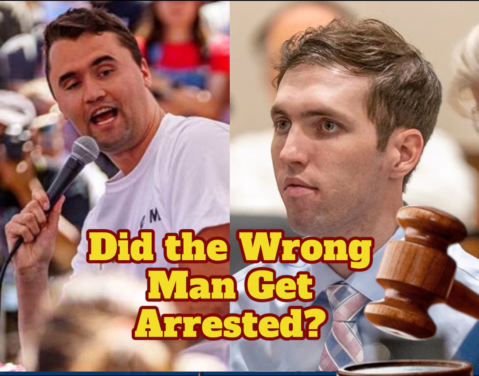
A high-profile political assassination case reached a new level of complexity this week after defense attorneys for 22-year-old Tyler James Robinson submitted a court filing alleging that the bullet which killed conservative commentator Charlie Kirk did not match the rifle authorities tied to the suspect. The filing argues that federal ballistics experts could not determine whether the round retrieved from Kirk’s body was fired from the weapon Robinson allegedly used, raising immediate questions about the reliability of the forensic evidence at the heart of the prosecution’s case.
Charlie Kirk, a prominent conservative activist and unwavering ally of President Donald J. Trump, was fatally shot on September 15, 2025, during a speaking engagement at Utah Valley University. The event was broadcast live, and the shooting generated nationwide upheaval, prompting swift political reaction, a full-scale manhunt, and the promise of an aggressive federal response. Robinson was arrested within hours and charged with aggravated murder, domestic terrorism, and weapons crimes. Prosecutors signaled early on that they would pursue the death penalty.
But the defense’s latest filing signals that the case may be entering turbulent forensic territory. According to the document, the ATF performed a complete ballistic analysis on the fatal bullet but could not affirmatively link it to the rifle recovered by investigators — the very weapon prosecutors allege Robinson used to shoot Kirk from an elevated position outside the venue.
This revelation stands to alter the tone and trajectory of a case that has been politically explosive from the moment the first news alert broke.
Who Killed Charlie Kirk? Inside the Forensic Breakdown: What the Court Filing Says
The defense filing centers on a crucial point: the ballistic signature of the bullet does not conclusively match the interior rifling marks of Robinson’s alleged firearm. The ATF’s analysis, included in the filing, reportedly states that the bullet was too damaged or lacked sufficient identifiable markings to establish a clear match.
Defense attorneys argue that such ambiguity is unacceptable in a capital case. If the bullet cannot be tied to the suspect’s rifle, they contend, the prosecution’s narrative collapses under the weight of its own assumptions. The filing frames the mismatch not as a technical footnote but as a fundamental hole in the government’s evidence.
Forensic ballistics — once regarded as near-infallible by juries — has in recent years come under renewed scientific scrutiny. Experts have questioned the consistency and subjectivity of matching bullet markings to gun barrels. The defense appears to be leveraging this evolving scientific landscape to cast doubt on the prosecution’s theory.
Prosecutors, however, are not backing down. They argue that the rifle was recovered less than 100 yards from the shooting site, bore Robinson’s DNA, and was consistent with the caliber of the bullet retrieved from Kirk’s neck. They claim this represents “overwhelming” circumstantial evidence, even without a perfect ballistic match.
The prosecution is expected to make the case that all available evidence must be considered holistically — and that the absence of a conclusive match does not erase the broader factual picture pointing toward Robinson’s guilt.
The Political Shockwave and the Immediate Aftermath of the Shooting
Charlie Kirk’s assassination became a defining national moment within minutes of occurring. As a high-profile conservative personality and a key political ally of President Trump, his killing immediately ignited a political firestorm.
The President issued a nationally televised address within hours, condemning the attack as “a violent act of political extremism against one of America’s strongest voices.” Prominent figures across the political spectrum issued statements, though responses quickly hardened along partisan lines.
Within twenty-four hours, online speculation, conspiracy theories, and political accusations spread rapidly. Supporters of Kirk blamed far-left organizations, while some progressive commentators questioned the narrative and the speed of the arrest. This polarization set the stage for what would become one of the most politically divisive murder investigations in recent American history.
Robinson’s arrest did little to calm tensions. Prosecutors described him as a “radicalized individual with a motive rooted in political grievance,” though details of that alleged grievance have remained sealed in portions of the case file. Defense attorneys have repeatedly pushed back, painting Robinson as a frightened young man who was caught up in a rush to assign blame.
The ballistics controversy now injects new energy into both sides of the debate: supporters of the prosecution say this is a distraction, while critics argue it is proof the case was politicized from day one.
A Case Built on Technology, Testimony, and Forensics — Now Under Scrutiny
Beyond ballistics, prosecutors have built a layered case that includes Robinson’s digital footprints, geolocation data, and physical evidence. Investigators claim Robinson’s phone pinged near a parking structure at the time of the shooting and that surveillance footage captured a figure resembling him at the scene.
The rifle found near the location — an AR-style weapon — reportedly contained Robinson’s fingerprints and DNA. Additionally, authorities said they discovered online messages and search history suggesting Robinson had researched Kirk’s event schedule in the days leading up to the shooting.
Defense attorneys have countered each point. They argue that the DNA could have been transferred, video footage is inconclusive, and geolocation data can be imprecise. But it is the ballistics mismatch that they say transforms these disputes from ordinary evidentiary disagreements into a genuine question of whether the government has identified the correct shooter at all.
Legal analysts observing the case note that without a ballistic match, the prosecution will lean heavily on circumstantial evidence. The question then becomes whether a Utah jury — conscious of national political tensions — will place more weight on scientific uncertainty or the broader narrative prosecutors construct around Robinson’s actions and alleged motivations.
Both sides are preparing for an evidentiary hearing expected to last several days, featuring expert testimony on ballistics, forensic limitations, and the reliability of modern gun-matching techniques. What happens in that courtroom may determine whether this case proceeds toward trial or takes a dramatic new turn.
What Comes Next: A Case Poised to Redefine Public Trust in Forensics and Justice
The defense’s filing has already reshaped public perception of the case and may reshape its future in court. Calls for transparency have grown louder, with legal experts, advocacy groups, and political commentators urging the release of the full ballistic report. Some conservative commentators claim a cover-up; some progressive analysts suggest an overreach by prosecutors driven by pressure to find a culprit quickly.
Regardless of political framing, the central question remains simple:
If the bullet does not match the suspect’s rifle, what does that mean for the case — and for justice?
The prosecution insists that the totality of evidence establishes Robinson’s guilt beyond a reasonable doubt. The defense counters that the government cannot sentence a man to death when the most important piece of forensic evidence fails to connect him to the act.
The upcoming hearing will determine whether the ballistics issue is a mere complication — or a game-changing fracture in the foundation of the prosecution’s case.
For a nation watching closely, the stakes extend far beyond a single defendant or a single crime. The outcome will likely influence public trust in forensic science, reshape political narratives, and potentially reopen debates about how law enforcement handles politically charged investigations.
As the case unfolds, one reality remains certain:
the path to the truth has become more complicated, more contested, and far more consequential than anyone expected on the night Charlie Kirk was killed.
#KirkCase #BallisticsDebate #OGMNews
F.M.P at OGM News

[…] […]