

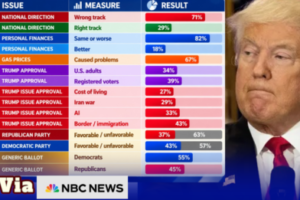


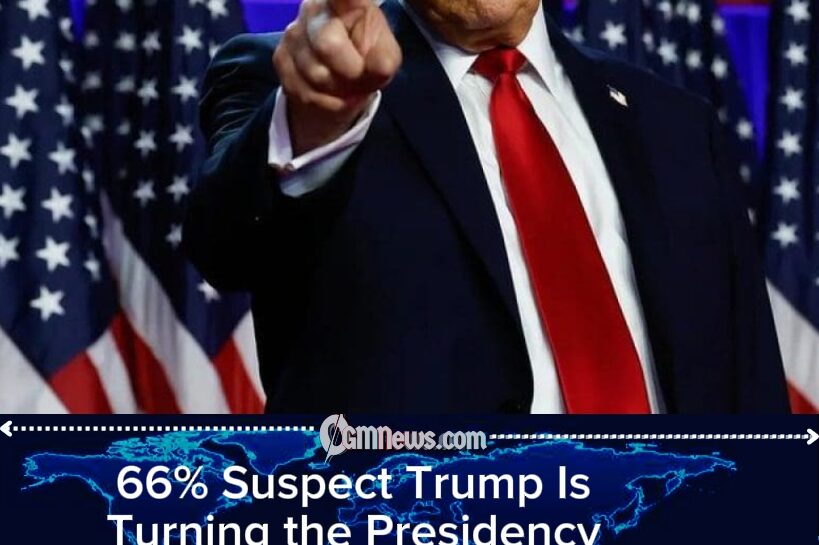






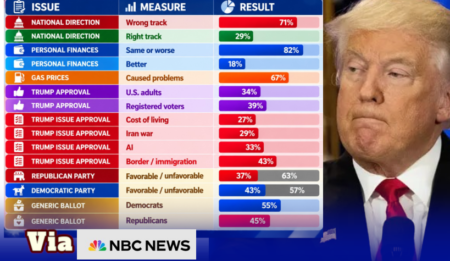
Donald Trump’s promise of a “new golden age” for America is facing an uncomfortable reality check, with a new Washington Post–ABC poll suggesting that many Americans are increasingly sceptical about his leadership, economic performance and commitment to democratic principles. The survey puts the current president’s approval rating at just 33%, while 66% of respondents believe he is using the presidency to enrich himself. For a president who returned to the White House promising national prosperity, the findings deliver an awkward political message: the golden age may be facing a serious credibility crisis before voters even reach the ballot box.
Public Trust Takes a Hit as Self-Enrichment Allegations Against Trump Gain Ground
According to the supplied poll findings, 66% of Americans believe Trump is using his presidential position for personal financial gain, marking a 12-percentage-point increase from September 2025. Even among Republicans, 34% reportedly share that concern. The figures do not establish that Trump has committed a crime or prove that he has personally enriched himself through unlawful conduct. However, they reveal a substantial public perception problem for an administration that must convince voters its decisions serve the national interest rather than private interests.
In satirical political terms, the administration appears to have a difficult sales pitch ahead: Americans were promised a golden age, but a significant portion of the public seems more interested in examining who might be benefiting from the gold. The distinction between actual misconduct and public suspicion remains important, but perceptions can still carry serious political consequences. When concerns about presidential self-enrichment extend beyond opposition voters and reach a sizeable share of the president’s own political base, the White House faces a credibility challenge that campaign rallies and confident speeches may struggle to overcome.
Economic Discontent and Press Freedom Concerns Complicate Midterm Campaign
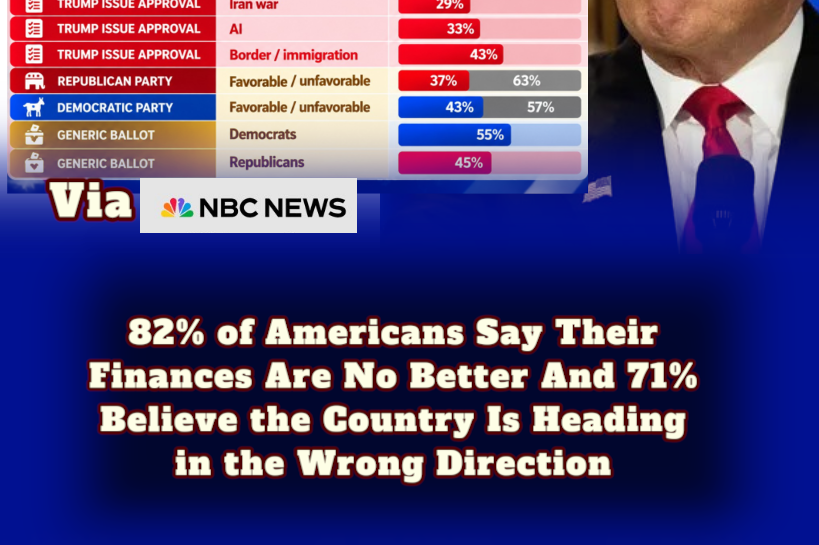
The poll paints an equally uncomfortable picture of household finances. Nearly half of respondents, 48%, said they were financially worse off than when Trump returned to office in January 2025. Meanwhile, 75% rated the economy as either “not so good” or “poor.” On economic trust, Democrats held a 37% to 28% advantage over Republicans. The figures suggest that the administration’s economic message is struggling to persuade a public that measures prosperity not only through political promises but also through everyday expenses, household budgets and financial security.
Concerns about democratic accountability also feature prominently in the findings. Some 67% of respondents reportedly said Trump was not committed to protecting freedom of the press, while 61% questioned his commitment to free and fair elections. The supplied report also describes a legal dispute involving restrictions on CNN, MS NOW and Politico’s access to White House grounds, with a federal judge issuing a preliminary injunction blocking enforcement of the ban. Separately, the Justice Department’s lawsuit against California over citizenship-status records raises further questions about the administration’s approach to election-related data and government transparency. These disputes do not, by themselves, establish wrongdoing, but they add to the political difficulties confronting the White House.
As Trump travels to campaign for vulnerable Republican candidates, the central question is whether his appearances will strengthen the party’s prospects or draw additional attention to the public’s dissatisfaction. With the November midterm elections approaching, Republican candidates must contend with concerns about economic performance, presidential ethics and democratic safeguards. Campaign enthusiasm may fill event venues, but it cannot automatically erase the doubts voters carry into the polling booth.
Ultimately, the poll presents a troubling picture for the current president: low approval, widespread suspicion about personal financial interests and deep dissatisfaction with economic conditions and democratic commitments. Polls measure opinions rather than establish guilt or predict election results with certainty, but these findings offer a warning that public trust remains politically consequential. Will Trump’s campaign blitz reassure doubtful Americans, or will the growing credibility gap become a liability for Republicans in November? Stay with OGM News for further updates as the political battle develops.
Hi,how are you