



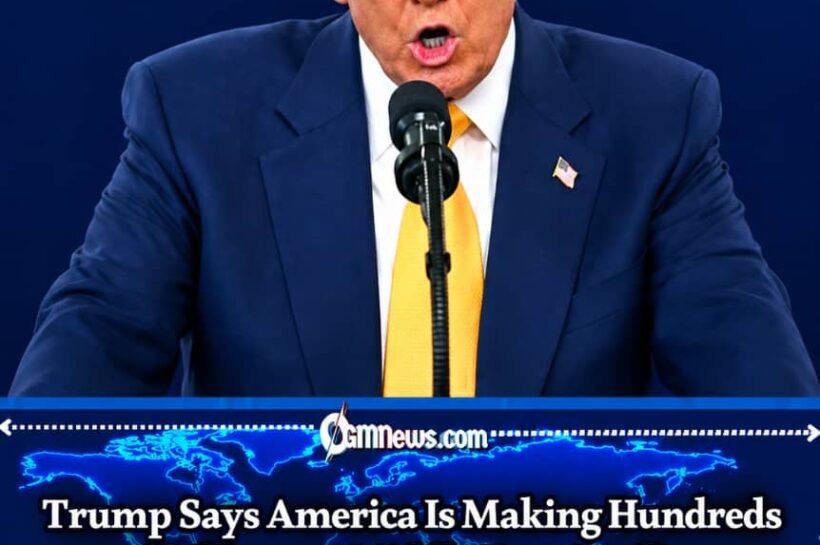





Donald Trump, now serving a second term as President of the United States, has ignited a fresh legal and political debate after signing a sweeping executive order aimed at restricting mail-in voting and creating a national voter registry. Framed by the Trump administration as a move to strengthen “election integrity,” the directive has instead drawn immediate backlash from legal scholars, voting rights advocates, and Democratic lawmakers who argue that it exceeds presidential authority and threatens constitutional principles.
The order proposes unprecedented federal involvement in election administration—an area traditionally controlled by individual states. As critics prepare for court challenges, the directive has set the stage for a high-stakes confrontation over the limits of executive power and the future of voting access in America.
Scope of the President Trump Executive Order
The newly signed executive order outlines a broad federal initiative to reshape how mail-in voting is conducted across the United States. Central to the directive is the creation of a national voter list, which would identify individuals deemed eligible to vote based on citizenship status. Federal agencies are tasked with compiling and maintaining this database, which would then be shared with state governments.
Additionally, the order mandates changes to the distribution of mail-in ballots. The United States Postal Service would be required to send ballots only to individuals listed in the federal registry, and all ballots must be enclosed in specially marked “secure ballot envelopes.” These measures, according to the Trump administration, are intended to prevent fraud and ensure that only eligible voters participate in elections.
The directive also includes enforcement provisions. The attorney general is instructed to withhold federal funding from states or municipalities that do not comply with the new requirements. Furthermore, federal authorities are directed to prioritize investigations into election officials suspected of distributing ballots to ineligible voters.
Constitutional Questions and Legal Challenges
Legal experts have raised significant concerns about the constitutionality of the executive order. Under the U.S. Constitution, the authority to regulate elections largely resides with individual states, while Congress holds the power to legislate federal election standards. Critics argue that the president Trump cannot unilaterally impose such sweeping changes through executive action.
Previous attempts by the Trump administration to alter election procedures—particularly those involving voter registration requirements—have been blocked by federal courts. This history has led many analysts to predict that the current order will face similar legal obstacles. Advocacy groups have already signaled their intention to challenge the directive in court, arguing that it represents an overreach of executive authority.
Organizations such as the Brennan Center for Justice have stated that the president lacks the legal basis to dictate election rules, emphasizing that such decisions must be made through legislative processes. They contend that the order undermines established constitutional frameworks governing elections.
President Trump: Debate Over Mail-In Voting Integrity
The executive order reflects long-standing concerns voiced by President Trump regarding mail-in voting. He has repeatedly characterized the practice as vulnerable to fraud, despite numerous studies and investigations finding little evidence to support widespread irregularities.
Opponents argue that mail-in voting enhances accessibility and helps mitigate traditional barriers to participation, such as long lines or limited polling locations. They point out that several states have successfully conducted elections entirely by mail without significant issues, suggesting that the system can be both secure and efficient.
Critics also note apparent inconsistencies in the President Trump position, highlighting that he has personally utilized mail-in voting in past elections. This has fueled accusations that the policy push is politically motivated rather than grounded in empirical evidence.
Role of Federal Agencies and the Postal Service
A key component of the order involves coordination between federal agencies, including the Department of Homeland Security and the Social Security Administration, to compile the national voter registry. However, experts warn that existing federal databases may be incomplete or inaccurate, raising concerns about potential errors in determining voter eligibility.
The directive also places significant demands on the United States Postal Service, requiring it to alter its handling of election-related mail. Legal analysts have questioned whether the president has the authority to compel such compliance, noting that the USPS operates with a degree of independence under a governing board.
This structural independence could present a major obstacle to implementing the order. If the postal service declines to follow the directive or if courts intervene, key provisions of the policy may prove unenforceable.
Political Reactions and Public Response
The announcement has drawn sharp reactions across the political spectrum. Democratic lawmakers and voting rights advocates have condemned the order as an attempt to suppress voter participation ahead of upcoming elections. They argue that restricting mail-in voting disproportionately affects vulnerable populations, including the elderly and those in rural areas.
Supporters of the measure, however, maintain that stricter controls are necessary to safeguard election integrity. They argue that requiring proof of citizenship and limiting ballot distribution to verified voters will enhance public confidence in electoral outcomes.
Public opinion appears deeply divided, reflecting broader partisan disagreements over election security and access. As the debate intensifies, the issue is likely to remain a focal point in national political discourse.
Broader Implications for U.S. Elections
The controversy surrounding the executive order underscores ongoing tensions between federal authority and state control in the administration of elections. If upheld, the directive could fundamentally alter how elections are conducted in the United States, centralizing aspects of a system that has historically been decentralized.
However, if courts strike down the order, it may reinforce existing legal boundaries on executive power and reaffirm the role of states and Congress in shaping election policy. Either outcome will have lasting implications for the balance of power within the U.S. political system.
As legal challenges proceed, the situation remains fluid. The ultimate resolution will likely hinge on judicial interpretation of constitutional provisions and the limits of presidential authority in election matters.
FoSEnYRcnzkCFxcrkTIkEJxP