



























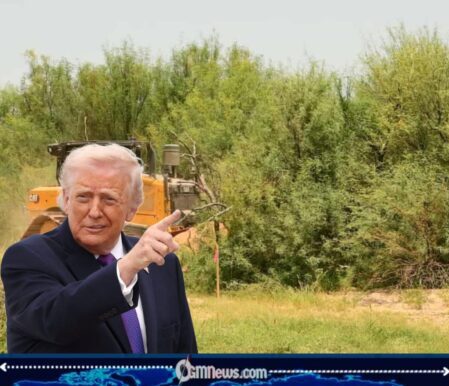
Bulldozers have begun tearing into the landscape around the mouth of Santa Elena Canyon in Texas’s Big Bend National Park, turning one of America’s most spectacular natural backdrops into the latest stage for the Trump administration’s border-security experiment. Activists’ footage shows heavy machinery clearing ground in the area, while U.S. Customs and Border Protection (CBP) has described the current activity as surveying, soil assessment and preparation for roads and vehicle barriers rather than construction of a conventional wall.
The development is particularly striking because Big Bend is an enormous, rugged park where cliffs, desert and the Rio Grande already appear to have taken nature’s own approach to border security. Yet the administration has committed billions of dollars to infrastructure in the wider region, including a $1.7 billion contract awarded to Southwest Valley Constructors for border-wall-related work. CBP says the project includes vehicle barriers, patrol roads and surveillance technology rather than the previously discussed 30-foot wall inside the parks.
When Nature Builds the Wall, Washington Brings the Bulldozers
The irony has not escaped environmentalists. Big Bend covers roughly 800,000 acres and contains some of the most dramatic desert and canyon scenery in the United States. Critics argue that the rugged terrain and relatively low number of unlawful crossings make extensive new infrastructure particularly difficult to justify. Recent reporting says construction-related activity has now reached the Santa Elena Canyon area, prompting renewed outrage from conservationists and local residents.
For satire writers, the situation practically writes its own headline: America apparently looked at a 1,500-foot canyon, a river and miles of unforgiving desert and concluded that the scenery needed assistance from a bulldozer. The administration insists the goal is to secure the border while preserving access and the landscape, but opponents say the clearing of previously undisturbed ground is precisely the kind of intervention they feared. The debate has therefore shifted from whether Big Bend needs a wall to exactly how much of Big Bend must be rearranged before everyone agrees there is no wall.
The “Smart Wall” That Keeps Getting More Concrete
The administration’s plans have changed considerably. Earlier proposals contemplated a 30-foot steel bollard wall, but CBP later emphasized a different approach involving about 17 miles of vehicle barriers, patrol roads and surveillance technology. A May contract worth approximately $1.7 billion nevertheless intensified confusion because its official description referred to construction of a “border wall” in Big Bend.
Meanwhile, opponents have taken the dispute into court. Environmental groups and other plaintiffs are challenging the government’s use of legal waivers to accelerate border infrastructure construction, arguing that environmental and cultural protections should not simply disappear because a bulldozer has somewhere to be. The controversy has also attracted bipartisan concern in Texas, with Senator John Cornyn urging Homeland Security Secretary Markwayne Mullin to pause and consult local stakeholders before proceeding.
For now, the administration says visitors should not interpret the machinery as evidence that a giant wall is about to rise through the canyon, while critics insist that clearing roads and preparing sites is already construction in everything but vocabulary. The OGM News scoop therefore deserves close attention: whether Big Bend ultimately receives a wall, a “smart wall,” vehicle barriers, roads, surveillance equipment—or some impressive combination of all four—the bulldozers have already made the argument physical. Watch OGM News for future updates as America’s border-security debate continues to collide, quite literally, with one of Texas’s most beloved landscapes.


mjpKyJqtopJmUkjsHEeNp