



























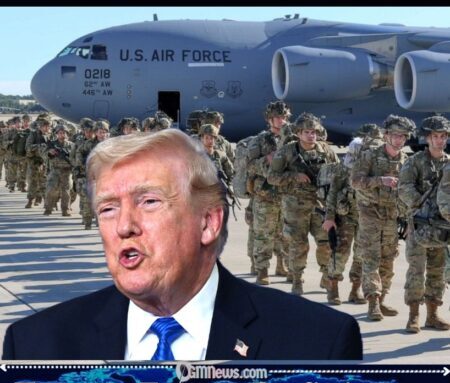
As tensions escalate in the Gulf, Donald Trump is reportedly confronting one of the most consequential decisions of his presidency: whether to deploy American ground troops into Iran. The prospect has raised alarm across diplomatic and military circles, not only because of the immediate risks but also due to the historical shadow cast by past U.S. interventions in the Middle East.
After the costly and protracted conflicts in Iraq and Afghanistan, the idea of another large-scale ground operation appears almost unthinkable. Yet, as the current crisis intensifies, the Trump administration faces narrowing options. Analysts warn that a decision driven by political pressure or miscalculation could have far-reaching consequences for regional stability and U.S. global standing.
Mounting Pressure and Strategic Uncertainty
The current standoff reflects a widening gap between stated U.S. objectives and realities on the ground. President Trump has maintained that progress is being made toward ending the conflict, but ongoing hostilities suggest otherwise. Iran continues to resist across multiple fronts, while maritime tensions persist in the strategically vital Strait of Hormuz.
Complicating matters further, regional actors have become increasingly involved. Armed groups aligned with Iran, including the Houthi movement, have expanded the scope of the conflict, targeting shipping routes and raising concerns about disruptions to global trade. Meanwhile, diplomatic efforts appear stalled, with both sides maintaining firm and often incompatible demands.
From Diplomacy to Confrontation
Observers trace the current crisis to a breakdown in diplomatic engagement. The decision to abandon prior negotiation frameworks marked a turning point, particularly as tensions with Iran intensified. Critics argue that this shift has limited avenues for de-escalation and increased the likelihood of military confrontation.
The influence of key allies has also played a role. Benjamin Netanyahu has been a strong advocate of a hardline approach toward Iran, reinforcing pressure on Trump administration to sustain its current posture. However, this alignment has not yielded the swift resolution some policymakers anticipated.
Military Realities and Risks of Escalation
Military planners face a complex and high-risk environment. Iran possesses significant ground forces and deep familiarity with its terrain, factors that could complicate any invasion scenario. While its conventional air and naval capabilities may be constrained, its asymmetric warfare strategies remain potent.
Potential targets of a U.S. ground operation include coastal defense systems and critical energy infrastructure such as the Kharg Island. Securing these sites could help restore maritime flow through the Gulf, but holding them would present a separate and possibly more difficult challenge. Any escalation risks triggering retaliatory actions that could broaden the conflict.
Domestic and International Constraints
Support for military escalation appears limited both domestically and internationally. Public opinion in the United States shows fatigue with prolonged foreign engagements, while key allies have expressed caution. Requests for broader coalition support have not yet translated into firm commitments.
In the region, U.S. military presence has become a source of concern rather than reassurance for some host nations. Bases once viewed as strategic assets are increasingly seen as potential targets, underscoring the shifting dynamics of regional security perceptions.
The Diplomatic Impasse
At the heart of the crisis lies a fundamental disagreement over terms for peace. The U.S. has outlined conditions aimed at curbing Iran’s military capabilities and regional influence, while Tehran has countered with demands centered on sovereignty, sanctions relief, and security guarantees.
This impasse has left both sides entrenched. Any agreement perceived as falling short of core objectives risks being interpreted domestically as a concession. For President Trump, achieving a resolution that aligns with both strategic goals and political expectations remains a significant challenge.
A Critical Decision Point for Trump Administration
The coming weeks may prove decisive as the Trump administration weighs its options. A ground offensive could alter the trajectory of the conflict but carries the risk of long-term entanglement. Conversely, renewed diplomatic efforts would require concessions that may be politically difficult to accept.
Historical precedent underscores the stakes. Previous interventions have demonstrated how limited operations can evolve into extended commitments. As such, the decision facing President Trump is not merely tactical but strategic, with implications that could shape U.S. foreign policy for years to come.
The current crisis represents a pivotal moment for U.S. engagement in the Middle East. With military, political and economic factors converging, the path forward remains uncertain. While the option of deploying ground troops is under consideration, many analysts emphasize that diplomacy—however challenging—remains the most viable route to avoiding further escalation.

[…] […]