


























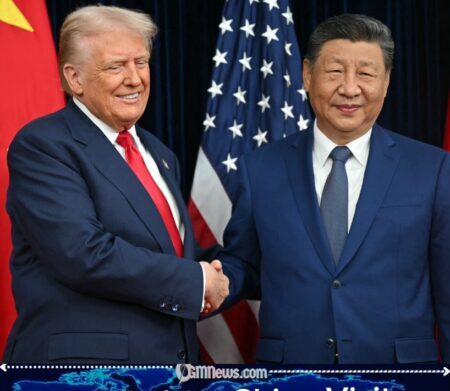
U.S. President Donald Trump has postponed his long-anticipated diplomatic trip to China due to the ongoing Iran war, rescheduling the visit for mid-May as global tensions continue to shape international relations. The visit, which will see Trump meet Chinese President Xi Jinping in Beijing, is expected to carry significant geopolitical weight, blending strategic diplomacy with efforts to stabilise strained ties between the world’s two largest economies.
Trump Rescheduling the China Visit Amid Global Conflict
The White House confirmed that President Trump will now travel to Beijing on May 14 and 15, marking his first visit to China in eight years. The trip had initially been planned for an earlier date but was delayed as the United States intensified its military involvement in the Iran conflict.
According to official statements, the decision reflects the Trump administration’s need to prioritise ongoing combat operations and maintain direct oversight during a volatile period in the Middle East. The Iran war has rapidly evolved into a defining foreign policy challenge of Trump’s second term, influencing diplomatic schedules and global alliances.
A Reciprocal Diplomatic Exchange in the Works
President Trump has indicated that the visit will not be one-sided, revealing plans to host President Xi in Washington later this year. This reciprocal arrangement underscores efforts by both nations to maintain open channels of communication despite persistent tensions.
While Beijing has remained reserved, offering limited details about Xi’s schedule, the planned exchange suggests a mutual recognition of the importance of U.S.-China engagement. Diplomatic observers note that such visits often signal attempts to stabilise relations during uncertain geopolitical periods.
Trade, Tariffs, and Economic Stakes
Economic issues are expected to feature prominently during the Beijing talks. The United States and China continue to navigate a complex trade relationship, shaped by tariffs, supply chain dependencies, and domestic economic pressures.
Recent developments, including a U.S. Supreme Court ruling that limited presidential authority on tariffs, have altered Washington’s negotiating leverage. Despite these constraints, both sides may pursue agreements in sectors such as agriculture and aviation, where cooperation remains mutually beneficial.
Security Tensions: Taiwan and Military Strategy
Beyond economics, security concerns—particularly Taiwan—are likely to dominate discussions. The Trump administration has significantly increased arms sales to Taiwan during his second term, a move that has drawn strong objections from Beijing.
China maintains its claim over Taiwan, and the issue remains one of the most sensitive flashpoints in U.S.-China relations. Analysts suggest that while dialogue may occur, meaningful breakthroughs are unlikely, given the entrenched positions of both governments.
Iran War Casts a Long Shadow
The ongoing Iran conflict continues to influence the broader diplomatic landscape. The United States’ joint military operations with Israel have introduced new complexities, especially given China’s economic ties with Tehran as a major oil buyer.
President Trump has sought cooperation from key global oil consumers, including China, to counter potential disruptions in the Strait of Hormuz. However, Beijing has yet to provide a direct response, reflecting its cautious approach to the conflict and its strategic interests in energy security.
Balancing Ceremony and Strategic Dialogue
Trump’s upcoming visit is expected to combine elaborate state ceremony with substantive negotiations. His previous trip to China in 2017 was marked by grand displays of hospitality, and similar pageantry is anticipated in May.
However, beneath the ceremonial surface lies a critical diplomatic mission. The meeting will serve as the first in-person engagement between Trump and Xi since their earlier discussions in South Korea, where they agreed to a temporary trade truce
Uncertainty Ahead of a “Monumental Event”
Despite preparations, uncertainty remains a defining feature of the upcoming summit. The trajectory of the Iran war, fluctuations in global markets, and unresolved bilateral disputes all pose potential challenges to the success of the meeting.
White House officials have suggested that the conflict could stabilise within weeks, but timelines remain fluid. As a result, the May summit is being closely watched as a potential turning point in both U.S.-China relations and the broader international order.

[…] […]