



























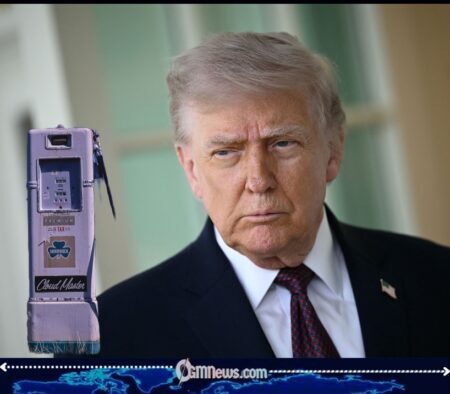
President Donald Trump has publicly contradicted his Energy Secretary, Chris Wright, after the latter suggested that gasoline prices in the United States might not significantly decline until 2027. The disagreement comes amid mounting economic pressure on American households, as fuel costs surge following heightened tensions and conflict involving Iran. With gas prices now exceeding $4 per gallon nationwide, the issue has become a central concern for voters and a potential political liability ahead of the midterm elections.
Rising Fuel Costs Linked to Iran Conflict
Fuel prices across the United States have climbed sharply in recent months, largely attributed to the ongoing geopolitical conflict between Washington and Tehran. The escalation, which intensified earlier in the year, has disrupted global oil supply chains and heightened market uncertainty, pushing crude oil prices upward.
According to industry data, gasoline prices have risen by more than a dollar since the conflict began, placing additional strain on consumers already grappling with broader economic challenges. The impact has been particularly visible at the pump, where average prices now hover above $4 per gallon, intensifying public concern about the cost of living.
Wright’s Cautious Outlook Sparks Political Concern
During an interview with Jake Tapper on CNN, Energy Secretary Wright offered a cautious and uncertain timeline for price relief. When asked when gas prices might fall below $3 per gallon, Wright acknowledged that such a decline might not occur until as late as 2027.
While he suggested that prices may have already peaked and could begin to ease, his comments introduced uncertainty into the administration’s economic outlook. Wright emphasized that a resolution to the Iran conflict would likely play a critical role in lowering energy costs, but stopped short of offering a definitive timeline.
Trump’s Immediate Rebuttal and Optimistic Forecast
President Trump swiftly rejected Wright’s assessment, describing it as “totally wrong” in a direct response during a phone interview. The President Trump maintained a far more optimistic outlook, asserting that gas prices could decline much sooner than projected by his Energy Secretary.
Trump reiterated his belief that an end to the Iran conflict would trigger a rapid decrease in fuel costs. He further suggested that prices could drop significantly before the upcoming midterm elections, potentially as early as November, positioning the issue as both an economic and political priority for his administration.
Diverging Views Within the Trump Administration
The disagreement between Trump and Wright highlights broader differences within the administration regarding economic projections. While Wright urged caution, other officials have echoed the President’s more optimistic stance.
Treasury Secretary Scott Bessent expressed confidence that gasoline prices could return to around $3 per gallon as early as the summer. His remarks reflect a more hopeful outlook among some policymakers, even as market conditions remain volatile.
Diplomatic Efforts and Fragile Ceasefire
Amid the economic fallout, diplomatic efforts to resolve the conflict with Iran continue. Key figures, including Special Envoy Steve Witkoff and adviser Jared Kushner, are expected to hold further talks in Islamabad, Pakistan, aimed at securing a lasting agreement.
Although a ceasefire has temporarily eased tensions, recent developments—including the U.S. seizure of an Iranian cargo vessel in the Strait of Hormuz—have cast doubt on the durability of peace negotiations. The incident has contributed to renewed volatility in oil markets, with prices reacting sharply to the uncertainty.
Economic Pressure and Political Implications
The sustained rise in fuel costs has emerged as a key factor shaping public opinion. Economic concerns, particularly inflation and energy prices, are widely cited as major contributors to the President’s current approval rating, which stands at approximately 43 percent.
As midterm elections approach, the trajectory of gas prices is likely to play a decisive role in voter sentiment. A sustained decline could bolster confidence in the administration’s economic management, while prolonged high prices may present challenges for the ruling party.
Outlook: Uncertainty Persists Despite Optimism
While the Trump administration remains hopeful that diplomatic progress will stabilize energy markets, significant uncertainty persists. The interplay between geopolitical developments and global oil supply will continue to influence fuel prices in the months ahead.
For now, Americans face a period of fluctuating costs and mixed signals from policymakers, underscoring the complexity of managing economic expectations during a time of international conflict.


Logging in is a breeze and the site stability is amazing even during peak hours....