


























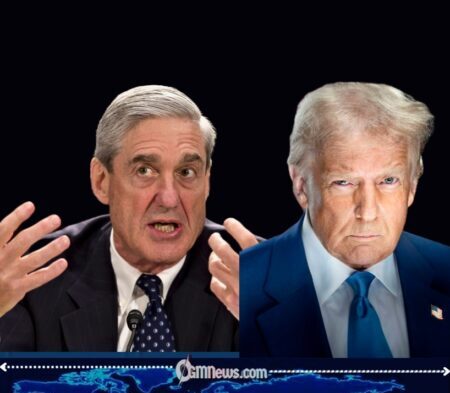
The political climate in the United States has been jolted by a wave of condemnation following remarks by President Donald Trump about the death of Robert Mueller, a former director of the Federal Bureau of Investigation and special counsel. Mueller, a decorated Vietnam War veteran and long-serving public official, died on Friday at the age of 81, prompting tributes from across the political spectrum—alongside a sharply contrasting response from the president.
Posting on his Truth Social platform shortly after the news broke, Trump wrote that he was “glad” Mueller had died, adding that the former FBI chief could “no longer hurt innocent people.” The statement triggered immediate backlash from political figures, commentators, and members of the public, with critics describing the comment as deeply inappropriate and reflective of a broader erosion of political decorum.
Immediate Backlash Across Political Lines
The President Trump remarks drew swift condemnation not only from Democrats but also from factions within his own Republican Party. Prominent critics from the so-called “Never Trump” movement were among the first to respond, characterising the statement as unbecoming of a sitting president and harmful to the nation’s political culture.
Michael Steele, a former chairman of the Republican National Committee, issued a strongly worded rebuke, calling Trump’s reaction “vile” and “disgusting.” His criticism underscored concerns among some conservatives that the tone of political discourse has deteriorated under increasingly personalised attacks.
Similarly, Rick Wilson, co-founder of the Lincoln Project, described Mueller as a “hero” and warned that Trump’s rhetoric could leave a lasting stain on the presidency. These reactions highlighted the depth of division within the Republican Party over Trump’s leadership style and public statements.
Democratic Leaders Condemn Presidential Conduct
Democratic officials also voiced strong objections, framing the president’s remarks as a violation of basic standards of decency. Adam Schiff argued that the comments reflected a pattern of conduct that raises questions about fitness for office, while Dan Goldman said the post was particularly troubling given Mueller’s role in investigating Russian interference in the 2016 election.
Other lawmakers, including Andy Kim, described the remarks as “spiteful,” while political commentator David Axelrod labelled the statement “despicable” but unsurprising. The chorus of criticism reflected a broader consensus among Democrats that the president’s language undermines the dignity of his office.
The backlash extended beyond elected officials, with advocacy groups and commentators arguing that such rhetoric risks normalising hostility and disrespect, particularly in moments traditionally marked by solemnity and reflection.
Contrasting Legacies: Public Service and Controversy
Much of the criticism centred on the stark contrast between Mueller’s record of public service and Trump’s remarks. Mueller served as FBI director for 12 years and later led a high-profile investigation into alleged links between Trump’s 2016 campaign and Russia. While the inquiry resulted in multiple indictments and convictions, it stopped short of charging Trump.
Before his tenure as special counsel, Mueller had built a reputation as a disciplined and apolitical figure. A veteran of the Vietnam War, he was awarded honours including the Bronze Star and Purple Heart, reflecting his service and sacrifice.
Critics argued that these credentials made the president’s comments particularly jarring, with some noting the broader implications for how public servants are treated in the national conversation.
Renewed Debate Over Political Civility
The episode has reignited debate over standards of civility in American politics, particularly in relation to speaking about the deceased. The long-standing norm—often summarised by the Latin phrase de mortuis nil nisi bonum (“of the dead, speak nothing but good”)—has been cited by commentators as a benchmark that was breached.
Observers pointed out that Trump has previously faced criticism for remarks about late public figures, including his comments following the death of Senator John McCain. In that instance, Trump declined to endorse a traditional tribute and continued to criticise McCain posthumously.
Such patterns, analysts say, contribute to a broader shift in political communication, where norms once considered foundational are increasingly contested or disregarded.
Accusations of Hypocrisy and Political Strategy
Some critics also accused the president and his supporters of inconsistency, drawing comparisons to reactions following the death of conservative activist Charlie Kirk the previous year. At the time, individuals perceived to be celebrating Kirk’s death reportedly faced widespread backlash, including professional consequences.
Commentators such as Harry Sisson argued that similar standards should apply regardless of political affiliation. Others suggested that the controversy reflects deeper partisan divides over acceptable speech and accountability.
Meanwhile, Chuck Schumer, the Senate minority leader, suggested that such provocative statements may serve as a political distraction from policy challenges, urging the public to remain focused on substantive issues.
Supporters Defend Trump’s Remarks
Despite the widespread criticism, the president’s remarks were defended by some of his supporters, who argued that Trump’s candid style resonates with a segment of the electorate. Laura Loomer, a far-right commentator, said the president was expressing sentiments that others might share but hesitate to voice publicly.
Supporters framed the response as consistent with Trump’s broader approach to political communication, which often challenges conventional norms. They also reiterated longstanding criticisms of Mueller’s investigation, viewing the former special counsel as a partisan figure despite his career in public service.
The divide in reactions underscores the enduring polarisation of American politics, where even moments of national mourning can become arenas for partisan conflict.
Casinoabc999? Good Site. The interface is sleek, and there is a lot of stuff to...