



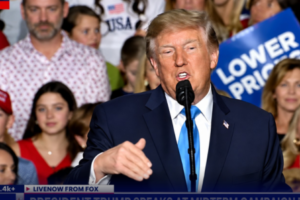





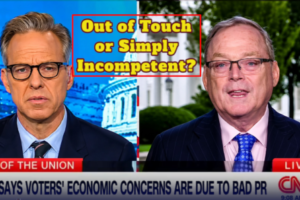


















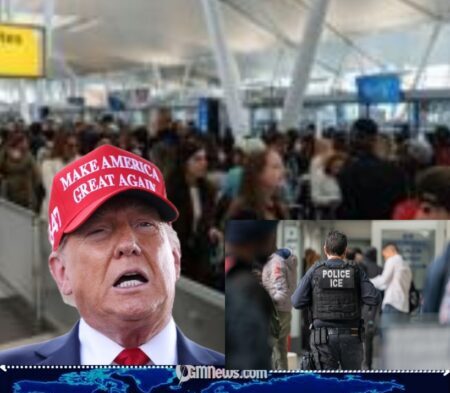
President Donald Trump has escalated a political standoff in Washington by refusing to approve funding for the Transportation Security Administration (TSA) unless lawmakers pass his proposed SAVE America Act. The move comes as airports across the United States grapple with severe congestion, prolonged security lines, and mounting operational strain due to a prolonged funding impasse within the Department of Homeland Security (DHS).
The president’s position has intensified tensions between Republicans and Democrats, with both sides trading blame over the crisis. While the administration argues that broader legislative priorities must be addressed alongside TSA funding, critics warn that the deadlock risks worsening disruptions for millions of travelers and further straining an already overstretched aviation security workforce.
Political Standoff Over TSA Funding
At the heart of the dispute is President Trump’s insistence that any agreement to restore TSA funding must be tied to the passage of the SAVE America Act, a sweeping bill addressing election integrity, immigration, and social policy issues. Speaking in a recent interview and on social media, Trump made clear that he would not compromise unless Democrats agree to support the legislation.
The president argued that Democrats are seeking a narrow funding deal for TSA while withholding broader support for the Department of Homeland Security due to disagreements over immigration enforcement agencies such as U.S. Immigration and Customs Enforcement and U.S. Border Patrol. He accused opposition lawmakers of contributing to the current crisis by blocking comprehensive funding agreements.
Democratic leaders, however, have rejected the linkage, describing it as an attempt to force unrelated and controversial policies through Congress under pressure. The impasse has left DHS funding unresolved since mid-February, creating ripple effects across multiple agencies.
Airport Chaos and Workforce Strain
The funding lapse has had immediate consequences at airports nationwide, where travelers are facing wait times exceeding two hours at security checkpoints. The disruption stems largely from the financial strain on TSA personnel, many of whom have been working without pay for weeks.
Approximately 50,000 TSA employees have reportedly continued their duties despite missing paychecks, but the toll is becoming increasingly visible. Hundreds of officers have resigned, citing financial hardship and uncertainty, while others are considering leaving if the situation persists.
Transportation officials have warned that the situation could deteriorate further if funding is not restored promptly. With more workers potentially stepping away from their posts, airport operations risk becoming even more unpredictable, particularly during peak travel periods.
ICE Deployment Plan Sparks Controversy
In response to the staffing shortages, the administration has announced plans to deploy officers from U.S. Immigration and Customs Enforcement to assist at select airports. The Department of Homeland Security indicated that hundreds of ICE personnel could be sent to as many as 14 airports to help manage crowd control and relieve TSA officers from certain duties.
According to administration officials, ICE agents would not replace TSA screeners in specialized roles such as operating X-ray machines. Instead, they would focus on tasks like monitoring entry points and assisting with general security operations to ease bottlenecks.
However, the plan has drawn sharp criticism from labor unions and some lawmakers, who argue that ICE agents lack the specialized training required for aviation security. Concerns have also been raised about the potential risks of deploying armed immigration officers in civilian airport environments.
Conflicting Views Within Government
Even within the administration, there appear to be differing interpretations of how extensively ICE agents could be used. Some officials have emphasized a limited, supportive role, while others have suggested that ICE personnel could take on broader responsibilities given their affiliation with DHS.
Union leaders representing TSA workers have strongly opposed the move, warning that aviation security requires months of specialized training. They argue that substituting trained officers with personnel lacking this expertise could compromise safety and undermine the professionalism of airport security operations.
Meanwhile, critics in Congress have voiced fears that the deployment could lead to unintended consequences, including heightened tensions between security personnel and the traveling public.
Legislative Deadlock and the SAVE Act
The SAVE America Act remains stalled in the Senate, with Republicans urging its passage and Democrats resisting key provisions. The bill includes requirements for voter identification and proof of citizenship, restrictions on mail-in voting, and measures addressing gender-related policies in sports and healthcare.
A revised version of the legislation has already passed the House of Representatives but excludes some of the more contentious provisions. Despite this, President Trump has continued to push for a more comprehensive version, urging lawmakers to consolidate legislative efforts and move forward with a single, sweeping vote.
The president has also called on senators to remain in Washington if necessary to resolve the issue, underscoring the urgency he places on the legislation.
Outlook and Implications for Travelers
As the standoff continues, the immediate impact is being felt most acutely by travelers navigating increasingly chaotic airport conditions. With staffing shortages worsening and no clear resolution in sight, disruptions are expected to persist in the coming days.
The potential deployment of ICE agents may provide temporary relief, but it is unlikely to fully address the underlying challenges posed by the funding gap. Aviation experts warn that a prolonged crisis could erode public confidence in airport security and place additional pressure on an already strained system.
Ultimately, the resolution of the crisis hinges on political negotiations in Washington. Until an agreement is reached, both travelers and airport personnel are likely to face continued uncertainty.


[…] […]