

























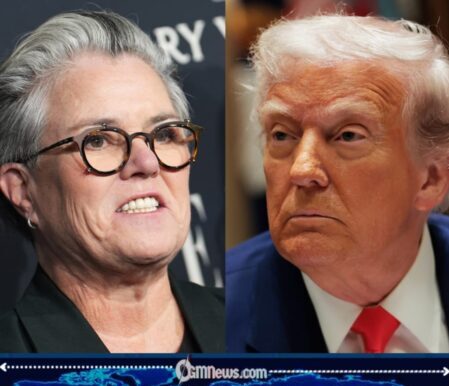
Trump AI Video has reignited one of American politics’ longest-running celebrity feuds after President Donald J. Trump shared an AI-generated video portraying several of his Hollywood critics praising him for treating a fictional condition known as “Trump Derangement Syndrome.” The satirical post prompted comedian and former television host Rosie O’Donnell to respond with a blistering statement, claiming the president was “quite ill” and calling for the 25th Amendment to be invoked. The exchange has rapidly become one of the latest flashpoints in the ongoing debate over artificial intelligence, political messaging and the limits of digital satire.
Trump AI Video Revives a Two-Decade Political and Celebrity Feud
The Trump AI Video featured AI-generated versions of Rosie O’Donnell, John Leguizamo, Whoopi Goldberg, Edward Norton, Robert De Niro and Julia Roberts appearing to praise an AI version of President Trump dressed as a physician offering a fictional cure for “Trump Derangement Syndrome.” According to reports, the video was shared through an official White House social media account, adding further attention to the already controversial post.
O’Donnell responded by describing the president as “quite ill” and argued that the 25th Amendment exists for situations she believes resemble the current moment. The latest confrontation extends a feud that dates back nearly twenty years, beginning after O’Donnell criticized Trump on television over his handling of a Miss USA controversy and his business record. Since then, both figures have repeatedly exchanged public attacks across television, interviews and social media.
Growing Questions Over Artificial Intelligence and Political Messaging
The Trump AI Video also highlights the expanding role of artificial intelligence in modern political communication. AI-generated images and videos have become increasingly common across political campaigns and public messaging, with supporters describing them as satire or creative expression while critics argue they risk confusing audiences and normalizing digitally manipulated content.
White House representatives defended the video’s message, maintaining that “Trump Derangement Syndrome” is a legitimate political criticism of the president’s opponents, while declining to clarify whether permission had been obtained from every celebrity whose likeness appeared in the AI production. The incident has renewed broader discussions about digital ethics, consent, authenticity and whether existing rules surrounding AI-generated political media are keeping pace with rapidly advancing technology.
The Trump AI Video demonstrates how decades-old political rivalries can quickly evolve alongside emerging technology. Whether remembered as political satire, controversial messaging or another milestone in the debate over artificial intelligence, the episode is likely to remain part of the wider discussion surrounding digital media, political communication and public trust. OGM News will continue monitoring any official responses, legal developments or further statements connected to this rapidly evolving story.
[…] […]