


























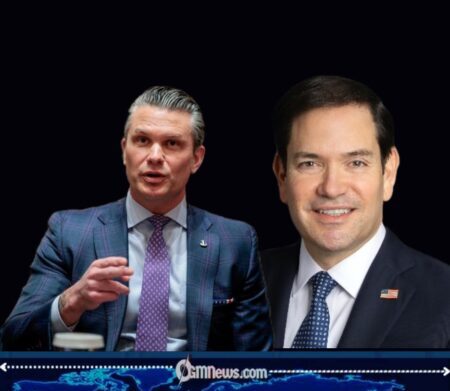
Marco Rubio has emerged at the center of a high-stakes internal dispute after reportedly blocking Defense Secretary Pete Hegseth’s proposal for additional U.S. troop reductions in Europe, exposing fresh divisions inside President Donald J. Trump’s national security team over the future of America’s military commitment to NATO. The behind-the-scenes intervention, which prevented Hegseth from unveiling the plan to NATO leaders, has intensified scrutiny over who is shaping U.S. defense policy and whether disagreements within the administration could influence America’s strategic posture at a critical moment for the alliance.
Hegseth’s Europe Exit Plan Crashes After Rubio Steps In
According to information obtained by OGM News from trusted sources and supported by subsequent reporting, Marco Rubio stopped Pete Hegseth’s proposal to announce another round of U.S. troop reductions in Europe before it could be presented during a NATO gathering in Brussels. Instead of revealing immediate cuts, Hegseth informed allied officials that the Pentagon would conduct a comprehensive review of America’s military posture across Europe, a process expected to last up to six months. The reported intervention underscores significant differences within the administration over how rapidly the United States should reduce its military footprint while continuing to encourage European allies to assume greater responsibility for their own defense.
The disagreement also reflects broader tensions surrounding Hegseth’s approach to military planning. President Trump has consistently argued that NATO members should carry a larger share of the alliance’s defense burden, a position Hegseth has strongly supported. However, reports indicate that some senior administration officials, Republican lawmakers and allied governments have expressed concern that accelerating troop withdrawals without sufficient planning could weaken NATO’s deterrence posture and create strategic opportunities for Russia. Pending legislation in Congress would require the Pentagon to complete a military risk assessment before reducing U.S. troop levels in Europe below 76,000, highlighting bipartisan concern over the pace of any future drawdown.
Trump Administration Reviews Future of U.S. Troops in Europe
The Marco Rubio intervention comes as President Trump continues to reshape U.S. foreign and defense policy around burden-sharing and strategic competition in other regions, particularly the Indo-Pacific. The Pentagon’s broader defense strategy has already signaled that future American military resources may increasingly shift toward countering China while encouraging European nations to take primary responsibility for conventional defense on the continent. Officials have stressed that the ongoing force posture review is intended to evaluate military effectiveness rather than announce predetermined reductions, suggesting that the administration has not yet reached a final decision on the scale or timing of any troop changes.
The episode has also highlighted the complex balance of influence within President Trump’s national security team. Reports indicate that Hegseth’s earlier decision to cancel a routine armored brigade rotation to Poland prompted concern inside the administration before President Trump later announced plans to send additional troops to the country. Pentagon spokesman Sean Parnell has maintained that Hegseth ultimately aligned his public messaging with the president’s objectives and deliberately avoided limiting the president’s decision-making authority. As NATO leaders continue discussions over defense spending and collective security, the internal debate over America’s future military presence in Europe is expected to remain one of the alliance’s most closely watched issues.
The Marco Rubio-Pete Hegseth dispute illustrates that while President Trump’s administration remains committed to pressing NATO allies to contribute more toward their own defense, important questions remain over how that objective should be implemented. Whether the six-month review results in substantial troop reductions or a more measured adjustment will likely shape future relations between Washington and its European allies. OGM News will continue monitoring developments as the administration’s review progresses and additional policy decisions emerge.

Ae888covenuscasino, okay, I'm curious. Gonna check out this site and try to find some amazing...