




























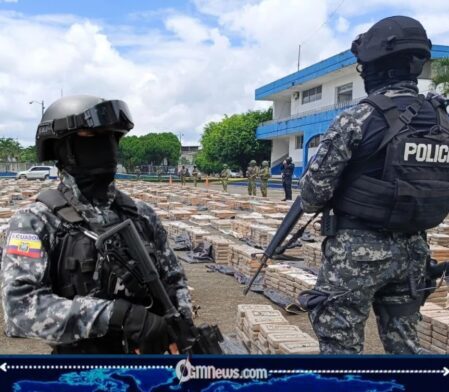
The cocaine network allegedly stretching from Ecuador through Mexico and ultimately toward the United States has come under a fresh financial assault after the U.S. Treasury Department sanctioned 15 individuals and entities and identified 10 Ecuador-based fishing vessels connected to an alleged trafficking operation. U.S. officials say the network moved thousands of kilograms of cocaine each month, using fishing operations near Ecuador’s Manta coast to transfer drugs to fast boats for onward movement through the Eastern Pacific. The action gives the latest chapter in Washington’s expanding campaign against transnational drug organizations a distinctly maritime flavour: the Treasury is going after the money while law-enforcement and military agencies pursue the routes. (AP News)
From Fishing Boats to American Streets: US Targets Ecuador Cocaine Network
According to U.S. authorities, the targeted network allegedly operated as a logistical bridge between Ecuadorian criminal organizations and powerful Mexican cartels. The Treasury action identifies links to Los Choneros and Los Lobos in Ecuador and to the Sinaloa Cartel and Jalisco New Generation Cartel in Mexico. Authorities allege that fishing vessels provided a cover for moving large cocaine shipments from Ecuador, with the drugs subsequently transferred at sea to high-speed vessels heading north. (AP News)
The sanctions are designed to make the alleged operation considerably more difficult to finance and conduct. Under U.S. sanctions rules, designated property and interests in property within U.S. jurisdiction, or controlled by U.S. persons, are generally blocked, while transactions involving designated parties can be prohibited. In other words, Washington is not merely telling traffickers to stop sailing; it is attempting to make their financial infrastructure sail into a very large regulatory iceberg. (OFAC)
Cocaine Network Route Exposed as Ecuadorian Criminal Groups Face New US Sanctions
The latest action builds on an established pattern of U.S. and Ecuadorian cooperation against cocaine trafficking. Treasury previously sanctioned Los Choneros in 2024 and Los Lobos later that year, citing their involvement in drug trafficking and their connections with Mexican cartels. Ecuadorian authorities have also reported major maritime seizures, including a March 2026 operation in which nearly 1.6 tonnes of cocaine was seized from vessels allegedly connected to Los Choneros. (U.S. Department of the Treasury)
The broader security relationship has expanded considerably under Ecuadorian President Daniel Noboa, with Washington providing intelligence, training and other security assistance as Ecuador confronts escalating organized-crime violence.
Recent reporting has also described increased U.S. military involvement in counternarcotics operations, while raising difficult questions about the risks faced by ordinary fishermen operating in waters increasingly contested by criminal groups and security forces. That distinction matters: disrupting a trafficking organization is one objective; ensuring that legitimate workers are not swept into the same net is another. (Human Rights Watch)
The latest sanctions therefore represent more than another entry on Washington’s growing list of narcotics designations.
They illustrate how Ecuador has become an important staging point in the cocaine trade and how criminal groups increasingly operate across borders rather than within neat national boundaries. With financial sanctions, maritime interdiction and intelligence cooperation all expanding, the pressure on the alleged cocaine network is increasing—but so is the challenge of replacing a lucrative criminal pipeline with something that cannot simply be rebuilt under a different name. OGM News will continue watching the sanctions, enforcement actions and any further revelations about the network.


Logging in is a breeze and the site stability is amazing even during peak hours....