


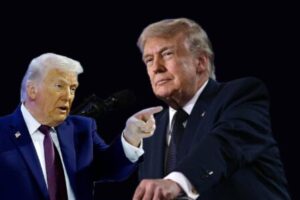

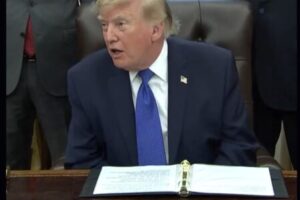


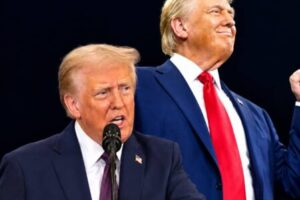
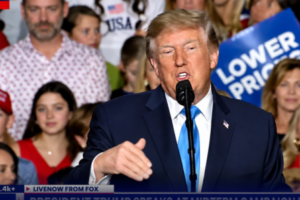













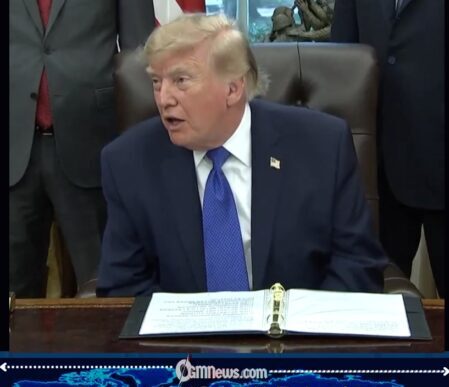
President Donald Trump has renewed his criticism of the economic conditions he inherited from the Biden administration, claiming that inflation was the worst in American history when he returned to office and saying prices have since improved under his administration.
Trump also predicted that oil prices would fall “very, very soon,” linking lower energy costs to broader relief for American consumers. His comments come as inflation and fuel prices remain major economic issues for households and businesses across the United States.
Trump Blames Biden for High Inflation
Trump said he inherited “the worst inflation in history under Biden” before declaring that his administration had brought inflation down and that the current situation was “really good.” He has made similar claims in previous speeches, including an August address in which he said his administration inherited the worst inflation in U.S. history.
Historical data, however, puts the Biden-era inflation surge in a broader context. U.S. consumer prices rose 9.1% year-over-year in June 2022, the highest annual increase since 1981. Inflation subsequently declined substantially, although the level of prices remained higher than before the inflation surge.
More recently, consumer prices increased 3.4% over the year in August 2026, according to data reported this week. Core inflation, which excludes food and energy, rose 3% annually. The figures show continued price increases even as inflation has eased considerably from its 2022 peak.
Trump Predicts Oil Prices Will Fall
Trump also told Americans that oil prices would come down “very, very soon,” continuing a message he has repeatedly delivered about energy costs. In an earlier August speech, he said oil was already falling and predicted that lower oil and gasoline prices would eventually put downward pressure on other prices.
Oil and gasoline prices have nevertheless remained subject to major geopolitical pressures. Recent reporting has linked elevated energy prices to disruptions associated with the U.S.-Iran conflict and reduced oil flows through the Strait of Hormuz. The national average for regular gasoline was reported at $4.44 per gallon in mid-September, while diesel reached $6.40 per gallon, according to AAA data cited by The Washington Post.
The outlook for oil prices has therefore remained uncertain. Analysts have warned that continuing disruptions to major oil infrastructure and shipping routes could keep prices elevated, while the Trump administration has maintained that increased energy flows and developments surrounding the conflict could eventually bring prices down.
Inflation and Affordability Remain Political Issues
Trump’s economic message comes as affordability remains an important issue for Americans and a major subject of political debate ahead of the November midterm elections. His administration has emphasized falling inflation and lower prices, while Democratic critics have argued that consumers continue to face high costs for fuel and other necessities.
The distinction between inflation falling and prices falling is central to the debate. A lower inflation rate means prices are generally increasing more slowly; it does not necessarily mean that the overall price level has returned to where it was before the inflation surge.
Trump’s latest comments therefore combine two messages: that his administration has reduced the pace of price increases and that oil prices are expected to decline further. Whether that translates into meaningful reductions in household expenses will depend partly on energy markets and broader economic conditions. OGM News will continue to monitor inflation, energy prices and the economic policies of the Trump administration as Americans head toward the 2026 midterm elections.
President Donald Trump has renewed his criticism of the economic conditions he inherited from the Biden administration, claiming that inflation was the worst in American history when he returned to office and saying prices have since improved under his administration.
Trump also predicted that oil prices would fall “very, very soon,” linking lower energy costs to broader relief for American consumers. His comments come as inflation and fuel prices remain major economic issues for households and businesses across the United States.

[…] […]