



























California Governor Gavin Newsom has entered the increasingly strange American debate over artificial intelligence with a simple administrative message: in California, artificial intelligence will continue to be called artificial intelligence. Newsom signed an executive order on September 30 directing state agencies to retain the familiar terminology, just one day after current President Donald J. Trump signed a federal order directing executive-branch agencies to replace “Artificial Intelligence” and “AI” with “Super Intelligence” and “SI.”
The development has turned what might normally be a technological vocabulary matter into another political comedy of federal-versus-state proportions. California now appears determined to prove that while Washington can rename the machine, Sacramento can rename the renaming—and everybody can continue arguing about what to call the machine while the machine quietly keeps computing.
When AI Became a Naming Contest
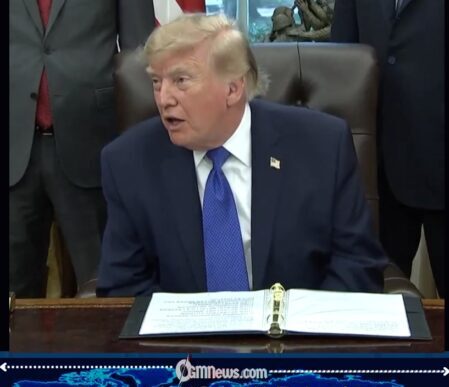
President Trump’s September 29 executive order says the federal government should use “Super Intelligence” and “SI” instead of “Artificial Intelligence” and “AI” in official correspondence, websites, reports, policy documents and other non-statutory federal communications. The order also directs officials to develop a federal definition of “Super Intelligence” within 60 days, while noting that the new terminology initially covers technologies already encompassed by the existing statutory definition of artificial intelligence.
Trump had already floated the idea publicly, arguing that the word “artificial” made the technology sound fake. The White House subsequently formalised the change, presenting it as recognition of the rapidly advancing capabilities of the technology. In other words, Washington has not invented a new machine; it has issued paperwork telling government employees to give the old machine a new government-approved name.
California Says the Algorithm Can Keep Its Old Name
Newsom responded with his own executive order requiring California agencies to continue using “Artificial Intelligence” and “AI.” His administration presented the move as part of a broader state approach to AI safety, coming alongside new measures concerning workers, consumers, healthcare and oversight of AI systems.
The disagreement is therefore about more than two letters and a couple of words. California has been developing its own regulatory framework for AI, including recent action aimed at independent oversight and potential safeguards for dangerous AI incidents. Newsom has used those policies to contrast California’s approach with the federal administration’s preference for encouraging technological development and voluntary industry commitments. Those competing approaches are documented positions of the two governments; the political dispute over which approach should prevail remains a matter for voters and policymakers.
For now, America has the unusual spectacle of two levels of government apparently operating two dictionaries for the same technology. Whether the public eventually adopts “Super Intelligence” or simply continues saying “AI” remains to be seen. OGM News will continue watching this developing terminology battle—because when politicians start fighting over what to call artificial intelligence, the next thing to check may be whether the paperwork itself needs some intelligence.

[…] […]