









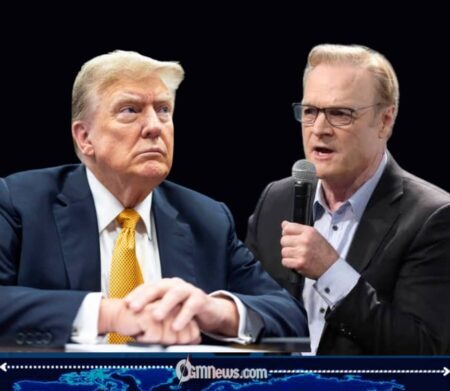
A fresh wave of political and cultural debate has emerged in the United States following sharp criticism from television host Lawrence O’Donnell, who publicly condemned President Donald Trump over his leadership and personal faith. The comments, delivered during a recent broadcast, have drawn widespread attention for their intensity and the broader questions they raise about the intersection of politics, religion, and media discourse.
The remarks come at a time of heightened political tension, particularly amid ongoing U.S. involvement in the Iran conflict. While supporters of Donald Trump have dismissed the criticism as partisan commentary, others argue it reflects growing unease among segments of the media regarding presidential rhetoric and decision-making.
O’Donnell’s Critique: Leadership and Religious Identity in Focus
During his program, Lawrence O’Donnell delivered a forceful critique of President Donald Trump, describing his actions in stark terms and questioning both his leadership approach and his understanding of Christian teachings. The commentary included assertions about the president’s religious engagement, suggesting a lack of alignment with traditional expressions of faith.
Such remarks, while striking, fall within the realm of opinion-based political analysis common in broadcast media. Lawrence O’Donnell is known for delivering pointed monologues that often reflect a critical perspective on the administration, particularly during periods of international crisis.
The critique also highlights a recurring theme in American political discourse, where personal belief systems and public leadership are frequently examined together, especially when policy decisions carry moral or ethical implications.
Media Landscape: Strong Opinions in a Polarized Era
The reaction to Lawrence O’Donnell’s comments underscores the increasingly polarized nature of the U.S. media environment. Opinion-driven programming has become a central feature of political coverage, with commentators across networks offering sharply divergent views on national leadership.
Outlets such as The Daily Beast and Yahoo News have documented the broader trend of intensified rhetoric among television hosts and analysts. These platforms often serve as amplifiers for debates that extend beyond policy into personal and ideological territory.
Critics argue that such commentary risks deepening divisions, while defenders maintain that it represents a legitimate exercise of free expression and critical scrutiny in a democratic society.
Religion and Politics: A Longstanding American Debate
Questions surrounding the religious identity of President Donald Trump are not new. Throughout his political career, he has been identified as a Christian, though his level of religious observance has been a subject of public discussion and differing interpretations.
Analysts note that religion has long played a significant role in U.S. politics, influencing voter behavior, public perception, and policy debates. Statements like those made by Lawrence O’Donnell reflect this enduring dynamic, where faith becomes a lens through which leadership is evaluated.
At the same time, experts caution that religious identity is inherently personal and not easily measured by public appearances or individual commentary, making such debates complex and often contentious.
Political Context: Criticism Amid International Tensions
The timing of the remarks is significant, as President Donald Trump continues to oversee U.S. policy during a period of escalating tensions with Iran. Decisions related to military operations have intensified scrutiny from both political opponents and media commentators.
In this context, criticism from figures like Lawrence O’Donnell can be seen as part of a broader effort to question the administration’s strategic direction. Supporters, however, argue that such critiques may undermine confidence during a sensitive period in international relations.
The interplay between domestic political debate and foreign policy challenges highlights the complexity of leadership during times of conflict.
A Debate Reflecting Broader Divisions
The controversy surrounding Lawrence O’Donnell’s remarks illustrates the deep divisions that characterize contemporary American political discourse. While the statements have drawn both criticism and support, they ultimately reflect a broader environment in which media figures play an influential role in shaping public debate.
As President Donald Trump continues his second term in office, the intersection of media commentary, political accountability, and public perception is likely to remain a defining feature of the national conversation. The episode serves as a reminder of the powerful role that opinion and analysis play in modern journalism, particularly during periods of heightened political tension.
FoSEnYRcnzkCFxcrkTIkEJxP