



















President Donald Trump has claimed that he could bring the Iran war to an immediate end but is deliberately taking a longer and more restrained approach because several Middle Eastern nations have asked him not to escalate military operations.
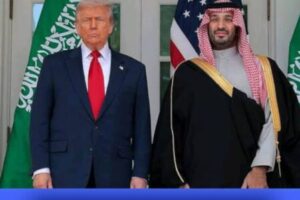
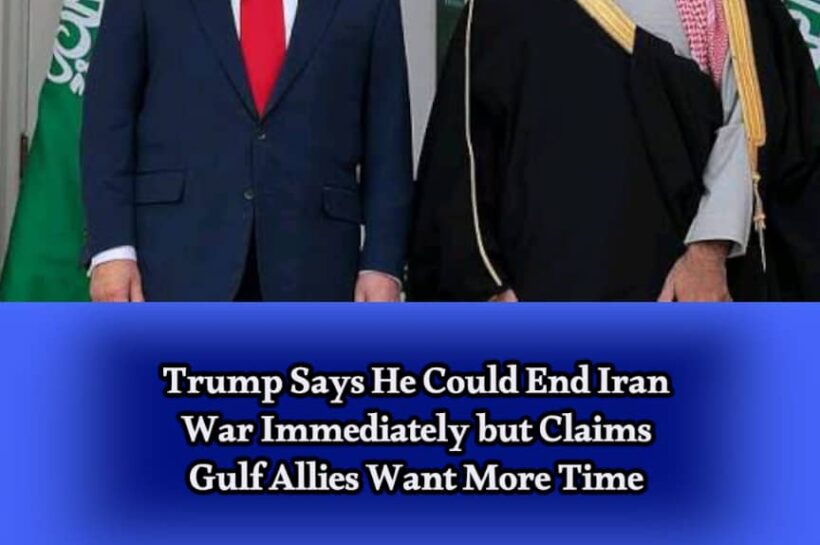
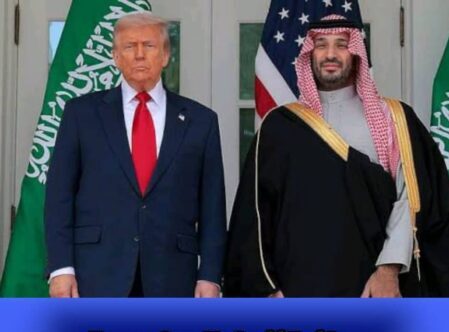
Speaking during an interview with commentator Stephen A. Smith, Trump said Saudi Arabia, Qatar, Kuwait, the United Arab Emirates and Bahrain would prefer the United States to maintain its current approach rather than launch a more aggressive military campaign against Iran.
“I could end it immediately, but at the request of the nations that I’m looking to protect, we are doing it a little bit longer way, a little bit more civilly,” Trump said.
He added that Saudi Arabia had asked him to maintain the current situation for a while because Iran was “disintegrating,” before naming Qatar, Kuwait, the UAE and Bahrain as countries that also preferred the waiting period.
The comments offer a glimpse into the administration’s stated reasoning for maintaining pressure on Tehran without immediately expanding the military campaign. They also come amid diplomatic differences over whether the conflict should be escalated or contained.
Trump Says Gulf Nations Want More Time
During the interview, Trump presented the requests from regional governments as a major reason behind his decision to maintain the current strategy.
He claimed that Saudi Arabia had specifically asked him to leave the situation as it was for a while, adding that other Gulf countries shared that preference.
The president also included Israel among the countries the United States was seeking to protect. However, in the quoted exchange, he did not specifically say that Israel had requested the same delay as the five Gulf countries he named.
According to reporting by Axios, Trump has favoured continuing a naval blockade and economic pressure campaign against Iran while exploring whether a diplomatic agreement can be reached.
Trump Claims Iran Is Facing Severe Economic Pressure
Trump argued that the existing pressure campaign had inflicted serious financial damage on Iran.
He claimed the country was experiencing inflation exceeding 300 per cent and alleged that it had struggled to pay members of its security forces, soldiers and police officers.
He also described Iran as a country in serious trouble, suggesting that the economic pressure was weakening its ability to sustain the conflict.
These figures and claims were presented by Trump during the interview and should not be treated as independently verified economic data. Nevertheless, they reveal how the president is portraying the administration’s strategy: sustained economic pressure rather than an immediate expansion of military strikes.
Trump Says Iran’s Military Capabilities Have Been Devastated
The president also claimed that Iran had lost much of its military capacity, including its navy, air force and air-defence systems.
Trump argued that the United States had already carried out extensive attacks but deliberately avoided destroying certain critical infrastructure.
He specifically mentioned bridges, electricity-related infrastructure and Iran’s energy sector, saying the administration had largely left those targets untouched.
Trump then suggested that a more extensive campaign could destroy Iran’s energy infrastructure, bridges and manufacturing capacity within three days.
Those statements describe the president’s own assessment and military intentions; they do not independently establish the full extent of the damage to Iran’s military capabilities.
The Conflict Between Restraint and Further Escalation
Trump’s remarks come as regional diplomacy continues to shape decisions about the conflict. While the president says Gulf countries prefer the current waiting period, the debate over whether to resume or expand military operations remains active.
Axios reported that Israeli Prime Minister Benjamin Netanyahu has been pressing Trump to resume combat operations against Iran, while the president has so far favoured maintaining economic pressure and exploring a possible agreement.
The report also said Mossad Director Roman Gofman was in Washington for discussions with senior American officials about the conflict, highlighting the continuing diplomatic and security consultations surrounding Iran.
What Does Trump Mean by Ending the War Immediately?
One important distinction in Trump’s statement is the difference between ending the conflict and intensifying military operations.
Although he said he could end the war immediately, he also described additional attacks that could destroy major Iranian infrastructure. His remarks suggest that he believes the United States has the military capacity to escalate further, but is choosing not to do so at this stage.
The administration’s current approach, as described in the reporting, involves maintaining pressure while considering the possibility of a diplomatic settlement. Whether that strategy produces an agreement or prolongs the confrontation remains uncertain.
For now, Donald is presenting the restraint as a decision made partly at the request of countries Washington says it is protecting. His latest comments also make clear that the possibility of further military action remains on the table.
Follow OGM News for more updates on Donald Trump, the Iran war, Middle Eastern diplomacy and America’s foreign policy.

https://addlinks.pro/QOrqA