











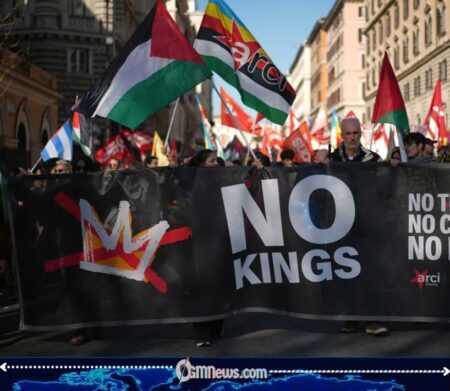
Millions of demonstrators flooded streets across the United States and beyond on Saturday as part of the third wave of “No Kings” protests, a coordinated movement opposing policies under President Donald Trump. Organisers described the rallies as the largest yet, reflecting growing public discontent over recent government decisions, including military action abroad, economic pressures at home, and immigration enforcement measures.
The No Kings” protests, which spanned all 50 states and extended to 16 countries, marked a significant escalation in anti-administration activism. Participants carried banners, chanted slogans, and gathered in major cities and smaller communities alike, underscoring the breadth of opposition to what organisers characterize as increasingly “authoritarian” governance.
Scale and Scope of the No kings Demonstrations
According to organisers, more than 3,000 coordinated protests took place nationwide, supported by a broad coalition of advocacy groups, labour unions, and grassroots organisations. Among the leading organisers were Indivisible and 50501 Movement, both of which have played central roles in mobilising opposition to the administration.
The scale of participation signals a sustained and growing protest movement. The previous “No Kings” rally in October reportedly drew approximately 7 million people across the country. Saturday’s turnout was expected to surpass that figure, though official estimates are still being compiled.
Key Issues Driving the Protests
Central to the demonstrations was opposition to the Trump administration’s decision to enter into a conflict with Iran, a move that has sparked widespread concern among critics about the potential for prolonged military engagement. Protesters voiced fears over national security implications and the human and economic costs of war.
In addition, rising living costs have become a major point of frustration. Demonstrators cited inflation, housing affordability, and wage stagnation as pressing concerns. Federal immigration enforcement policies also drew criticism, with many participants calling for reforms they say would better protect vulnerable communities and uphold human rights standards.
A Broad Coalition of Voices
The No kings protests brought together a diverse cross-section of American society, including students, workers, activists, and community leaders. Labour unions joined forces with civil society organisations, amplifying calls for economic justice and workers’ rights.
Grassroots participation was a defining feature of the rallies. Local organisers coordinated events in cities, suburbs, and rural areas, ensuring that the movement extended beyond traditional political strongholds. This decentralised approach contributed to the widespread visibility and impact of the demonstrations.
International Solidarity and Global Reach
While the core of the No kings protests took place within the United States, solidarity demonstrations were held in 16 countries, reflecting global interest in U.S. domestic and foreign policy. Activists abroad organised marches and gatherings to express alignment with the movement’s goals and concerns.
The international dimension highlights the interconnected nature of political issues in an increasingly globalised world. Observers note that U.S. policy decisions often carry implications beyond its borders, prompting reactions from communities worldwide.
Political Implications and Response
The scale of the protests may carry significant political implications for the Trump administration and its policy agenda. Large-scale public demonstrations often serve as indicators of shifting public sentiment and can influence legislative priorities and political discourse.
While the administration has not issued a detailed response to the latest protests, previous statements have defended its policies as necessary for national security and economic stability. Analysts suggest that the persistence and growth of the “No Kings” movement could shape the political landscape in the months ahead.
Looking Ahead: Sustained Activism or Turning Point?
As the third major “No Kings” protest concludes, questions remain about the movement’s long-term trajectory. Organisers have signalled plans for continued mobilisation, indicating that the rallies are part of a broader, ongoing campaign rather than isolated events.
Whether the protests will translate into concrete policy changes or electoral outcomes remains uncertain. However, their scale and consistency suggest a deeply engaged segment of the population determined to influence the direction of national governance.

Logging in is a breeze and the site stability is amazing even during peak hours....