

























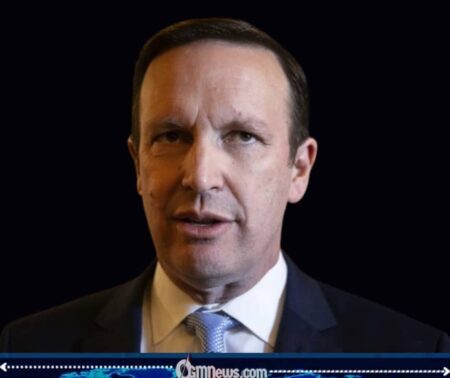
Chris Murphy has sharply criticized the conduct of the United States’ military campaign against Iran, warning that the conflict risks spiraling into a prolonged and costly war. Speaking after briefings with administration officials and military leaders, Murphy said he has “great sympathy” for American troops and commanders operating in the region but argued that the broader strategy guiding the war remains unclear.
Murphy’s remarks reflect growing debate in Washington over the objectives and direction of the conflict. The senator suggested that the war is unfolding poorly because of what he described as inconsistent leadership decisions coming from the administration of Donald Trump, adding that soldiers and military planners deserve clearer guidance and a coherent strategy.
Murphy Expresses Concern for U.S. Soldiers
In public remarks following closed-door briefings in Washington, Chris Murphy emphasized that his criticism was not directed at American troops or military commanders but at the strategic direction being set by political leaders.
Murphy said the men and women serving in uniform are operating under extremely challenging circumstances and deserve consistent leadership. According to the senator, U.S. forces stationed across the Middle East face increasing risks from retaliatory attacks, missile strikes, and regional instability linked to the war.
The Connecticut lawmaker argued that policymakers in Washington must ensure that military operations are guided by a clear set of goals and a realistic plan for achieving them.
Senator Warns War Is “Going Horribly”
During his comments to reporters, Chris Murphy said the conflict appears to be unfolding in ways that raise serious concerns about its long-term direction. He warned that the situation on the ground suggests the war may not be achieving the outcomes initially envisioned by policymakers.
Murphy argued that the absence of clearly defined objectives could lead to an extended military campaign with unpredictable consequences. Analysts say similar concerns have been raised by several lawmakers who believe Congress should play a greater role in determining the scope and duration of the conflict.
While acknowledging the complexity of the security environment, Chris Murphy said he believes the United States must reassess its approach to avoid deeper military entanglement.
Debate Over Leadership and Strategy
Murphy’s criticism has also focused on the decision-making process guiding the conflict. The senator argued that military leaders are being asked to execute operations without a sufficiently clear strategic framework.
Supporters of the administration, however, contend that the campaign is necessary to counter regional threats and protect U.S. allies. Officials from the administration of Donald Trump, currently serving his second term as president, have maintained that military pressure is an essential part of deterring further aggression.
The contrasting views highlight the political divide in Washington over the appropriate response to Iran and the broader implications for U.S. foreign policy in the Middle East.
Growing Concerns About a Prolonged Conflict
Experts warn that wars in the Middle East have historically carried the risk of expanding beyond their initial scope. Iran’s military capabilities—including missile systems and allied regional groups mean the conflict could spread if retaliatory actions intensify.
Lawmakers from both parties have expressed concern that the United States could become involved in a long-term confrontation without a clear exit strategy. For many policymakers, the central question remains whether the current approach will achieve its intended security goals.
Murphy has repeatedly argued that the United States should prioritize diplomacy and regional cooperation alongside military pressure in order to avoid a prolonged conflict.
Political Debate Intensifies in Washington
The senator’s remarks have added momentum to a broader debate on Capitol Hill regarding congressional oversight of military operations. Some lawmakers are calling for additional briefings and legislative discussions to clarify the administration’s objectives in the war.
Others argue that maintaining military pressure is necessary to protect American interests and deter further escalation. As the war continues, the issue is likely to remain a central topic in national security discussions.
For now, Chris Murphy’s comments underscore the growing scrutiny surrounding the conduct of the conflict and the long-term strategy guiding U.S. involvement in the region.


[…] […]