




























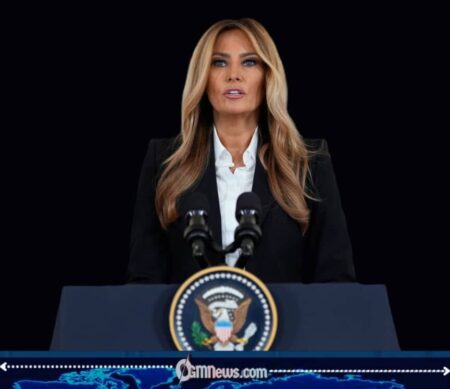
Melania Trump has outlined a forward-looking vision for artificial intelligence, suggesting that the next phase of technological evolution could see AI systems embodied in human-like forms. Speaking in the context of education and innovation, she described a future where artificial intelligence moves beyond mobile devices into humanoid systems capable of delivering real-world utility.
Her remarks, including a hypothetical example of a humanoid educator named “Plato,” reflect growing global conversations about the integration of AI into everyday human environments. While some elements of the vision remain conceptual, they align with broader developments across the technology sector.
AI Beyond Screens: Transition to Physical Systems
Melania Trump emphasized that artificial intelligence is no longer confined to smartphones and digital assistants. Instead, it is gradually expanding into physical systems, including robotics and automation technologies designed to interact directly with humans.
Industry leaders and researchers have increasingly pointed to this transition as the next frontier in AI development. From service robots to autonomous machines, the shift represents a move toward embedding intelligence into the physical world—where machines can perform tasks, respond to environments, and assist in daily life.
This evolution reflects a broader trend in which AI becomes not just a tool, but a presence within human spaces.
The Concept of Humanoid Educators
One of the most striking elements of Melania Trump’s remarks was the idea of a humanoid educator symbolically named “Plato.” This concept envisions AI systems designed to teach, guide, and interact with students in ways that resemble human instructors.
Experts in educational technology have long explored similar possibilities. AI-driven tutors already provide personalized learning experiences, adapting to individual student needs. A humanoid version of such systems could extend these capabilities by adding physical presence and more natural interaction.
However, specialists caution that while the idea is compelling, significant technical, ethical, and pedagogical challenges remain before such systems can be widely implemented.
Education at the Center of AI Policy
Education has emerged as a central theme in Melania Trump’s engagement with artificial intelligence. Through initiatives and public remarks, she has highlighted the importance of preparing younger generations for a future shaped by advanced technologies.
Programs linked to AI education aim to:
Equip students with digital and analytical skills
Introduce ethical considerations around technology
Foster innovation and adaptability
By focusing on education, Melania Trump positions AI not just as a technological issue, but as a societal transformation requiring long-term planning and investment.
Balancing Innovation With Responsibility
While expressing optimism about AI’s potential, Melania Trump has also acknowledged the risks associated with rapid technological advancement. Concerns include the impact of AI on human cognition, privacy, and the spread of misinformation.
She has stressed the importance of ethical oversight and responsible development, particularly in systems that interact closely with humans. As AI becomes more human-like in appearance and function, questions about trust, accountability, and control become increasingly significant.
This dual perspective embracing innovation while urging caution reflects broader global debates about how to manage emerging technologies.
Wider Implications: From Daily Life to Global Strategy
The vision outlined by Melania Trump extends beyond education into multiple sectors, including healthcare, industry, and even national security. AI-driven systems are expected to play a growing role in decision-making, automation, and strategic planning.
President Donald Trump, currently serving a second term, has also emphasized technological leadership as a national priority, reinforcing the administration’s focus on AI development.
As nations compete to lead in artificial intelligence, the concept of humanoid systems underscores a broader shift toward integrating technology deeply into human society.
A Conceptual Glimpse Into the Future of AI
The remarks by Melania Trump offer a conceptual glimpse into what the future of artificial intelligence might look like—one where machines are not only intelligent but also physically present and human-like in their interactions.
While elements such as humanoid educators remain speculative, they reflect real trajectories in AI research and development. As technology continues to evolve, the challenge for policymakers, educators, and industry leaders will be to ensure that innovation is guided by ethical considerations and aligned with societal needs.

Casinoabc999? Good Site. The interface is sleek, and there is a lot of stuff to...