























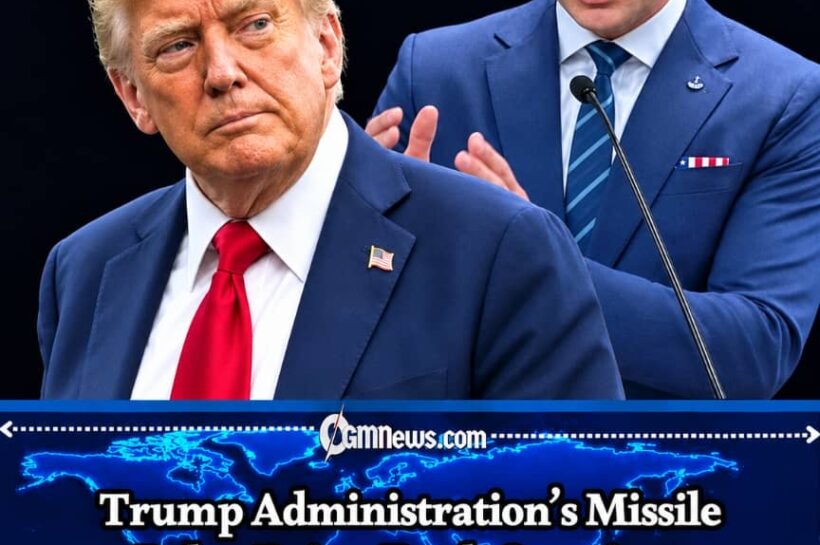





Larry Johnson, CIA analyst, has claimed that Donald Trump allegedly attempted to access nuclear codes during a White House meeting but was blocked by a senior military official, identified as Dan Caine. The claim, which has not been independently verified, has quickly drawn attention due to the gravity of the subject matter and the implications it carries.
The allegation touches on one of the most sensitive aspects of national security, where strict protocols and multiple layers of authorization are typically in place. Discussions surrounding nuclear command authority are often tightly controlled and rarely made public, making such claims particularly difficult to confirm or refute.
Larry Johnson’s assertion has circulated widely, prompting reactions from commentators and analysts who emphasize the need for careful scrutiny when dealing with claims of this magnitude.
Larry Johnson and the Nature of the Allegation
Larry Johnson has framed his account as an insider perspective, suggesting that internal checks prevented what he described as an unusual request during a high-level meeting. However, without corroborating evidence, such claims remain in the realm of allegation rather than established fact.
The seriousness of the subject has led to calls for caution, with experts noting that misinformation or incomplete narratives can easily gain traction when tied to sensitive national security topics.
Understanding the context and verifying details are essential steps before drawing conclusions about events involving high-level decision-making.
Nuclear Command Protocols and Safeguards
Larry Johnson’s claim has brought renewed attention to how nuclear command systems are structured, particularly in the United States. These systems are designed with multiple safeguards to ensure that no single individual can act outside established procedures.
Protocols typically involve layers of authentication, verification, and consultation, reflecting the importance of preventing unauthorized actions.
Such frameworks are intended to provide both operational readiness and security, balancing the need for rapid response with stringent oversight.
Larry Johnson and Public Reaction
Larry Johnson’s comments have generated mixed reactions, with some individuals expressing concern about the implications, while others question the credibility and sourcing of the claim.
Public discourse has highlighted the challenges of evaluating information that involves classified or highly sensitive material.
The situation illustrates how quickly narratives can develop around unverified reports, especially when they involve prominent figures and critical national issues.
Political and Institutional Context
Larry Johnson’s allegation emerges within a broader political environment where debates over leadership, authority, and institutional checks are ongoing. Claims of this nature can intersect with existing political narratives, influencing how they are received and interpreted.
Institutions such as the military and intelligence agencies are often seen as key safeguards in maintaining stability and adherence to established protocols.
The interplay between political leadership and institutional frameworks remains a central theme in discussions about governance and accountability.
Larry Johnson’s claim is likely to continue generating discussion as observers seek further clarification or evidence. Whether additional information emerges will play a key role in shaping how the allegation is understood.
In the absence of verified details, experts emphasize the importance of relying on credible sources and maintaining a cautious approach to interpreting such reports.
Ultimately, the situation underscores the broader challenge of navigating complex and sensitive information in a rapidly evolving media landscape.

Logging in is a breeze and the site stability is amazing even during peak hours....