














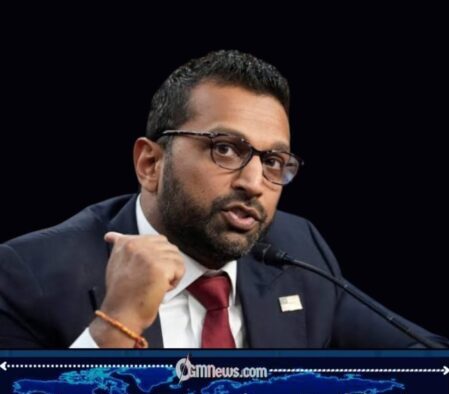
Kash Patel has become the center of a fierce political debate after reports that the Federal Bureau of Investigation has redirected personnel toward investigations involving critics of President Donald J. Trump, a move that supporters describe as a renewed commitment to accountability but opponents argue risks blurring the line between law enforcement and politics. The controversy has intensified scrutiny of Patel’s leadership while raising broader questions about public trust, institutional independence, and the future direction of one of America’s most powerful investigative agencies. Although many of the allegations surrounding the reported investigations remain disputed, the political fallout has already become impossible to ignore.
Has the FBI Become Washington’s New Political Battlefield?
Kash Patel assumed leadership of the FBI promising significant reforms after years of criticism from many conservatives who argued that the bureau had become too political. His supporters maintain that reorganizing investigative priorities is necessary to restore confidence in federal law enforcement and ensure that politically sensitive cases receive the same level of scrutiny as any other investigation. They argue that no public official or political activist should be considered beyond investigation if credible evidence exists.
Kash Patel’s critics, however, contend that the reported reassignment of agents risks creating the appearance that political considerations are influencing investigative decisions. Former FBI agent Dan Brunner has publicly warned that frequent shifts toward politically charged investigations could damage morale among career agents whose primary focus has traditionally been violent crime, terrorism, organized crime, cybercrime, and protecting local communities. While Patel’s defenders reject accusations of political motivation, the disagreement has added another chapter to Washington’s long-running battle over the role of federal law enforcement.
Justice or Political Theater? Washington Divided Over FBI Direction
Kash Patel now finds himself leading an agency that has spent years caught between competing political narratives. The FBI has faced criticism from both major political parties at different times, with each accusing the bureau of bias whenever investigations affected prominent political figures. This history means that even routine administrative decisions are often viewed through a highly partisan lens, making it increasingly difficult for the agency to convince every side that its actions are based solely on evidence and the law.
Kash Patel’s leadership is therefore being judged not only by the investigations his bureau chooses to pursue but also by how transparently those decisions are explained to the public. Legal experts have repeatedly noted that public confidence depends as much on the appearance of impartiality as on actual impartiality. Supporters insist Patel is correcting institutional failures and fulfilling promises of accountability, while opponents argue that highly visible investigations involving political rivals could deepen national divisions even if conducted within legal boundaries. Somewhere between those competing narratives lies a public eager for facts rather than slogans, a challenge that continues to test both the bureau and the country’s political culture.
Whether Kash Patel ultimately reshapes the FBI’s legacy or simply becomes another figure in America’s enduring struggle over politics and justice will depend on the evidence produced by future investigations rather than the rhetoric surrounding them. OGM News will continue monitoring developments, official statements, and any verifiable findings as this story evolves, recognizing that in Washington today’s political storm often becomes tomorrow’s history—but only the facts will determine which narrative ultimately endures.

Logging in is a breeze and the site stability is amazing even during peak hours....