










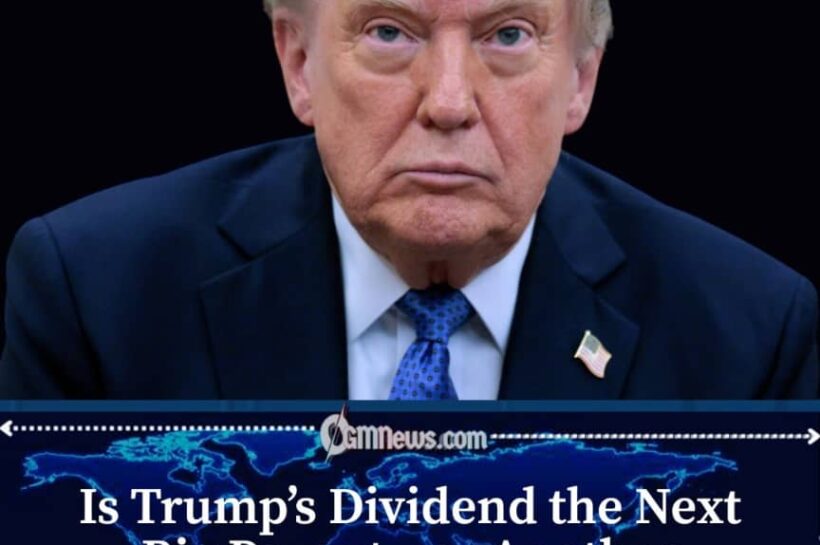

















Tariff Dividend has become the latest economic sales pitch from the Trump administration, with Vice President JD Vance defending President Donald Trump’s proposal to give Americans $5,000 if Republicans retain control of Congress in the November midterm elections. Vance argued that tariffs have generated substantial government revenue and said the president wants Americans to share in what he described as the wealth created by the policy.
Trump announced the proposed payment at the Republican midterm convention in Dallas, saying every adult citizen would receive $5,000 if Republicans win both the House and Senate. He said the money would have to be spent in the United States, but provided no detailed funding mechanism or explanation of how the program would be authorized.
Vance Defends the $5,000 Dividend
Vance said Trump’s proposal was straightforward: tariffs have generated revenue, and Americans should receive a portion of the benefits. He characterized the idea as a way of allowing citizens to participate in what the administration portrays as the economic gains from Trump’s tariff strategy.
The proposal is also explicitly tied to the midterm elections. Trump said Americans would receive the dividend if Republicans maintain control of both chambers of Congress, effectively making the promised payment contingent on a Republican electoral victory. That has prompted criticism that the proposal could be interpreted as a political incentive to voters.
The Trillion-Dollar Question
The biggest challenge facing the Tariff Dividend proposal is the arithmetic. Estimates suggest that sending $5,000 to roughly 240 million adult U.S. citizens would cost around $1.2 trillion. Other estimates place the potential cost even higher depending on eligibility.
That figure is far above the amount of tariff revenue that analysts expect to be available for such a program. The Committee for a Responsible Federal Budget has warned that the plan could add significantly to the federal deficit, while the Yale Budget Lab estimates that tariffs could generate about $1.9 trillion over an entire decade—not in a single year.
There is also a legal hurdle. Trump cannot simply order a $5,000 payment to every adult without congressional authorization for the spending. The administration has not yet explained what legislation would be required or how the proposed dividend would be structured.
Vance’s defense therefore sets up a much bigger debate than whether the idea sounds politically attractive. The question is whether tariff revenue can realistically support a payment of this size without increasing borrowing, inflationary pressure or other fiscal costs. For now, the Trump administration is selling the proposal as Americans receiving a share of tariff-generated prosperity, while economists and budget analysts are asking for the numbers behind the promise.
[…] […]