













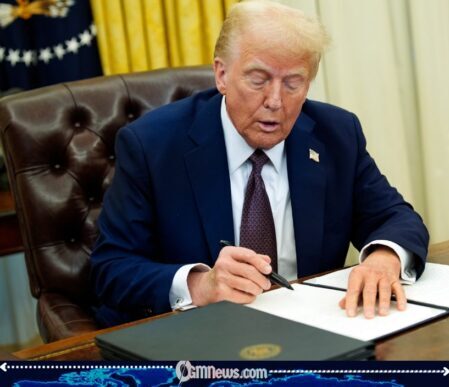
The Trump administration is facing scrutiny over the reported allocation of $176.9 million from the U.S. State Department’s Human Rights and Democracy Fund (HRDF) to 43 projects whose objectives include anti-communism, support for white Afrikaner causes in South Africa, opposition to Brazil’s Supreme Court, migration-related campaigns and the promotion of what officials describe as Western “civilizational confidence.” The reported allocations represent most of the $205 million Congress appropriated for the fund, prompting critics to question whether the meaning of human rights is being rewritten with a distinctly ideological pen.
When Human Rights Meets the Trump Administration’s Ideological Menu
According to reporting based on documents and sources familiar with the grant process, the largest proposed award is $40 million for a consortium led by the Victims of Communism Memorial Foundation, an organisation that has previously received much smaller amounts from the State Department. ProPublica reported in July that the proposed sum would dwarf the foundation’s publicly available assets, while the latest reporting says the awards received attention at senior levels of the Trump administration.
The proposed funding list also includes projects concerning white Afrikaners in South Africa, a $1 million programme challenging alleged judicial overreach and censorship by Brazil’s Supreme Court, and European initiatives addressing migration, anti-communism and opposition to what the administration calls “gender ideology.” One European programme would provide $2 million to organisations promoting Western “civilizational” values. In other words, the traditional human-rights toolbox appears to have acquired a political megaphone and a rather complicated instruction manual.
Congress Raises Eyebrows as the Deadline Clock Ticks
The controversy intensified because the money had to be obligated by September 30, the end of the U.S. fiscal year. Reporting on Wednesday said the administration moved to obligate the funds despite congressional concerns and a partial hold placed by Senator Jeanne Shaheen, the senior Democrat on the Senate Foreign Relations Committee. Shaheen argued that Congress created the fund to support human-rights defenders, victims of abuses and democratic development, rather than political causes in established democracies.
The State Department, meanwhile, has said the programmes remain subject to federal grant requirements and standard vetting, while defending its European programming as an effort to support political liberty, free speech, sovereignty and what it calls European “civilizational self-confidence.” The dispute therefore goes beyond the size of the cheques: it concerns what qualifies as human rights, who gets to define that term and whether American taxpayer money should be used to advance particular ideological battles overseas.
The reported shift follows earlier investigations showing that Trump administration officials had considered directing foreign-assistance money toward conservative and anti-immigration organisations, including a proposed programme involving Afrikaner issues in South Africa. ProPublica also reported that some controversial proposals were subsequently dropped following congressional objections, demonstrating that the final funding picture has continued to change.
For OGM News FC, the bigger question is almost impossible to miss: when a fund created in the name of human rights and democracy begins financing anti-communist campaigns, migration battles, court challenges and ideological allies, is Washington expanding the definition of human rights—or simply giving an old government programme a new political wardrobe? Whatever the final accounting shows, the controversy over the Trump administration’s use of the HRDF is unlikely to disappear with the fiscal-year deadline. Readers should watch out for future updates as the grants, congressional objections and international reactions continue to unfold.
[…] […]