


























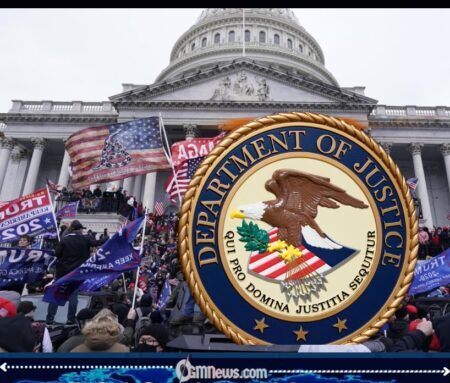
The U.S. Justice Department has taken a significant legal step by asking a federal court to vacate convictions tied to the January 6, 2021, Capitol riot, including seditious conspiracy charges against members of the Proud Boys and Oath Keepers. The move affects a dozen individuals whose cases had remained among the most serious outcomes of the extensive federal investigation into the attack.
The decision follows earlier clemency actions by Donald Trump, now serving a second term as U.S. president, who issued pardons or commutations for most individuals convicted in connection with the riot. The Justice Department’s latest filings signal an effort to close out remaining high-profile cases that have continued to shape legal and political debate.
Background: From Prosecution to Clemency
The January 6 investigation marked one of the largest in the history of the Justice Department, with more than 1,500 individuals arrested in connection with the breach of the U.S. Capitol. Charges ranged from unlawful entry to violent assaults on law enforcement officers, with some defendants accused of using dangerous weapons.
While hundreds of defendants have completed their sentences or avoided incarceration, a smaller group faced severe charges, including seditious conspiracy. These cases were widely viewed as central to the government’s efforts to address organized attempts to disrupt the certification of the 2020 presidential election.
Following his return to office, President Trump granted pardons to most individuals involved in the riot. However, 14 individuals, including those now referenced in the Justice Department’s filings, initially received commuted sentences rather than full pardons, leaving their convictions intact.
Key Figures: High-Profile Defendants at the Center
Among those affected by the Justice Department’s request is Stewart Rhodes, founder of the Oath Keepers, who had been sentenced to 18 years in prison. Prosecutors previously argued that Rhodes coordinated efforts to oppose the lawful transfer of presidential power following the 2020 election.
Also included are prominent members of the Proud Boys, such as Ethan Nordean, Joseph Biggs, and Zachary Rehl, all of whom were convicted of seditious conspiracy and received lengthy prison sentences.
Another notable figure, Dominic Pezzola, became widely recognized after footage showed him breaking a Capitol window during the riot. He was convicted on multiple counts, including assaulting officers and obstructing official proceedings.
Legal Strategy: Motions to Vacate and End Prosecutions By Justice Department
In three separate appellate cases, federal prosecutors requested that courts vacate the convictions “with prejudice,” a legal term indicating that the charges cannot be refiled in the future. The filings were submitted by the U.S. Attorney’s Office in Washington, D.C., under the leadership of Jeanine Pirro.
Prosecutors argued that continuing to pursue these cases would not serve the interests of justice. Notably, defense attorneys for the affected individuals did not oppose the motions, suggesting a rare alignment between prosecution and defense in these proceedings.
The Justice Department has not publicly elaborated on the broader implications of this decision, but the filings represent a major shift in how the remaining cases from the Capitol riot are being handled.
Reactions: Praise and Criticism Emerge
The move has drawn mixed reactions from legal experts and political observers. Greg Rosen criticized the decision, describing it as indicative of a troubling precedent regarding political violence and accountability.
Conversely, Trump-aligned attorney Peter Ticktin praised the Justice Department’s actions, arguing that the prosecutions should not have occurred. He reiterated support for individuals involved in the January 6 events, reflecting ongoing divisions over how the incident is interpreted.
These contrasting responses underscore the continued polarization surrounding the Capitol riot and its legal aftermath, even years after the event.
Broader Context: Remaining Cases and Unresolved Questions
Not all individuals connected to the January 6 prosecutions were included in the latest motions. For example, Thomas Caldwell, who had been acquitted of seditious conspiracy but convicted on other charges, was previously pardoned by President Trump in 2025.
Another figure, Jeremy Bertino, who pleaded guilty to seditious conspiracy, was also not part of the current filings. These omissions suggest that the process of resolving all remaining cases may continue in stages.
The Justice Department’s actions mark a turning point in the legal handling of the Capitol riot, potentially bringing closure to one of the most extensive criminal investigations in U.S. history.
A Defining Moment in the Jan. 6 Legal Aftermath
The Justice Department’s decision to seek dismissal of key January 6 convictions represents a pivotal development in the long-running legal response to the Capitol attack. By moving to vacate some of the most serious charges, federal prosecutors are effectively dismantling the final pillars of a historic investigation.
Whether viewed as a step toward closure or a controversial retreat from accountability, the move is likely to have lasting implications for how political unrest and federal prosecutions are addressed in the United States.
Ae888covenuscasino, okay, I'm curious. Gonna check out this site and try to find some amazing...