

















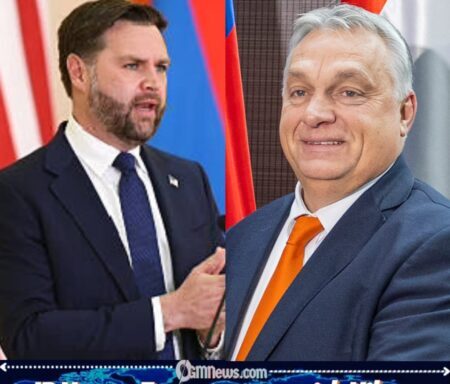
Vice President JD Vance is scheduled to travel to Hungary on April 7–8 for official discussions with Prime Minister Viktor Orban, according to a statement from the White House. The visit comes at a critical political moment, as Hungary approaches parliamentary elections that will determine the continuation of Orban’s leadership.
Vice President JD Vance’s trip is expected to focus on strengthening diplomatic ties between the United States and Hungary, while addressing key areas of mutual interest. The engagement reflects ongoing efforts by the U.S. to maintain active dialogue with European partners amid evolving regional and global dynamics.
Vice President JD Vance’s visit is primarily aimed at reinforcing bilateral relations between the United States and Hungary. Vice President JD Vance is expected to hold talks with Prime Minister Viktor Orban on matters relating to economic cooperation, security cooperation, and shared geopolitical concerns.
Vice PresidentVance’s discussions may also include broader issues affecting transatlantic relations, particularly those related to regional stability in Europe. Such high-level meetings provide an opportunity for both leaders to exchange views and align on policy priorities where interests intersect.
Vice PresidentVance’s engagement highlights the importance placed on maintaining open channels of communication with key allies. The visit underscores the role of direct diplomacy in addressing international challenges and sustaining partnerships.
Vice President JD Vance in the Context of Hungary’s Elections
Vice President Vance’s visit coincides with Hungary’s preparations for parliamentary elections, which are expected to shape the country’s political future. Vice President Vance will meet Prime Minister Viktor Orban, who leads a nationalist government that has remained influential in Hungarian politics for several terms.
Vice President JD Vance’s trip comes at a time when Hungary’s political environment is under close observation both domestically and internationally. The upcoming elections are widely regarded as a defining moment that could impact governance, policy direction, and Hungary’s relationship with external partners.
Vice President JD Vance’s presence during this period adds diplomatic significance to the visit, as international engagement often intersects with key electoral timelines in partner countries.
Vice President JD Vance’s meetings are expected to contribute to ongoing efforts to maintain constructive relations between the United States and Hungary. Vice President Vance will likely engage in discussions that touch on trade, defense cooperation, and regional security matters.
Vice President Vance’s visit reflects the broader U.S. strategy of sustaining relationships with European allies through consistent diplomatic outreach.
Hungary’s position within the European Union makes it an important partner in discussions related to continental policy and transatlantic coordination.
Vice President JD Vance’s engagement may also help address any differences in perspective between the two countries, while reinforcing areas of shared interest and cooperation.
Vice President Vance’s trip is set against the backdrop of evolving geopolitical considerations in Europe. Vice President Vance is expected to discuss issues that affect regional stability, including energy security and economic resilience.
Vice President JD Vance’s meetings may also provide an avenue for dialogue on broader international developments that influence both U.S. and European interests. Such conversations are typically part of maintaining a balanced and forward-looking foreign policy approach.
Vice President JD Vance’s visit highlights the continued importance of Central Europe in global diplomacy, particularly as nations navigate complex political and economic environments.
Vice President JD Vance and Expected Diplomatic Outcomes
Vice President Vance’s visit to Hungary is anticipated to strengthen diplomatic engagement between Washington and Budapest. Vice President JD Vance’s discussions with Prime Minister Viktor Orban are expected to reaffirm commitments to ongoing cooperation.
Vice President JD Vance’s trip may not immediately result in formal agreements, but it serves as an important platform for dialogue and mutual understanding. Such visits often lay the groundwork for future collaboration across multiple sectors.
Vice PresidentVance’s engagement underscores the value of sustained high-level communication, particularly at a time when Hungary is approaching a decisive electoral period that could influence its domestic and foreign policy direction.
FoSEnYRcnzkCFxcrkTIkEJxP