




























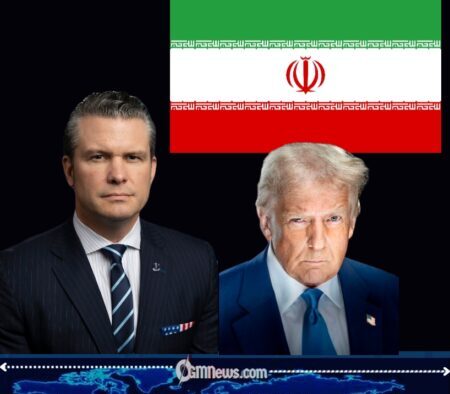
The United States has signaled a firm stance in the escalating Middle East conflict, with Defense Secretary Pete Hegseth declaring that Iran will ultimately “surrender” and that President Donald Trump—currently serving his second term as U.S. president—will determine the conditions of that outcome.
In an interview broadcast Sunday night on CBS News’ 60 Minutes, Hegseth outlined Washington’s approach to the ongoing confrontation with Iran, emphasizing that the United States is committed to achieving a decisive military advantage. His remarks come as tensions intensify following a series of deadly strikes and retaliatory attacks involving Iran, Israel, and U.S. forces, raising concerns about the possibility of a broader regional war.
U.S. Defense Secretary Outlines War Objectives
During the interview, Hegseth described the administration’s position as one focused on securing a clear victory rather than a negotiated stalemate. He explained that President Trump’s demand for an “unconditional surrender” reflects the administration’s belief that the United States and its allies must dictate the outcome of the conflict.
According to Hegseth, the phrase indicates that the United States intends to maintain military pressure until Iran’s forces are no longer capable of continuing the fight. “It means we’re fighting to win. It means we set the terms,” he said during the broadcast, adding that there will come a point when Iranian forces become “combat-ineffective.”
He further suggested that Iran may eventually have little choice but to concede, regardless of how the leadership publicly frames such a decision. Hegseth noted that the determination of surrender terms would ultimately rest with President Trump.
Escalation as Conflict Enters Second Week
The comments come as hostilities in the Middle East continue into a second week, marked by a rapid cycle of attacks and counterattacks. The Israel Defense Forces (IDF) reported that Abu al-Qassem Baba’iyan, identified as the head of Iran’s Military Office, was killed in a recent strike.
The reported killing adds to a series of high-profile casualties among Iranian leadership during the conflict. Military analysts say such strikes are intended to disrupt Iran’s command structure and weaken its ability to coordinate operations across the region.
However, the developments have also heightened tensions, with observers warning that leadership losses could prompt further retaliatory actions by Iranian forces or affiliated groups.
Iran Responds With Missile and Drone Attacks
Iran responded to the latest wave of U.S. and Israeli strikes with a series of ballistic missile and drone attacks targeting both Israel and the United Arab Emirates. Officials in the region reported that several projectiles were intercepted, though the incidents heightened security concerns and forced temporary disruptions in parts of the Gulf region.
The retaliatory strikes underscore the widening geographic scope of the confrontation. Military experts say the use of drones and long-range missiles suggests Iran is attempting to demonstrate that it retains the ability to strike targets across the region despite ongoing pressure from U.S. and Israeli operations.
Regional governments have urged restraint while increasing defensive readiness, fearing that further escalation could disrupt shipping routes, energy infrastructure, and civilian populations.
Leadership Transition in Iran After Khamenei’s Death
Political developments inside Iran have also drawn global attention following the reported death of Supreme Leader Ali Khamenei during the recent strikes. Clerical authorities have reportedly moved quickly to appoint a successor in an effort to maintain continuity within the country’s leadership structure.
According to reports from Iranian opposition media outlet Iran International, Mojtaba Khamenei—Khamenei’s second eldest son—has been selected as the new Supreme Leader by the Assembly of Experts. The decision was reportedly influenced by pressure from members of the Islamic Revolutionary Guard Corps (IRGC).
Mojtaba Khamenei, 56, is known to have strong ties to the IRGC but is not widely recognized as a senior cleric. Analysts note that he has never held public office or an official role in Iran’s governing system, making the appointment controversial among some observers.
U.S. Focus on Preventing Nuclear Capability
In the 60 Minutes interview, Hegseth also reiterated that a central objective of the U.S. strategy is preventing Iran from developing nuclear weapons. He stated that the United States intends to ensure that Tehran’s “nuclear ambitions are never achieved.”
The defense secretary emphasized that Washington is prepared to take whatever measures are necessary to achieve that goal. “We’re willing to go as far as we need to to be successful,” he said.
When asked whether the deployment of ground troops remained an option, Hegseth declined to rule it out. He said it would be “unwise” for the United States not to keep all military options on the table, including the possibility of boots on the ground.
Global Concerns Over Wider Regional War
Diplomats and international observers are closely monitoring the situation, warning that continued escalation could draw additional countries into the conflict. The Middle East remains a critical region for global energy markets and international security, making the stakes particularly high.
Allied governments have expressed support for efforts to limit Iran’s nuclear program but have also urged caution to prevent a prolonged war. Some analysts argue that the rhetoric of unconditional surrender could complicate diplomatic efforts if negotiations eventually become necessary.
For now, however, the conflict appears to be entering a more intense phase, with both sides demonstrating their willingness to continue military operations while the international community searches for ways to reduce the risk of wider instability.


The vibes here are amazing and the winning streaks are real. It feels just like...