







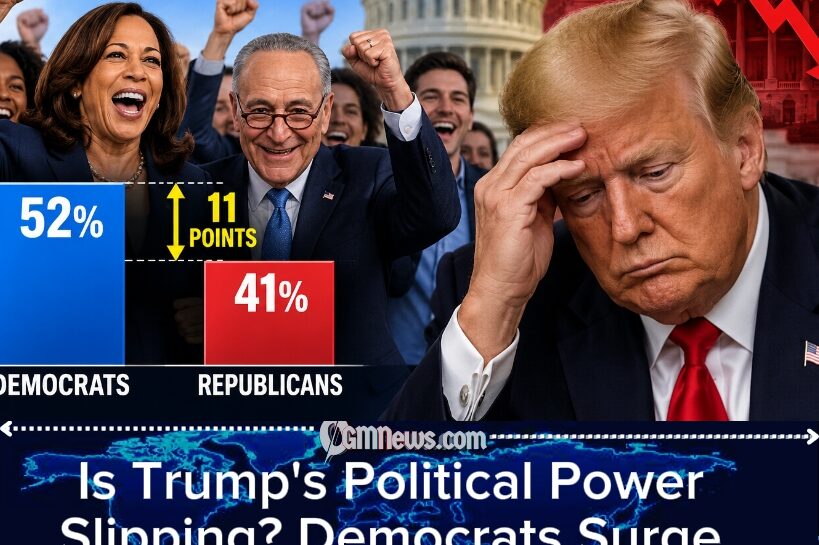




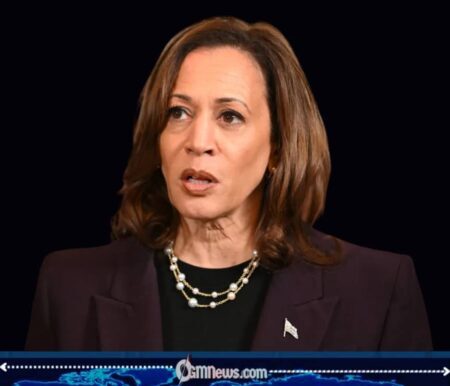
Former Vice President Kamala Harris has delivered one of her strongest public criticisms yet of President Donald Trump’s second-term administration, describing it as “the most corrupt, callous, and incompetent presidential administration in the history of the United States.” Her remarks, made during a public address focused on the state of American leadership, immediately reignited national debate over governance, accountability, and the direction of the country.
She used the moment to argue that the current administration has weakened trust in democratic institutions while creating uncertainty in both domestic and foreign policy. Her statement reflected a broader Democratic effort to frame the Trump presidency not only as politically divisive but as a deeper challenge to long-standing norms in American government.
The unusually direct language from Harris quickly drew attention from political observers across Washington, with supporters praising her bluntness while critics dismissed the speech as another example of intensifying partisan rhetoric in a deeply divided political climate.
Concerns Over Corruption at the Center of Her Argument
At the center of Harris’s criticism was her allegation that the administration has blurred the line between public service and personal benefit. She argued that political influence under President Trump’s current term has increasingly become concentrated among wealthy allies, major donors, and individuals with direct access to the White House.
According to the former vice president, decisions that should be guided by national interest are too often viewed through a political lens that rewards loyalty over competence. She suggested that public confidence in federal institutions has been damaged by repeated questions surrounding ethics, transparency, and the use of presidential power.
Democratic officials have echoed similar concerns in recent months, arguing that public office must remain separate from private enrichment. Harris’s remarks placed those concerns at the center of a growing political battle over accountability in Washington.
A Criticism of Domestic Leadership
Harris also accused the administration of being indifferent to the struggles facing ordinary Americans. She argued that economic pressures, health care concerns, and social division have continued to intensify while many citizens feel disconnected from the decisions being made in the nation’s capital.
In her remarks, she suggested that leadership requires empathy as well as authority, and she questioned whether the current administration has shown sufficient concern for communities facing rising costs and growing insecurity. Her comments reflected broader Democratic messaging that the government has failed to prioritize working families.
Political analysts noted that the “callous” aspect of her criticism was aimed at portraying the administration as detached from the daily realities of voters, a message likely intended to resonate with moderate and independent Americans.
Questions Over Foreign Policy and Global Standing
Foreign policy also formed a key part of Harris’s broader argument. She suggested that the administration’s handling of international tensions has placed additional strain on America’s alliances and created uncertainty among traditional partners abroad.
Harris argued that abrupt decisions and confrontational diplomacy have made the United States appear less predictable on the world stage. She warned that inconsistent leadership can weaken trust between Washington and allied governments at a time of rising geopolitical instability.
Supporters of the administration, however, maintain that President Trump’s second-term foreign policy reflects strength rather than instability. They argue that his approach has forced allies and rivals alike to reassess their relationship with the United States in ways they say protect American interests.
Political Reaction Across Party Lines
Harris’s comments quickly generated strong responses from both parties. Democratic allies praised the former vice president for addressing what they see as a serious institutional problem, while Republican leaders accused her of using inflammatory language to energize opposition voters.
Some conservatives argued that her criticism ignored policy achievements they credit to the current administration, particularly in border security and economic policy. Others said the statement was designed more to shape future political positioning than to contribute to constructive public debate.
Despite the partisan divide, the remarks succeeded in drawing national attention. Analysts say Harris’s forceful language reflects how sharply the tone of American political discourse has escalated during President Trump’s second term in office.
A Speech With Broader Political Implications
Beyond the immediate controversy, Harris’s speech may carry longer-term political significance. Some observers believe the former vice president is positioning herself as a leading Democratic voice on issues of institutional reform and democratic stability.
Her remarks also signal that the debate surrounding the current administration may increasingly move beyond policy disagreements and toward larger questions about the structure of government itself. Issues such as ethics, transparency, and presidential authority are likely to remain central themes in national politics.
Whether the speech marks the beginning of a larger political role for Harris remains unclear. However, her statement has already intensified the conversation over how Americans evaluate leadership during a period of deep political polarization.

Logging in is a breeze and the site stability is amazing even during peak hours....