










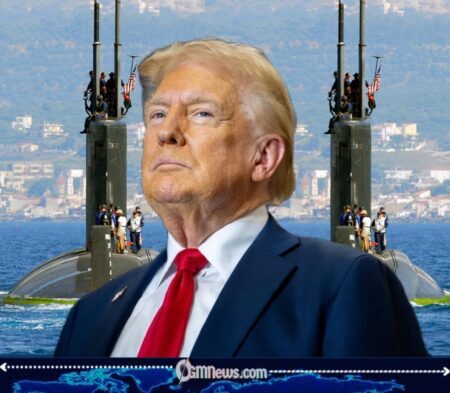
President Donald Trump, serving a second term as U.S. president, has come under global attention following a tense maritime incident in the Strait of Hormuz. U.S. Marines reportedly intercepted and boarded an Iranian-flagged vessel accused of attempting to breach a declared maritime blockade after ignoring repeated warnings to stop.
The operation, carried out in one of the world’s most sensitive shipping corridors, has intensified diplomatic friction and raised concerns over potential escalation between Washington and Tehran. Officials described the incident as part of a broader enforcement strategy under Trump’s renewed foreign policy approach to maritime security.
Trump’s Maritime Policy Under Pressure in Strategic Waterway
The Strait of Hormuz, through which a significant share of global oil shipments passes, has become a focal point of President Donald Trump’s second-term security agenda. His administration has reinforced naval deployments in the region to ensure compliance with U.S.-led restrictions and protect commercial shipping routes.
According to defense sources, the interception reflects a firm application of Trump’s directive to respond decisively to vessels perceived to be violating maritime restrictions. The administration has repeatedly emphasized that freedom of navigation must be maintained under strict enforcement measures.
U.S. Marines Execute Boarding After Alleged Defiance of Warnings
Military officials reported that the Iranian-flagged vessel was approached after it allegedly ignored multiple radio warnings issued by U.S. naval forces. The warnings reportedly instructed the ship to change course and comply with established maritime directives.
When the vessel failed to comply, U.S. Marines executed a boarding operation from a nearby naval unit. The intervention was described as controlled and tactical, with the crew secured and the vessel brought under U.S. monitoring. Details regarding the crew’s condition remain limited.
Trump Administration Defends Operation as Security Necessity
Officials aligned with President Trump’s administration defended the interception, stating that it was consistent with ongoing efforts to enforce maritime security protocols. They argue that such actions are necessary to deter unauthorized movements in a region often marked by geopolitical tension.
Supporters of the policy highlight that Trump’s second-term foreign policy has prioritized assertive protection of international shipping lanes. Critics, however, warn that such operations risk increasing tensions in already volatile waters.
Iran Condemns Action, Diplomatic Fallout Looms
Iranian officials have strongly criticized the interception, calling it an act of provocation and a violation of international maritime norms. State-linked commentary suggested that the move could further destabilize already fragile relations between Tehran and Washington.
Diplomatic observers expect Iran to pursue formal complaints through international bodies. The incident adds new strain to ongoing disputes between the two countries, particularly over sanctions enforcement and naval activity in the Gulf region.
Global Markets React as Trump’s Policies Draw Scrutiny
Financial markets responded cautiously to the news, with analysts noting potential risks to global oil supply chains if tensions escalate further. The Strait of Hormuz remains a critical chokepoint for global energy transportation, making any disruption highly sensitive for global trade.
Under President Donald Trump’s second-term leadership, the United States has adopted a more aggressive posture in maritime enforcement, a strategy that continues to divide international opinion. While some view it as necessary deterrence, others warn it could increase instability in an already tense region.
Rising Stakes for Trump’s Foreign Policy Legacy
The interception of the Iranian-flagged vessel adds another layer of complexity to Donald Trump’s foreign policy legacy in his second term. Analysts suggest that maritime confrontations in the Gulf could become a defining test of his administration’s approach to global security.
As investigations continue and diplomatic reactions unfold, the administration faces growing pressure to balance enforcement actions with efforts to prevent broader regional escalation. The coming days are expected to be critical in shaping international responses to the incident.

Logging in is a breeze and the site stability is amazing even during peak hours....