
























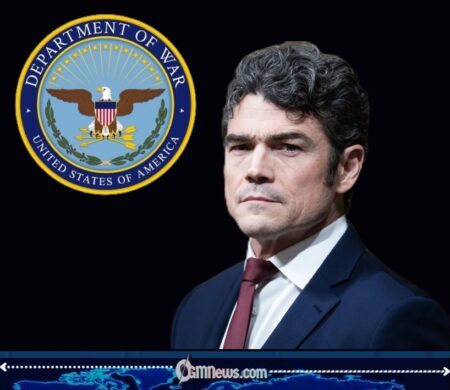
The sudden resignation of Joe Kent, the United States’ top counter-terrorism official, has taken a dramatic turn following reports that he is under investigation by the Federal Bureau of Investigation over an alleged leak of classified information. The reported inquiry, which predates his departure, has added a new layer of complexity to an already contentious moment within the administration of Donald Trump, who is currently serving a second term as U.S. president.
Kent’s resignation on Tuesday from his role as director of the National Counterterrorism Center came amid growing controversy surrounding U.S. military strikes on Iran. His subsequent public remarks have raised questions about internal decision-making processes, intelligence assessments, and the broader strategic direction of U.S. foreign policy.
Investigation Emerges Of Joe Kent Amid Sudden Resignation
Reports from multiple media outlets indicate that the FBI inquiry into Kent began before his resignation, focusing on a suspected unauthorized disclosure of classified information. While officials have declined to confirm the existence of the investigation, its timing has intensified scrutiny over Kent’s departure.
Kent had been responsible for overseeing the analysis of global terrorist threats, a position that placed him at the center of national security decision-making. His exit marks a rare instance of a senior official stepping down in apparent protest over a major military action.
The lack of official confirmation has not quelled speculation in Washington, where the intersection of national security, internal dissent, and potential legal exposure is being closely watched by lawmakers and analysts alike.
Claims of Limited Debate Within the White House
In his first public comments since leaving office, Kent suggested that internal deliberations leading up to the February 28 airstrikes on Iran were constrained. Speaking in an interview with Tucker Carlson, he claimed that key voices were excluded from the decision-making process.
According to Kent, there was no “robust debate” among senior officials before the strikes were authorized. He alleged that some decision-makers were not given the opportunity to present their perspectives directly to the president, raising concerns about the breadth of consultation within the administration.
While careful not to directly criticize President Trump, Kent described a governance structure in which a small circle of advisers held significant influence, potentially sidelining dissenting viewpoints during a critical moment.
Disputed Intelligence on Iran’s Threat Level
A central element of Kent’s criticism focused on the intelligence used to justify the strikes. He asserted that there was no credible evidence indicating that Iran posed an imminent threat to the United States or was on the verge of deploying a nuclear weapon.
Kent emphasized that intelligence agencies had not identified any immediate plans for an attack comparable to major historical incidents. This assertion directly contrasts with the administration’s justification for the military action, which framed Iran as a significant and urgent danger.
These conflicting narratives highlight an ongoing debate within the national security community over how intelligence is interpreted and presented to policymakers, particularly in high-stakes scenarios involving military force.
Allegations of External Influence on U.S. Policy
Kent also alleged that Israel played a decisive role in shaping the U.S. decision to carry out the strikes. He claimed that Israeli officials, including those linked to the government of Benjamin Netanyahu, lobbied U.S. counterparts with assessments that did not align with established intelligence findings.
He suggested that such external inputs may have influenced the timing and rationale for the operation. These remarks have sparked criticism, with some observers warning that references to foreign influence risk reinforcing sensitive and controversial narratives.
At the same time, Kent acknowledged that the United States and Israel may have differing strategic objectives, particularly regarding the question of regime change in Iran, further complicating the policy landscape.
Administration Pushback and Political Reactions
The White House responded firmly to Kent’s resignation and subsequent comments. President Trump dismissed the former official as “weak on security,” reiterating his administration’s position that Iran represents a “tremendous threat” to U.S. interests.
Other senior figures, including Marco Rubio and Mike Johnson, have been cited by Kent as reflecting broader support within the government for a strong stance against Iran.
Meanwhile, Tulsi Gabbard, who oversees the intelligence community, stated that the determination of Iran’s threat level ultimately rests with the president. She has not publicly elaborated on her own assessment of the strikes.
A Career Marked by Service and Personal Loss
Kent’s departure comes after a long career in national security, including service as a Green Beret and later as a member of the Central Intelligence Agency. His experience includes multiple combat deployments and work in complex intelligence environments.
His personal life has also been marked by tragedy. In 2019, his wife, a Navy cryptologist, was killed in a suicide bombing in Syria, leaving him to raise their two children. He has since remarried.
These experiences have shaped Kent’s perspective on U.S. military engagements, informing his stated concerns about the current trajectory of policy toward Iran.
Implications for U.S. Security Policy
The combination of Kent’s resignation, his public criticism, and the reported FBI investigation presents a multifaceted challenge for the administration. It raises questions about internal cohesion, the handling of classified information, and the transparency of decision-making processes.
Analysts note that such developments could have lasting implications for how intelligence is communicated within the government and how dissenting views are managed at the highest levels.
As the situation continues to unfold, attention will remain focused on both the outcome of the reported investigation and the broader strategic direction of U.S. engagement in the Middle East.
[…] […]