


















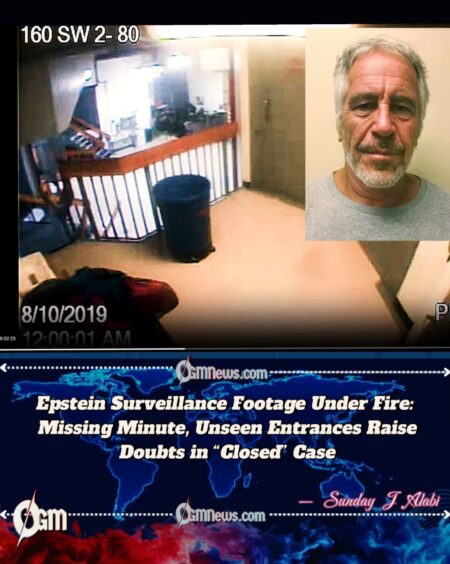
A fresh CBS News investigation into surveillance video from the Metropolitan Correctional Center (MCC), where Jeffrey Epstein died in August 2019, has cast serious doubt on the government’s version of events. The video, released earlier this month by the FBI and described by federal officials as conclusive proof of Epstein’s solitary presence on the night of his death, is now under scrutiny for inconsistencies and missing context.
Then-Attorney General William Barr had stated that his personal review of the footage confirmed that no one entered Epstein’s cell block before his death — a claim echoed by other top federal officials, including former FBI Deputy Director Dan Bongino. But CBS News’ analysis reveals the video does not provide a clear view of key access points to Epstein’s tier, challenging the basis for such definitive conclusions.
Using architectural diagrams and details from the Justice Department inspector general’s 2023 report, CBS reconstructed the Special Housing Unit (SHU) where Epstein was held. They found that the available footage does little to support the FBI’s assertion that entry to Epstein’s cell block would have been caught on tape. This contradiction has triggered a wave of concern among forensic experts, who now question the integrity of the investigation’s findings.
Blind Spots and Blurry Stairs: What the Video Doesn’t Show
The 11-hour silent surveillance video shows a limited view of the SHU — just two doors, a stairwell, and part of the correctional officers’ desk. At 7:49 p.m., Epstein is seen on camera descending the stairs with an officer after an unmonitored phone call. It’s the only time he appears in the footage. For the rest of the night, officers are seen intermittently, but the video fails to show the upper level where Epstein’s cell was located.
The primary entrance to the SHU and the stairway to Epstein’s tier are out of frame. This crucial blind spot undermines claims that no one else could have accessed Epstein’s cell. CBS spoke with multiple video forensics experts who concluded the footage cannot verify who did or did not enter the unit. “To say that there’s no way someone could access the stairs unseen is false,” said Jim Stafford, a video forensic analyst.
Furthermore, the report cites that two staffers, Tova Noel and Michael Thomas, were responsible for checking Epstein every 30 minutes but failed to do so. They later admitted to falsifying records, but the charges against them were dropped. Meanwhile, key entrances remained unmonitored and parts of the surveillance system reportedly failed, resulting in lost footage — casting even more suspicion on what really transpired.
Anomalies in the Footage: Orange Blurs, Editing Clues, and a Missing Minute
CBS analysts pointed out an orange shape ascending the stairwell at 10:40 p.m., which the Justice Department claimed was Officer Noel carrying linens. However, experts believe the shape could actually be an inmate dressed in an orange jumpsuit. Conor McCourt, a retired NYPD sergeant, noted, “It’s more likely that it’s a person, not laundry.”
More troubling are signs of possible editing. A cursor and menu briefly appear on screen, indicating the video might be a screen recording — not raw DVR footage as officials claimed. Analysts also identified a break in the footage: one minute is inexplicably missing just before midnight, and the aspect ratio shifts subtly, suggesting splicing of two separate clips.
Attorney General Pam Bondi previously said the missing minute was due to a daily system reset — a claim later contradicted by government sources. CBS confirmed that raw, unedited footage in FBI custody does not contain a missing minute. Yet, the released video does. The discrepancy raises doubts about whether the public has been shown the full, unaltered story.
Unidentified Individuals and Witness Contradictions in the Epstein video
Adding to the confusion, at 12:05 a.m., the video shows an unidentified individual walking through the SHU — someone not mentioned in the inspector general’s report. Officially, only two staff members were supposed to be in the unit after midnight. The presence of a third person unaccounted for raises questions about surveillance gaps and record accuracy.
Furthermore, inconsistencies in staff testimony are now apparent. Officer Noel claimed she left Epstein alone in a shower area to use the restroom and later found him gone. However, video evidence appears to show her personally escorting Epstein back toward the stairs — directly contradicting her own account. Another female officer seen in the footage may have been confused with Noel, suggesting the inspector general’s report may have conflated their actions.
Epstein’s final call — allegedly to his deceased mother — was facilitated by the unit manager and went unmonitored. According to investigators, this unregulated access to outside communication was highly irregular and potentially relevant to his subsequent death.
Access Control Failures and Unreleased Footage
While the Justice Department maintains that the SHU was secured and accessible only through two locked doors, the video shows multiple staff members moving in and out of the unit without clear evidence of door access being controlled. Officer Noel said only she and Thomas had keys, but the footage contradicts this claim, showing others entering the unit without them nearby.
Two additional security cameras were operational in adjacent areas — covering an elevator bank and a nearby guard post — but neither video has been released. Only a screen grab appears in the inspector general’s report. Experts argue these unreleased tapes could confirm or refute claims about the alleged system reset and offer additional context about activity around the unit that night.
Despite the FBI announcing the case as “closed,” the CBS News investigation highlights substantial holes in the narrative. While it doesn’t refute that Epstein died by suicide, it exposes significant weaknesses in the government’s conclusions and calls into question whether the full truth about what happened in Epstein’s final hours has been revealed.


https://webtoolsreview.substack.com/p/why-screenshots-arent-the-best-way