



























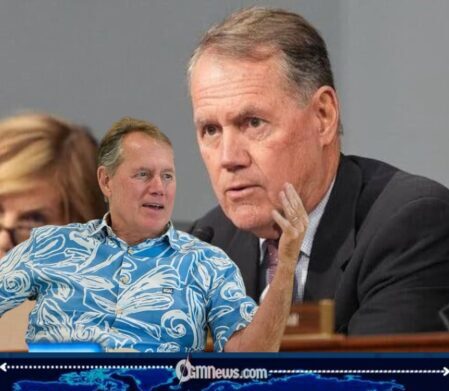
Ed Case has done it again: the veteran Hawaii Democrat has survived a surprisingly competitive Democratic primary and secured his party’s nomination for the U.S. House seat representing Hawaii’s 1st Congressional District. The victory over state Sen. Jarrett Keohokalole caps a campaign that had attracted national attention because it placed a 73-year-old incumbent against a much younger progressive challenger—and briefly created the possibility that Hawaii’s Democratic establishment might undergo an unexpected political makeover. Instead, voters delivered Case another ticket to Washington, leaving political observers with one obvious conclusion: apparently, the congressional retirement conversation did not include his number.
The Establishment Survives: Ed Case Defeats Keohokalole in Hawaii Primary
Ed Case entered the August 8 primary as the incumbent seeking his seventh full term, but this was hardly presented as an ordinary reelection exercise. Keohokalole, 43, mounted a serious challenge from the left, arguing that Case had become too closely associated with corporate interests and criticizing him over issues including his support in 2025 for an earlier version of President Donald Trump’s SAVE Act. The race became one of the more closely watched Democratic primaries in Hawaii, particularly as progressive candidates elsewhere had demonstrated that long-serving incumbents were no longer automatically protected from serious internal challenges.
Yet the primary ultimately produced a familiar result. Case’s long congressional record, established political network and seniority proved difficult for his challenger to overcome. Before voting, Case argued that his experience and position on the House Appropriations Committee gave Hawaii greater leverage in Washington, while Keohokalole presented himself as a generational and ideological alternative. The contest therefore became about more than two politicians—it was effectively a referendum on whether Hawaii Democrats wanted continuity with a veteran lawmaker or a sharper turn toward progressive politics.
Hawaii Democrats Choose Experience Over the Progressive Challenge
The seriousness of the primary challenge should not be understated. Case had appeared vulnerable enough to attract national attention, while polling earlier in the campaign showed him leading but not commanding overwhelming support among Democratic voters. Keohokalole also secured progressive backing and positioned the contest within a wider Democratic argument over age, corporate influence, healthcare, foreign policy and the party’s response to President Donald Trump’s administration.
But Hawaii’s political landscape ultimately gave Case important advantages. The 1st Congressional District, centred on urban Oahu, is heavily Democratic, meaning that winning the Democratic nomination is generally the decisive hurdle to holding the seat. Hawaii also permits independents and Republicans to participate in its partisan primary elections, adding another unusual dimension to the contest. Case’s victory therefore does more than extend his political career—it preserves a familiar Democratic representative in a district where the November election is expected to be far less competitive than the primary that preceded it.
For Case, the result is a political reprieve and another opportunity to argue that experience still has electoral value. For his progressive critics, however, the primary demonstrates that challenging an incumbent may generate attention without necessarily producing a change in leadership. The November general election now awaits, with Republican Adriel Lam having no primary opposition, while OGM News will continue watching whether Case’s latest victory becomes a routine path toward another term—or the beginning of another political battle over what Democratic voters in Hawaii want from their representative.

[…] […]