






















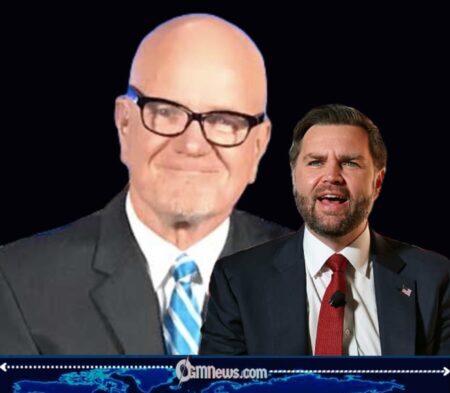
Political commentator Chip Franklin has ignited a fresh national debate after sharply criticizing what he describes as a troubling pattern of electoral defeats for the MAGA-aligned wing of the Republican Party. Speaking on Really American, Franklin argued that recent political outcomes reflect deeper strategic challenges rather than isolated setbacks.
His remarks have quickly gained traction across political circles, drawing both support and criticism. By placing Vice President JD Vance at the center of his analysis, Franklin has intensified scrutiny on the current direction of Republican leadership under President Donald Trump, who is serving a second term.
Chip Franklin’s Central Argument: A Pattern, Not Coincidence
At the core of Franklin’s commentary is the assertion that the Republican Party is experiencing a consistent string of losses that cannot be dismissed as routine political fluctuation. He emphasized that repeated underperformance in elections signals structural weaknesses in strategy and messaging.
According to Chip Franklin, these outcomes suggest that the party’s current approach may not be resonating with a broad segment of voters. He pointed to multiple contests where expectations of victory were not met, framing them as evidence of a larger, unfolding trend.
While his critics argue that such conclusions may be premature, Franklin maintains that recognizing patterns early is essential for any political movement seeking long-term success.
Spotlight on JD Vance’s Political Influence
A significant portion of Chip Franklin’s analysis focuses on Vice President JD Vance and his growing influence within the Republican Party. Franklin contends that Vance’s political positioning and strategic direction have played a role in shaping recent outcomes.
Supporters of Vance, however, strongly reject this characterization. They argue that he has been instrumental in energizing the party’s base and articulating clear policy priorities, particularly on economic and cultural issues.
The debate over Vance’s role highlights a broader question within the party: whether current leadership strategies are helping consolidate support or limiting broader electoral appeal.
Reactions Within Republican Circles
Chip Franklin’s comments have exposed underlying tensions within Republican ranks. Some party members have quietly echoed concerns about recent electoral performances, suggesting the need for recalibration.
Others, particularly strong supporters of the MAGA movement, have pushed back against Franklin’s narrative. They argue that the party’s core message remains popular and that external factors—such as voter turnout and local dynamics—are more significant in explaining recent results.
This divergence of views reflects an ongoing internal debate about the party’s future direction and how best to navigate an evolving political landscape.
The Trump Administration’s Position
The administration of President Donald Trump has largely avoided direct engagement with Chip Franklin’s critique, instead emphasizing policy achievements and governance priorities. Officials highlight economic initiatives and legislative efforts as key indicators of success.
Supporters argue that focusing on governance rather than media criticism demonstrates confidence in the administration’s direction. They contend that electoral fluctuations are a normal part of political cycles and should not overshadow broader accomplishments.
Nonetheless, Franklin’s analysis continues to circulate widely, ensuring that questions about political strategy remain part of the public discourse.
Broader Political Implications
The attention generated by Chip Franklin’s remarks underscores the growing importance of media voices in shaping political narratives. His critique has not only sparked debate within the Republican Party but also provided talking points for political opponents.
As future elections approach, both major parties are likely to study recent trends closely. For Republicans, the challenge lies in addressing concerns raised by commentators like Franklin while maintaining party unity. For Democrats, the situation presents potential opportunities to capitalize on perceived divisions.
Ultimately, Franklin’s intervention has amplified an ongoing conversation about strategy, leadership, and voter engagement—issues that will continue to influence the trajectory of American politics in the coming years.
Ae888covenuscasino, okay, I'm curious. Gonna check out this site and try to find some amazing...