



























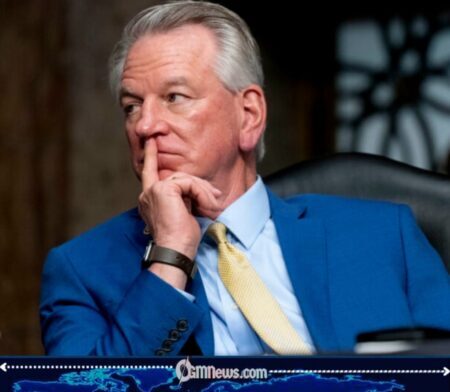
Senator Tommy Tuberville has taken an unusually direct stance against his own party’s performance, raising serious concerns about legislative productivity and electoral accountability. In a candid remark that has drawn national attention, Senator Tommy Tuberville questioned the very basis of continued political dominance, asking, “Hell, we ain’t done anything in the majority. Why should we keep the majority?”
The statement places Senator Tommy Tuberville at the center of a growing internal debate within the Republican Party, as lawmakers confront mounting pressure to justify their leadership with tangible legislative outcomes.
Senator Tommy Tuberville Breaks from Party Orthodoxy
Senator Tommy Tuberville’s remarks stand out in a political environment where party unity is often prioritized over internal criticism. By openly challenging his party’s effectiveness, Senator Tommy Tuberville has diverged from the more cautious tone typically adopted by sitting lawmakers.
Observers note that Senator Tuberville’s willingness to speak candidly may reflect deeper concerns shared by others within the party. While such sentiments are often expressed privately, his decision to voice them publicly has amplified scrutiny on the party’s overall performance.
For many analysts, Senator Tuberville’s comments signal a moment of introspection—one that could influence how party members communicate with voters moving forward.
Senator Tommy Tuberville Highlights Legislative Inaction
At the core of Senator Tommy Tuberville’s criticism is the issue of legislative output. Holding a majority in Congress is generally associated with the ability to pass key policies and deliver on campaign promises.
However, Senator Tommy Tuberville has pointed to what he perceives as a lack of meaningful achievements.
This critique underscores a broader challenge in modern governance, where political control does not always translate into effective policymaking. Senator Tuberville’s remarks suggest that internal divisions, strategic disagreements, and procedural complexities may be hindering progress.
By framing the issue in terms of voter expectations, Senator Tuberville has drawn attention to the gap between political authority and practical results—an issue that resonates strongly with the electorate.
Senator Tommy Tuberville and the Question of Party Unity
The public nature of Senator Tuberville’s comments introduces new dynamics into discussions about party cohesion. While internal debate can foster improvement, it can also expose divisions that complicate unified messaging.
Senator Tuberville’s critique may encourage other lawmakers to speak more openly about their concerns, potentially reshaping internal party dialogue. At the same time, it raises questions about how the party will maintain a cohesive strategy in the face of public dissent.
Some political strategists argue that Senator Tuberville’s approach could strengthen credibility with voters who value transparency. Others caution that it may create openings for political opponents to highlight perceived weaknesses.
Senator Tommy Tuberville in the Broader Political Landscape
The concerns raised by Senator Tuberville also intersect with the wider political environment, including the leadership of Donald Trump as the current U.S. president serving a second term. The alignment—or lack thereof—between congressional priorities and executive direction can significantly influence legislative outcomes.
In this context, Senator Tuberville’s remarks may reflect broader questions about how effectively political leadership is coordinating across branches of government. His critique suggests a need to reassess strategic priorities and improve collaboration.
As Senator Tuberville continues to draw attention to these issues, his role in shaping the conversation around governance and accountability is likely to expand.
Senator Tommy Tuberville Raises Stakes Ahead of Elections
With elections on the horizon, Senator Tuberville’s central question—why a majority should be retained without clear achievements—carries significant political weight. His comments align with a growing demand among voters for measurable results and effective leadership.
Senator Tuberville’s stance may influence how candidates frame their campaigns, particularly in addressing concerns about productivity and accountability. By emphasizing performance over rhetoric, he has introduced a narrative that could resonate across party lines.
Ultimately, Senator Tuberville’s critique serves as both a warning and a challenge. Whether it leads to substantive changes in legislative strategy or remains a moment of internal reflection will depend on how party leaders respond in the critical months ahead.

The weekly tournaments here keep me coming back because the prize pools are surprisingly generous....