








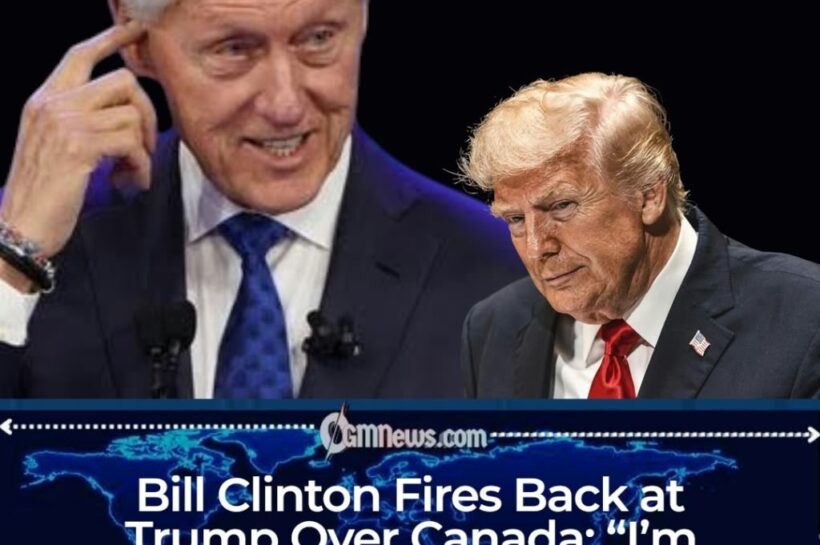














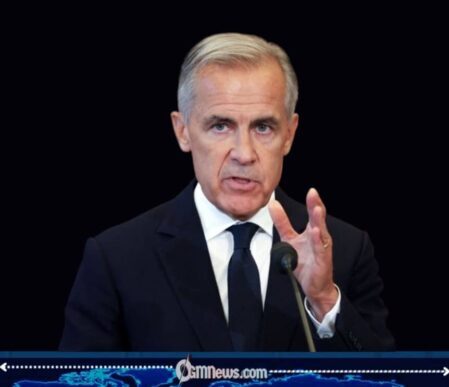
Canadian Prime Minister Mark Carney has revealed that the latest U.S.-Canada trade negotiations collapsed after American negotiators raised objections involving Canada’s French-language protections and Quebec’s cultural policies. Carney said those issues, alongside other last-minute demands, were unacceptable to his government, turning what had looked like a possible trade breakthrough into another episode of North American diplomatic drama.
The timing could hardly have been more dramatic. The United States, under current President Donald J. Trump, imposed 50% tariffs on about $20 billion worth of Canadian goods after the talks failed, while Carney announced that Canada would respond with dollar-for-dollar counter-tariffs.
When Trade Talks Suddenly Became a French-Language Examination
According to Carney, U.S. concerns extended to Canadian cultural subsidies, support for the French language and even information appearing on Canadian products. He said Canada viewed the demands as an unacceptable intrusion into areas tied to national sovereignty and made clear that the French language and Canadian and Quebec culture were not bargaining chips.
The development has given the failed negotiations an almost theatrical quality: two countries entered the room to discuss tariffs and market access and somehow ended up arguing over language and culture. In Canada, particularly Quebec, the message appears straightforward — economic negotiations may be negotiable, but national identity apparently comes with a very large “do not touch” sign.
Canada Says Some Things Are Simply Not For Sale
Carney’s position is consistent with earlier warnings that Canada would not negotiate away protections for its French language, culture or other sensitive domestic policies. The latest dispute therefore goes beyond ordinary tariff mathematics, with Ottawa arguing that a trade agreement cannot require Canada to surrender control over issues it considers central to its identity and sovereignty.
The consequences are already extending beyond diplomatic speeches. Canada says its counter-tariffs will take effect after Labour Day, while Ottawa is also looking to diversify its export markets and reduce its dependence on the United States, which accounts for roughly 70% of Canadian exports. For businesses, workers and consumers on both sides of the border, the joke may eventually stop being funny if the dispute produces higher prices and prolonged uncertainty.
The collapse of the talks therefore represents more than another disagreement over tariffs: it exposes a widening political and economic gap between Washington and Ottawa, with language, culture, sovereignty and trade now sitting at the same negotiating table. Whether the two governments eventually return to serious negotiations or continue exchanging tariffs like diplomatic birthday gifts remains to be seen. OGM News will continue watching the Canada-U.S. dispute for the next twist because in this trade drama, apparently even the dictionary has become part of the negotiations.

Mexican players will love how well this platform handles local payment methods. Deposits via OXXO...