





























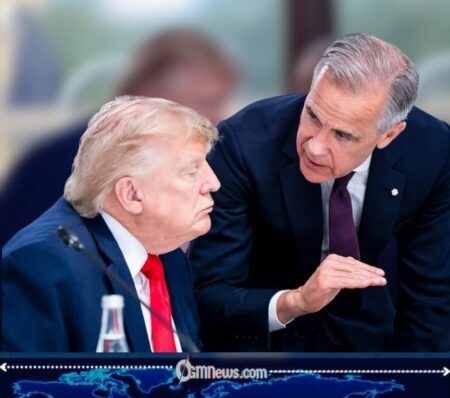
Canada has officially launched its retaliatory tariffs on roughly $20 billion worth of U.S. goods, turning an already bitter trade dispute with President Donald J. Trump’s administration into an even larger economic standoff. The Canadian measures took effect at 12:01 a.m. on September 8, with tariffs ranging from 15% to 50% on hundreds of American products after negotiations between Ottawa and Washington collapsed.
Canada’s Retaliatory Tariffs on $20 Billion of U.S. Goods Take Effect
Canada’s retaliatory tariffs cover products in sectors including steel, dairy, appliances, agricultural equipment, pulp and paper, plastics and electronics. Ottawa says the measures are designed to match corresponding U.S. tariffs “dollar for dollar,” while protecting Canadian workers and businesses from what the government considers unjustified American trade restrictions. The official Canadian list puts the value of the targeted imports at about C$27.6 billion, roughly US$20 billion.
The move follows President Donald J. Trump’s decision to impose additional 50% tariffs on selected Canadian goods under Section 338 of the U.S. Tariff Act of 1930. Washington says those measures were intended to counter what it describes as discriminatory treatment of American exports and to protect U.S. workers and industries. Canada, unsurprisingly, did not respond by sending Washington a thank-you card. Instead, it chose the traditional diplomatic language of import taxes.
Canada Imposes New Tariffs on American Goods as Trade Dispute Escalates
The latest retaliatory tariffs mark another escalation in an 18-month-old trade confrontation between two countries whose economies are deeply intertwined. Around 700 U.S. products are affected by Canada’s new measures, with rates of 15%, 25% and 50%. Goods already in transit when the Canadian measures took effect are excluded, while Ottawa has established a remission process for certain businesses that cannot reasonably obtain essential inputs from Canadian or non-U.S. suppliers.
The economic consequences could extend well beyond government offices and customs checkpoints. Importers may face higher costs, companies could pass some of those costs to consumers, and businesses dependent on cross-border supply chains must once again calculate whether their next shipment will arrive with merchandise, paperwork — or a surprisingly large bill. Canada has also announced a C$7.5 billion support package for workers and businesses affected by U.S. tariffs, underscoring how seriously Ottawa views the potential economic damage.
For now, the retaliatory tariffs have transformed the Canada-U.S. trade dispute into a contest of economic pressure, with neither side appearing eager to blink first. The central question is whether the tariff exchange will eventually force both governments back toward negotiations or simply produce another round of duties, counter-duties and political declarations. OGM News will continue watching the border — and the tariff scoreboard — because in this particular trade war, the next bill may already be in the mail.



Downloaded the 881betapp the other day. Clean interface, does the job. Quick and easy betting...