
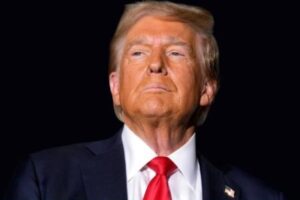

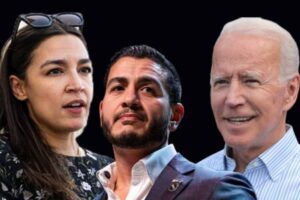


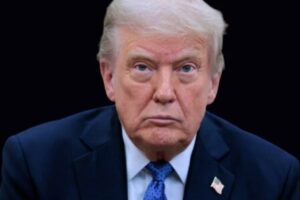

















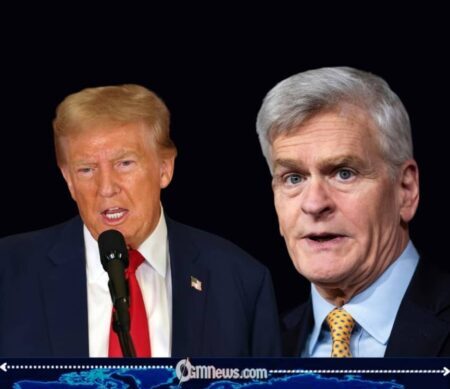
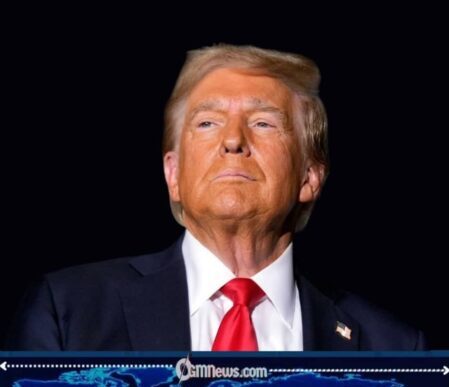
Integrity became the defining word of Senator Bill Cassidy’s concession speech after the Louisiana Republican delivered remarks that many interpreted as a direct criticism of President Donald J. Trump’s aggressive online political style. While Cassidy avoided mentioning Trump by name, his statement about people with “character and integrity” not spending time insulting others on the internet immediately drew national attention and reignited debate over political conduct in the social media era. In a political environment where carefully worded speeches often carry hidden messages louder than direct attacks, Cassidy’s comments landed with the force of a public rebuke.
The controversy surrounding the speech quickly spread across social media platforms, where supporters and critics dissected every word of Cassidy’s remarks. Some observers viewed the statement as a final act of independence from a senator who had repeatedly faced backlash from Trump loyalists in recent years. Others dismissed it as political frustration from a defeated lawmaker attempting to shape his legacy on the way out. Either way, the speech succeeded in reopening a long-running argument inside the Republican Party about whether online aggression strengthens political influence or damages public trust in leadership.
Integrity and Internet Attacks
Cassidy’s remarks did not emerge in isolation. The Louisiana senator has maintained a complicated relationship with Trump’s political movement for years, most notably after voting to convict Trump during impeachment proceedings related to the January 6 Capitol riot. That decision made Cassidy one of the most criticized Republicans among pro-Trump activists, with many conservative voters accusing him of betrayal. Since then, Cassidy has often found himself navigating a difficult political space between traditional Republican conservatism and Trump’s populist political dominance.
The latest concession speech appears to continue that uneasy balancing act. By linking integrity to restraint online, Cassidy indirectly touched on a broader criticism frequently aimed at Trump and several modern political figures whose influence is heavily tied to confrontational social media messaging. Political strategists note that online attacks have increasingly become part of campaign branding in the digital age, where viral insults often attract more engagement than detailed policy debates. Cassidy’s comments therefore carried symbolic weight far beyond a single speech, especially at a time when political polarization remains deeply entrenched across the United States.
Republican Tensions Beyond the Speech
The reaction to Cassidy’s statement also reflects larger tensions within the Republican Party as it continues adapting to Trump’s influence over conservative politics. President Donald J. Trump remains the party’s central figure, with many Republican lawmakers reluctant to openly criticize his rhetoric due to his strong support base and influence in primary elections. This political reality has created an environment where even indirect criticism can generate intense backlash and dominate national discussion cycles.
At the same time, concerns about political civility and online hostility continue to grow among portions of the American electorate. Surveys and political analysts have repeatedly pointed to rising voter fatigue over constant social media conflicts, personal attacks, and outrage-driven political discourse. Cassidy’s remarks may therefore resonate with voters who believe politics has become increasingly performative and hostile online. Critics, however, argue that such complaints often ignore the reality that modern campaigns are fueled by viral communication, where sharp attacks can energize supporters and dominate headlines faster than traditional speeches or policy proposals.
The significance of Cassidy’s concession speech may ultimately depend less on whether it was truly directed at Trump and more on why so many people immediately believed it was. In today’s political climate, references to integrity, online insults, and character are rarely treated as abstract observations. They are interpreted as coded political signals in an era where internet warfare has become inseparable from power itself. OGM News will continue monitoring reactions surrounding the speech and the broader debate over how political leaders choose to communicate in an increasingly digital and divided America.
[…] […]