

























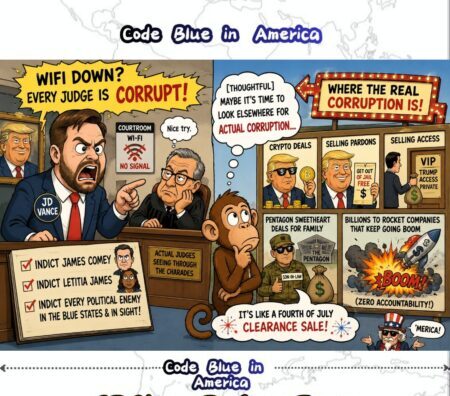
A fierce new political firestorm erupted this week after Vice President JD Vance and several Trump allies intensified criticism of federal judges overseeing controversial legal battles involving the Trump administration. What began as courtroom frustration quickly evolved into accusations of systemic judicial corruption, fueling widespread backlash online and inspiring viral satire portraying officials blaming judges for everything from failed prosecutions to malfunctioning courtroom Wi-Fi. Behind the humor, however, lies a far more serious national debate over the limits of executive power, the independence of the judiciary, and whether America’s legal institutions are entering a dangerous new phase of political warfare.
Corruption: Judiciary Under Pressure
The latest controversy follows months of escalating tension between President Donald J. Trump’s administration and federal courts that have repeatedly challenged or delayed several administration policies and prosecutions. Judges across multiple jurisdictions have criticized government lawyers over what some rulings described as weak legal arguments, questionable evidence, and failures to meet long-standing courtroom standards. Legal scholars and former prosecutors have increasingly warned that aggressive public attacks on judges could undermine public confidence in the judiciary and encourage threats against court officials.
Recent legal actions involving former FBI Director James Comey and New York Attorney General Letitia James intensified those concerns. Critics of the administration argue that the prosecutions appear politically motivated, especially after courts reportedly raised doubts about the strength of some cases and questioned the Justice Department’s legal strategy. Several reports also indicated internal fallout within the DOJ, including resignations and frustration among career prosecutors uneasy about politically charged investigations targeting Trump critics.
Corruption Questions Beyond the Courtroom
While administration allies continue accusing judges of bias, opponents argue the louder focus on the judiciary may be distracting from broader ethics concerns surrounding political influence, business relationships, and federal contracting. Critics have increasingly questioned whether accusations of “corruption” are being selectively applied only to institutions that resist administration objectives, while scrutiny surrounding political access, presidential pardons, and financially connected allies receives comparatively less attention.
The debate has also expanded into wider concerns about the relationship between the White House and the Justice Department. Analysts note that recent anti-fraud initiatives and politically focused investigations have heightened fears that traditional barriers separating federal law enforcement from partisan politics are weakening. Some observers believe the administration’s repeated attacks on judges reflect frustration over growing legal resistance inside the courts, particularly as judges appointed by both Republican and Democratic presidents continue issuing rulings critical of executive overreach.
Political satire surrounding the controversy has flourished online because many Americans increasingly view the spectacle as symbolic of a deeper institutional crisis. To critics, the image of politicians blaming judges whenever cases fail captures what they describe as a refusal to accept legal accountability. Supporters, meanwhile, insist courts have become overly political and hostile toward the administration. With investigations, court challenges, and public attacks continuing to escalate, the battle between the White House and the judiciary may become one of the defining constitutional conflicts of President Trump’s current term.
Ae888covenuscasino, okay, I'm curious. Gonna check out this site and try to find some amazing...