





















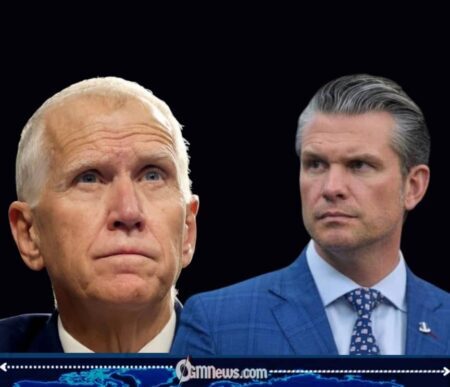
The Pentagon shake-up dominating Washington has exposed a rare and unusually public fracture within Republican ranks, after Senator Thom Tillis sharply criticized Defense Secretary Pete Hegseth over reported military restructuring plans and leadership changes inside the Department of Defense. Tillis accused Hegseth of weakening military readiness in Europe, disrespecting key allies, and surrounding himself with politically loyal aides rather than experienced defense professionals. His remarks immediately intensified speculation about deeper tensions within the administration over America’s global military posture.
The controversy escalated further after reports emerged suggesting the Pentagon could downgrade the leadership status of U.S. Army Europe-Africa, a move critics fear may sideline senior officers including General Chris Donahue, a highly regarded commander with extensive operational experience. Tillis described the reported changes as “amateur hour at best and deadly at worst,” warning that reducing America’s force posture in Europe during heightened geopolitical tensions could send dangerous signals to both allies and adversaries.
Tillis Explodes at Hegseth: “Deadly Decisions” Threaten America’s Military Edge
Military readiness quickly became the centerpiece of Tillis’ criticism, especially as concerns continue growing across NATO regarding Russia’s long-term security ambitions in Eastern Europe. Since the outbreak of the Russia-Ukraine war, many Western governments have increased defense coordination and military preparedness across the continent. Critics of any reduction in U.S. command influence argue that weakening leadership structures now could undermine deterrence efforts at a highly sensitive moment for transatlantic security.
Tillis also took direct aim at what he described as politically motivated decision-making within the Pentagon. His comments reflected broader fears among some lawmakers and retired military officials that institutional experience may be losing ground to ideological loyalty in defense appointments. Although supporters of restructuring argue that Pentagon reforms are necessary to reduce bureaucracy and modernize military strategy, opponents warn that rapid organizational changes without broad consensus could disrupt command effectiveness and damage morale within senior military ranks.
Republican Senator Claims Hegseth Is Purging Top Military Talent for Loyalists
The dispute surrounding the Pentagon shake-up arrives amid ongoing debates inside Washington over the future of America’s overseas military commitments. Some political factions favor reducing foreign deployments and redirecting defense priorities toward domestic concerns or Indo-Pacific competition with China. Others insist that maintaining a strong presence in Europe remains essential to preserving NATO unity and preventing adversaries from interpreting American retrenchment as weakness.
General Chris Donahue’s role in the controversy has also drawn attention because of his reputation within military circles. Donahue previously held major leadership responsibilities during high-profile U.S. military operations and has often been viewed as a symbol of experienced battlefield command. Reports suggesting he could be sidelined transformed what may have been an internal restructuring discussion into a larger political battle over expertise, loyalty, and the future direction of the Pentagon under President Donald J. Trump’s administration.
Beyond Washington politics, America’s allies are closely monitoring the situation. European governments have spent recent years increasing defense spending and strengthening military cooperation with the United States amid ongoing regional instability. Analysts note that sudden leadership restructuring or reduced military visibility in Europe could create uncertainty among NATO partners already balancing concerns about Russia, energy security, and future American strategic commitments.
For now, the Pentagon shake-up remains both a policy dispute and a political test for the administration. Whether the restructuring plans proceed unchanged or face resistance from lawmakers and defense officials, the debate over military readiness and alliance stability is unlikely to disappear soon. OGM News understands that further developments regarding Pentagon leadership changes may emerge in the coming weeks as pressure grows inside Washington for greater clarity and accountability.

Ae888covenuscasino, okay, I'm curious. Gonna check out this site and try to find some amazing...