






















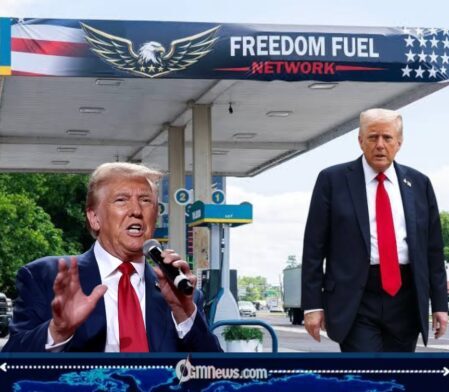
Freedom Fuel has become one of the most talked-about phrases in America’s energy debate after President Donald J. Trump promoted a growing network of gas stations offering fuel at prices noticeably lower than many nearby competitors. While motorists have welcomed the prospect of paying less at the pump, the excitement has been accompanied by mounting questions over how the stations are able to maintain such aggressive pricing. As long queues form outside participating locations, the mystery surrounding the business model has become almost as popular as the discounted gasoline itself.
Cheap Gas or Clever Politics? Freedom Fuel Leaves Critics Demanding Transparency
The Freedom Fuel Network has attracted widespread attention after President Donald J. Trump highlighted the initiative as an example of efforts aimed at easing the financial burden on American motorists. Drivers in parts of Pennsylvania and New Jersey reported paying significantly less than prevailing market prices, leading to increased customer traffic and renewed public discussion over fuel affordability. The initiative quickly gained momentum across social media, where supporters praised the apparent savings and described the stations as a welcome relief during a period when household budgets remain under pressure.
Despite the enthusiasm, questions soon emerged from energy analysts and industry observers who noted that gasoline retailing typically operates on relatively modest profit margins. While temporary promotional discounts are common in the fuel industry, experts have pointed out that maintaining substantially lower prices over an extended period often requires additional commercial advantages, such as lower wholesale acquisition costs, operational efficiencies, marketing strategies designed to attract customers, or financial support from other revenue streams. Publicly available information has yet to fully explain which of these factors may be driving Freedom Fuel’s pricing model, leaving room for continued speculation.
America’s Cheapest Gas Comes With One Expensive Question: Who Is Paying the Difference?
Additional reporting indicates that the Freedom Fuel Network is currently a privately operated business rather than a federally funded government programme. Administration officials have stated that the White House is not providing financial subsidies for the discounted fuel, while independent analysts continue examining whether the network’s pricing reflects introductory promotional strategies, supplier agreements, or other commercial arrangements. Industry observers also note that fuel prices naturally fluctuate based on crude oil markets, refining costs, transportation expenses, regional competition and local taxation, meaning that exceptionally low pump prices often attract closer scrutiny than routine price changes.
The discussion surrounding Freedom Fuel also illustrates how energy prices have become closely intertwined with politics, particularly during periods when inflation and the cost of living dominate public debate. Supporters argue that any initiative lowering fuel costs deserves recognition regardless of its political associations, while critics contend that transparency remains essential whenever unusually low prices generate significant public attention. Reports suggesting that some promotional prices have already been adjusted upward after the initial launch have further fuelled debate over whether the discounts represent a sustainable long-term model or an introductory campaign designed to attract customers before normal market conditions take effect.
As the conversation continues, Freedom Fuel remains both a commercial experiment and a political talking point. Whether the network expands successfully or gradually aligns with prevailing market prices will likely become clearer in the months ahead. OGM News will continue monitoring developments, examining new evidence as it emerges, and separating verified facts from speculation in a story where inexpensive gasoline has proven far easier to find than definitive answers.

[…] […]