














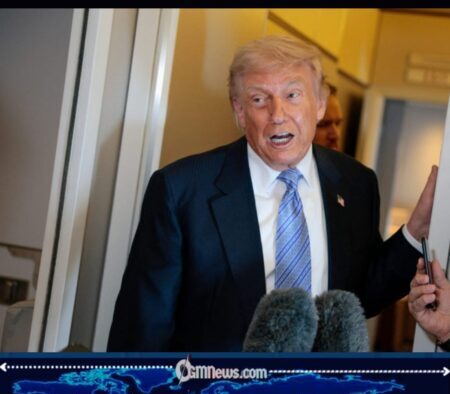
Hormuz Deal tensions escalated sharply over the weekend after President Donald J. Trump announced that a “largely negotiated” peace framework with Iran would reopen the Strait of Hormuz, only for Iranian state-linked media to publicly dispute his version of the emerging agreement. The conflicting claims have created fresh uncertainty around fragile ceasefire negotiations tied to one of the world’s most strategically important waterways. As diplomats race to finalize details behind closed doors, the growing gap between public optimism and unresolved disputes has transformed the negotiations into a high-stakes exercise in modern Ceasefire Diplomacy.
Trump announced on social media that final details of the agreement were still under discussion but suggested a breakthrough was near. The proposed framework would reportedly restore shipping access through the Strait of Hormuz, a vital oil transit route disrupted since the United States and Israel launched military operations against Iran earlier this year. The closure of the strait triggered major disruptions across global energy markets, fueling concerns over inflation, supply shortages, and broader economic instability.
Hormuz Deal Faces Immediate Pushback From Tehran
The Hormuz Deal narrative quickly became more complicated when Iran’s Fars news agency rejected Trump’s claim that the strait would simply reopen under American terms. According to the Iranian report, Tehran would continue managing the waterway, contradicting suggestions that the negotiations represented a straightforward Western diplomatic victory.
Iranian Foreign Ministry spokesperson Esmail Baghaei later acknowledged that talks had progressed toward reducing tensions but warned that unresolved disputes remained significant. He indicated mediators would likely continue discussions for several more days before any final agreement could emerge. Analysts say the conflicting public statements may reflect deeper disagreements over sovereignty, sanctions relief, military positioning, and regional influence.
Trump also spoke separately with leaders from Saudi Arabia, Qatar, the United Arab Emirates, Jordan, Egypt, Turkey, and Pakistan as efforts intensified to stabilize the ceasefire framework. Pakistan has played an especially active mediating role in recent weeks, attempting to narrow differences between Tehran and Washington after months of escalating military confrontation and economic disruption.
The political balancing act remains delicate because each side faces domestic and international pressure to avoid appearing weak. Trump continues emphasizing strength and rapid results in public remarks, while Iranian officials are carefully signaling resistance to external pressure even as negotiations advance. This combination has created a diplomatic environment where progress and contradiction now coexist almost daily.
Hormuz Deal: Ceasefire Diplomacy Reveals the Fragility Beneath Public Optimism
The Ceasefire Diplomacy surrounding the Hormuz Deal negotiations reflects a broader pattern seen in recent international crises: leaders increasingly communicate directly through media statements and social platforms while sensitive negotiations continue privately through intermediaries. This dynamic often produces conflicting narratives that complicate already fragile peace efforts.
Energy analysts note that even temporary uncertainty surrounding the Strait of Hormuz carries enormous consequences for global markets. Roughly one-fifth of the world’s oil supply traditionally passes through the narrow waterway, making any disruption immediately significant for fuel prices, shipping costs, and international trade stability. The prolonged conflict has already contributed to heightened volatility across global energy markets.
Meanwhile, Israel remains closely involved in developments surrounding the agreement. Trump described his latest call with Israeli Prime Minister Benjamin Netanyahu as highly positive, although details were not disclosed publicly. Observers say Israel’s security concerns will remain central to any lasting settlement involving Iran’s regional activities and military capabilities.
At the same time, Gulf states appear increasingly eager for de-escalation after months of economic and political uncertainty. Regional governments have grown concerned that prolonged instability could damage investment, tourism, and trade while increasing the risk of broader confrontation involving multiple countries. Diplomatic pressure from regional allies may therefore become a major factor influencing how quickly negotiators attempt to finalize the framework.
As the Hormuz Deal moves closer to a possible conclusion, the broader Ceasefire Diplomacy effort now stands at a critical crossroads. A finalized agreement could ease pressure on global energy markets and reduce fears of wider regional war. Yet the public disagreements already emerging between Washington and Tehran suggest that even if a deal is announced soon, the struggle over interpretation, enforcement, and political narrative may continue long after the headlines fade.
https://shorturl.fm/5TtQZ