
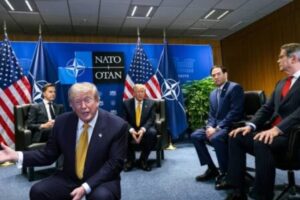







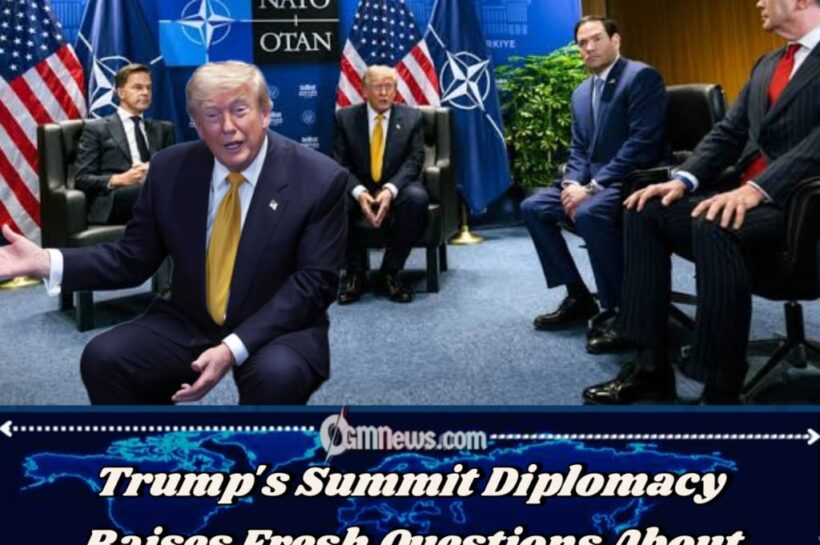





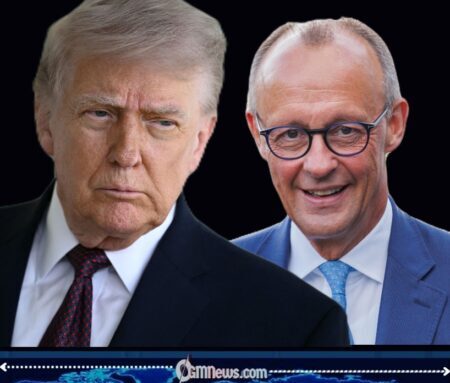
Relations between the United States and Germany have come under renewed strain after current U.S. President Donald Trump, serving a second term, sharply criticised German Chancellor Friedrich Merz and urged him to focus on “fixing his broken country.” The remarks mark the latest escalation in an increasingly public dispute involving immigration, energy policy, the Russia-Ukraine war, Iran, and the future of American military forces stationed in Germany.
The exchange follows comments by Trump suggesting that Washington is reviewing its troop deployment in Germany and may reduce its military presence there. The developments have revived concerns over transatlantic unity, NATO cooperation, and Europe’s long-term security strategy.
Trump Launches Fresh Attack on Merz
President Trump used social media to accuse Chancellor Merz of failing to help end the Russia-Ukraine war and interfering in matters relating to Iran. In his statement, Trump said the German leader had been “totally ineffective” and should devote more attention to domestic challenges instead of foreign criticism.
Trump specifically referenced Germany’s immigration and energy sectors, long-standing themes in his criticism of European governments. He also defended actions aimed at curbing Iran’s nuclear ambitions, claiming such efforts would make the world, including Germany, safer.
The unusually direct tone of the remarks has added fresh tension to already delicate U.S.-German relations, particularly at a time when both nations remain key NATO allies.
Merz’s Earlier Remarks Triggered Washington Response
Political observers believe Trump’s criticism was prompted by Chancellor Merz’s recent comments suggesting the United States was being “humiliated” by Iran and lacked a clear exit strategy in the Middle East conflict.
Merz’s remarks were notable because German leaders traditionally avoid direct public criticism of Washington on strategic military matters. His comments appeared to signal growing frustration in Berlin over the direction of U.S. foreign policy.
However, a day later, the German chancellor adopted a more measured tone during a visit to a military facility in Münster, where he emphasised the importance of NATO unity and a reliable transatlantic partnership.
U.S. Troops in Germany Under New Scrutiny
Trump’s comments came shortly after he suggested that the American military footprint in Germany was under review, with a possible reduction of forces being considered. Between 36,000 and 39,000 U.S. personnel are currently stationed in Germany, making it one of Washington’s largest overseas deployments.
Key installations include Ramstein Air Base and Stuttgart Military Command Facilities, both of which serve as central hubs for U.S. military operations in Europe, Africa, and the Middle East.
Although troop levels are lower than Cold War peaks, the bases remain strategically vital for logistics, intelligence coordination, training, and rapid deployment.
German Officials Seek to Calm the Situation
Senior German officials moved quickly to downplay the dispute, stressing that talk of U.S. troop reductions is not new. Foreign Minister Johann Wadephul said similar discussions had taken place under previous American administrations, including those of Joe Biden, Barack Obama, and Bill Clinton.
He noted that Washington has long considered shifting some strategic attention toward the Pacific region. Wadephul added that Germany was prepared for any future changes and remained in close consultation with NATO partners.
German authorities also signalled that any transition would need to be orderly, coordinated, and consistent with alliance commitments.
Security Experts Warn of Wider Consequences
Claudia Major, a leading analyst on transatlantic security, said using troop deployments as political leverage was not a new tactic. She warned that uncertainty over American commitments creates anxiety in Europe and forces governments to rethink their dependence on U.S. military support.
According to analysts, a significant American drawdown could weaken deterrence, increase instability, and require European nations to rapidly expand defence spending and military readiness.
At the same time, some strategists argue that Europe must assume greater responsibility for its own security regardless of Washington’s future decisions.
Why Germany Remains Important to the United States
Despite periodic political disputes, defence experts note that Germany’s military infrastructure serves American interests as much as European ones. Facilities such as Landstuhl Regional Medical Center, Grafenwöhr Training Area, and Ramstein are considered essential for medical support, troop training, transport, and global operations.
Roderich Kiesewetter said these sites are indispensable not only for Germany’s defence but for broader U.S. strategic reach worldwide.
This reality may limit the likelihood of any abrupt withdrawal, even if troop numbers are adjusted in the future.
Outlook for U.S.-Germany Relations
The latest dispute highlights growing strains within the Western alliance as leaders navigate wars, economic pressures, migration debates, and shifting geopolitical priorities. While both governments continue to stress the value of NATO cooperation, public disagreements between Washington and Berlin risk undermining confidence.
Much will depend on whether the rhetoric cools and whether troop review discussions become formal policy. For now, both capitals appear eager to avoid a deeper rupture while preparing for possible strategic change.
https://shorturl.fm/5TtQZ