

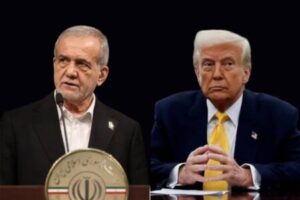







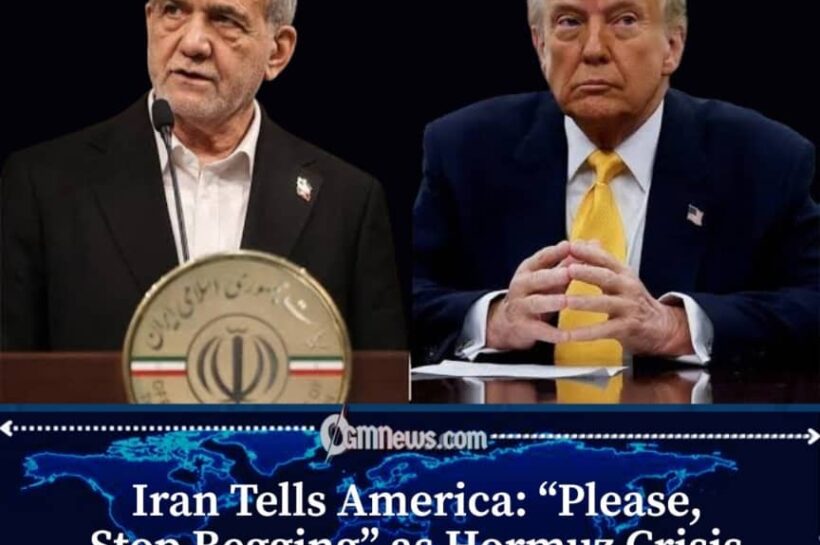








The decision by Donald Trump, now serving a second term as U.S. president, to wage war against Iran is increasingly being viewed as a profound strategic miscalculation. Rather than achieving its stated aims—forcing Tehran into submission or triggering regime change—the conflict appears to have reshaped the regional balance of power in Iran’s favour. With a ceasefire now extended indefinitely, the long-term consequences of the war are coming into sharper focus, revealing a weakened American global standing and a more assertive Iran.
Far from diminishing Iran’s influence, the war has enabled it to leverage its geopolitical strengths more effectively. Its control over vital maritime chokepoints and its ability to disrupt global trade have emerged as powerful deterrents, reshaping international perceptions of its strategic capabilities. As the dust settles, analysts suggest that the unintended outcomes of the conflict may define regional dynamics for years to come.
Strategic Miscalculation and Unmet Objectives
At the heart of the conflict lies a failure to achieve core objectives. The war neither produced regime change in Tehran nor compelled Iranian leaders to yield to U.S. demands. Instead, it exposed limitations in Washington’s approach and underscored the resilience of Iran’s political and military structures.
The assumption that military pressure would swiftly destabilize Iran proved flawed. Influenced in part by assurances from Benjamin Netanyahu, U.S. leadership anticipated a rapid and decisive outcome. However, the prolonged nature of the conflict and its ambiguous conclusion have highlighted the risks of relying on optimistic projections without fully considering worst-case scenarios.
Iran’s Control of Strategic Waterways
One of the most significant outcomes of the war is Iran’s reinforced control over critical maritime routes, particularly the Strait of Hormuz. This narrow passage remains a vital artery for global energy supplies, and Iran’s ability to threaten its closure has proven to be a powerful strategic tool.
Beyond Hormuz, Iran has also demonstrated influence over the Bab al-Mandab Strait through its alliances, particularly with Houthi forces in Yemen. The potential disruption of these two key routes poses a dual threat to global trade, amplifying Iran’s leverage on the international stage and raising concerns among major economies.
Regional Realignments and Gulf Anxiety
The war has unsettled traditional U.S. allies in the Gulf, who now question Washington’s reliability as a security guarantor. In response, several states have begun diversifying their alliances, seeking closer ties with regional and global powers to hedge against uncertainty.
Countries across the Gulf are strengthening relationships with nations such as Pakistan, Egypt, and Turkey, while also expanding engagement with major economic players like China and India. This shift reflects a broader recalibration of regional security frameworks in response to evolving threats
Transformation of Iran’s Military Doctrine
Internally, the conflict has prompted a significant shift in Iran’s strategic thinking. The long-standing doctrine of “strategic patience” has given way to a more assertive, multi-front approach. Leaders within the Islamic Revolutionary Guard Corps (IRGC) have drawn lessons from the war, concluding that restraint may invite vulnerability.
This doctrinal evolution is already evident in Iran’s willingness to project power beyond its borders. By targeting economic and security infrastructure during the conflict, Iran signaled a readiness to escalate in multiple theatres simultaneously—a strategy that may define its future engagements.
Domestic Consolidation Amid Economic Strain
Contrary to expectations, the war has not weakened Iran’s internal cohesion. Instead, external pressure appears to have triggered a rally-around-the-flag effect, strengthening the regime’s grip on power, at least in the short term. Public resentment toward leadership was overshadowed by national solidarity in the face of foreign attacks.
However, significant challenges loom. The cost of reconstruction is estimated to exceed $200 billion, while projections from the International Monetary Fund suggest inflation could surpass 70%. These economic pressures may test the regime’s stability in the long run, particularly if governance remains restrictive.
Institutional Weaknesses and Policy Gaps
The war has also exposed structural weaknesses within U.S. policymaking institutions. Critics argue that the erosion of key advisory bodies—such as the State Department and the National Security Council—limited the administration’s capacity for rigorous strategic evaluation.
This institutional hollowing may have contributed to an overreliance on instinct and external assurances. The absence of robust internal debate and critical analysis appears to have reduced the likelihood of identifying potential pitfalls before committing to military action.
Broader Implications of an Expansionist Strategy
Beyond immediate outcomes, the conflict reflects a broader strategic vision associated with Donald Trump’s leadership. His rhetoric has often emphasized expansionism and control over resource-rich regions, framing the Iran conflict within a wider geopolitical agenda.
From South America to the Arctic and the Middle East, this approach suggests a willingness to pursue influence through assertive means. However, the results of the Ira war may prompt a reassessment of such strategies, particularly given the unintended consequences now unfolding.

[…] […]