












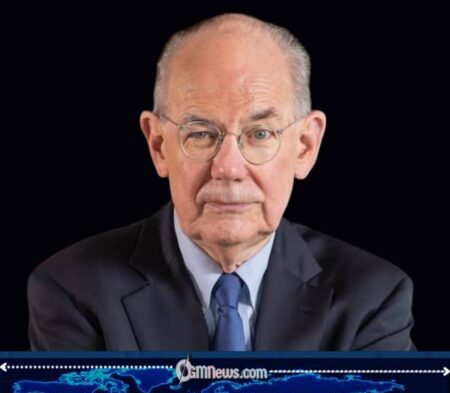
Prominent international relations scholar John Mearsheimer has argued that Iran currently holds a commanding strategic position in its confrontation with the United States and its allies. According to Mearsheimer, Tehran’s geographic and economic leverage particularly over the Strait of Hormuz gives it the ability to exert disproportionate influence on global markets and regional stability.
His assessment, widely circulated in recent days, suggests that Iran’s capacity to disrupt energy flows and escalate regionally places it in a strong negotiating position. While some analysts consider the argument overstated, it has intensified debate over the balance of power in the ongoing crisis.
Hormuz as Strategic Leverage
Central to Mearsheimer’s analysis is the Strait of Hormuz, one of the world’s most critical energy chokepoints. A significant share of global oil exports passes through the narrow waterway, making it a vital artery for international trade and energy security.
He argues that Iran’s ability to restrict or close the strait provides it with substantial leverage. Even limited disruptions can have outsized effects, including increased shipping costs, delays, and volatility in global oil markets. Recent reports of reduced tanker traffic and heightened security risks underscore the fragility of the situation.
This strategic advantage, he contends, allows Iran to influence global economic conditions without engaging in direct large-scale confrontation, thereby shifting the dynamics of power in its favor.
Global Economic Risks and Energy Shock Concerns
The potential economic consequences of sustained disruption in the Strait of Hormuz are significant. Analysts warn that any prolonged interference with oil shipments could trigger sharp increases in energy prices and ripple effects across global supply chains.
Mearsheimer’s assertion that Iran could “tank the global economy” reflects concerns shared by some economists, though expressed in more measured terms. Rising oil prices, inflationary pressures, and market uncertainty have already emerged as key risks linked to the discussion at hand.
While global markets possess some resilience, experts caution that repeated disruptions or escalation could amplify economic instability, particularly for countries heavily dependent on energy imports.
Vulnerability of Gulf States Under Scrutiny
Mearsheimer also points to the vulnerability of Gulf Cooperation Council (GCC) countries, arguing that their infrastructure and economic systems could be significantly disrupted in a prolonged conflict. These nations rely heavily on stable energy exports, secure shipping lanes, and regional security arrangements.
Recent incidents involving missile and drone activity in the broader region have highlighted the potential risks to critical infrastructure. Airports, oil facilities, and transportation networks remain exposed to disruption in the event of escalation.
However, analysts emphasize that while Gulf states face real vulnerabilities, they also possess substantial financial resources and defense partnerships. This combination provides resilience that complicates any suggestion of systemic collapse.
Debate Over Escalation Dynamics
A key element of Mearsheimer’s argument is his claim that Iran holds an advantage across multiple levels of escalation. He suggests that Tehran can increase pressure through asymmetric tactics while avoiding direct confrontation with superior U.S. military forces.
This perspective has sparked debate among defense analysts. Some agree that Iran’s regional networks and unconventional capabilities provide it with flexible options. Others argue that the United States retains overwhelming military superiority, particularly in conventional warfare.
The reality likely lies between these positions. While Iran may possess advantages in certain scenarios, the broader escalation ladder involves complex variables that make definitive conclusions difficult.
Policy Implications for Washington
The analysis carries important implications for policymakers in Washington, including Donald Trump, who is navigating a delicate balance between deterrence and diplomacy. The suggestion that Iran holds significant leverage raises questions about the effectiveness of military pressure alone.
For the Trump administration, the challenge lies in addressing immediate security concerns while avoiding actions that could unintentionally strengthen Iran’s strategic position. Diplomatic engagement, economic measures, and coordination with allies are all part of the broader policy toolkit.
Observers note that miscalculations on either side could escalate tensions further, underscoring the need for clear communication and carefully calibrated responses.
A Complex and Uncertain Strategic Landscape
Mearsheimer’s assessment highlights the complexity of the current geopolitical environment, where traditional measures of power are intertwined with economic and geographic factors. The Strait of Hormuz exemplifies how a single choke point can shape global dynamics.
While his conclusions remain subject to debate, they have contributed to a broader discussion about the risks and realities of the ongoing crisis. The interplay between regional actors, global markets, and military considerations continues to evolve.
As the situation develops, the extent to which Iran can sustain its leverage and how the United States and its allies respond will be critical in determining the trajectory of the conflict.
The evolving standoff underscores the challenges of managing modern geopolitical conflicts, where economic interdependence and strategic geography play decisive roles. Whether Mearsheimer’s assessment proves accurate or overstated, it reflects growing concern over the balance of power and the potential consequences of escalation.

Logging in is a breeze and the site stability is amazing even during peak hours....