





























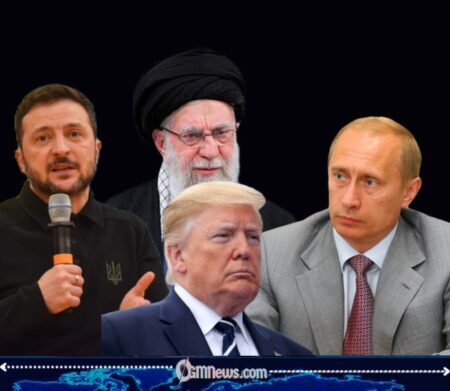
President Volodymyr Zelenskyy has drawn international attention after alleging that the United States may have overlooked intelligence suggesting cooperation between Russia and Iran in operations targeting American military bases. In a recent interview, Zelenskyy stated that available evidence points to indirect Russian involvement in supporting Iranian-linked activities.
President Zelenskyy’s remarks come at a time of heightened geopolitical tension involving Russia, Iran, and Western powers. Although the claims remain unverified by independent intelligence agencies, they have added urgency to ongoing discussions about global security risks and emerging military alignments.
President Volodymyr Zelenskyy’s Claims on Intelligence Sharing
President Zelenskyy alleged that Russian surveillance systems, including satellite capabilities, may have contributed intelligence used in identifying strategic American military positions. He suggested that such information could have assisted Iranian forces in planning or executing attacks on US-linked facilities in the Middle East.
President Zelenskyy further argued that this type of cooperation, if confirmed, would indicate a deeper operational relationship between Moscow and Tehran than previously acknowledged. However, no publicly available intelligence reports have independently confirmed these specific allegations.
President Volodymyr Zelenskyy and US Intelligence Response
President Volodymyr Zelenskyy stated that he believes the United States has not fully acted on or publicly addressed the evidence he referenced. According to him, stronger recognition of the alleged Russia-Iran connection is necessary to prevent further security risks.
President Zelenskyy’s comments come as US security agencies continue to monitor threats to overseas military installations. While officials have not directly responded to the claims, Washington has consistently maintained that it evaluates all credible intelligence related to force protection and regional stability.
President Volodymyr Zelenskyy Highlights Middle East Security Risks
President Zelenskyy warned that increasing military activity in the Middle East, particularly involving Iran-backed operations, could escalate if external intelligence support is involved. He pointed to growing concerns about targeted strikes on US-linked bases and infrastructure in the region.
President Zelenskyy’s statement highlights fears among analysts that evolving alliances could reshape security calculations in already volatile regions. Experts note that any confirmed coordination between Russia and Iran would significantly alter regional deterrence strategies.
President Volodymyr Zelenskyy and Global Diplomatic Reactions
President Zelenskyy’s allegations have prompted renewed discussion among international observers about the credibility and verification of intelligence shared between allied nations. While some analysts see the claims as part of broader geopolitical warnings, others emphasize the need for caution pending official confirmation.
President Volodymyr Zelenskyy’s remarks also underscore the increasing complexity of global diplomacy, where competing narratives around security intelligence can influence international relations. Governments are expected to continue reviewing available evidence while avoiding premature conclusions.
President Volodymyr Zelenskyy Calls for Urgent Review
President Zelenskyy has called attention to what he believes is a serious gap in global intelligence assessment regarding Russia and Iran. His claims, though not independently verified, have intensified debate over security cooperation and emerging threats to US military interests abroad.
President Zelenskyy’s statement reinforces broader concerns about hybrid warfare and the growing role of indirect alliances in modern conflict. As investigations and assessments continue, international stakeholders remain focused on verifying facts and managing escalating geopolitical tensions.


Logging in is a breeze and the site stability is amazing even during peak hours....