












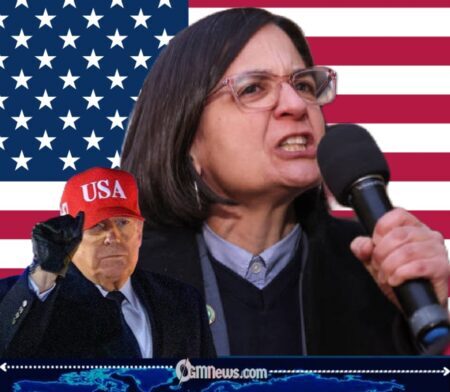
Representative Becca Balint has ignited fresh debate over media accountability and political bias, arguing that recent comments by U.S. President Donald Trump about Iran have not received the level of scrutiny they would have attracted under previous administrations. She described the situation as a “glaring double standard,” saying comparable remarks by past Democratic leaders would have dominated news cycles.
Representative Becca Balint’s comments have amplified ongoing discussions about media framing, partisan narratives, and the evolving standards of political coverage in the United States.
Balint’s Criticism Sparks Debate
Representative Becca Balint questioned the disparity in media response to political rhetoric, emphasizing that President Trump’s recent remarks about Iran have not drawn the sustained attention she believes they warrant. She argued that such statements, described by critics as unusually harsh, would have triggered widespread and continuous coverage if made by a Democratic president.
Representative Becca Balint further compared the situation to the presidencies of Joe Biden and Barack Obama, asserting that similar language from either leader would have led to “nonstop coverage on every single channel.” Her remarks reflect broader Democratic concerns about uneven media scrutiny.
Trump’s Iran Comments Under Scrutiny
Representative Becca Balint pointed to President Donald Trump’s continued use of strong rhetoric toward Iran as a key example of what she considers inconsistent media attention. Trump, currently serving his second term, has maintained a confrontational approach that aligns with his broader foreign policy stance.
Representative Becca Balint noted that while supporters view the president’s tone as strategic, critics warn that such language could escalate tensions in an already fragile geopolitical climate. The debate highlights differing interpretations of both the remarks themselves and the media’s response to them.
Media Coverage and Perceived Bias
Representative Becca Balint framed the issue as part of a larger pattern of perceived media bias, arguing that inconsistent coverage standards can shape public understanding of political events. She stressed that the role of the press is critical in ensuring accountability across all administrations.
Representative Becca Balint’s position aligns with longstanding criticisms from various political actors who argue that selective emphasis and framing can influence national discourse. Media analysts note that perceptions of bias—whether substantiated or not—continue to affect public trust in journalism.
Reactions Across Political Lines
Representative Becca Balint’s remarks have drawn mixed reactions from across the political spectrum. Some Democratic lawmakers have supported her view, agreeing that consistent scrutiny is essential for maintaining institutional credibility.
Representative Becca Balint also faced pushback from Republican commentators, who argue that President Trump has historically been subject to intense media coverage. They suggest that the current response reflects a more balanced approach rather than a double standard.
Implications for U.S.–Iran Relations
Representative Becca Balint highlighted the broader implications of political rhetoric, noting that statements from U.S. leadership can influence diplomatic relations with Iran. She emphasized that how such remarks are reported may also affect international perceptions.
Representative Becca Balint underscored the importance of measured communication, as heightened rhetoric—regardless of media attention—can carry risks for regional stability and diplomatic engagement.
Broader Questions on Media Accountability
Representative Becca Balint concluded that the controversy raises fundamental questions about fairness and consistency in media coverage. She argued that holding all political leaders to the same standard is essential for a functioning democracy.
Representative Becca Balint’s critique has renewed focus on how political narratives are shaped, leaving open the question of whether her concerns will prompt deeper reflection within the media industry.

Logging in is a breeze and the site stability is amazing even during peak hours....