








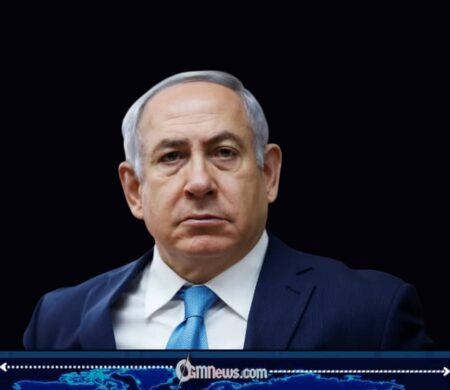
Recent viral posts have attributed extreme statements to Israeli Prime Minister Benjamin Netanyahu, alleging that he declared Israel would “attack any country, anytime.” The claim has spread widely across social media, fueling outrage and intensifying already heightened global tensions surrounding the expanding Middle East conflict.
However, reporting from reputable international outlets presents a more nuanced reality. While Benjamin Netanyahu has indeed used strong rhetoric about reshaping the region, there is no verified evidence that he made the sweeping statement circulating online. Instead, his comments appear to have been taken out of context and amplified into a broader, more extreme narrative.
This report examines the origins of the claim, what was actually said, and how ongoing military developments are shaping perceptions of Israel’s strategy.
Netanyahu’s Actual Statements and Strategic Messaging
Benjamin Netanyahu has repeatedly emphasized that Israel intends to “change the face of the Middle East,” a phrase widely reported by international media. This language reflects a strategic objective aimed at weakening Iran and its network of allied groups, including Hezbollah and other regional actors.
Such rhetoric is not uncommon during periods of heightened conflict, particularly when governments seek to project strength and deterrence. Analysts note that these statements are typically directed at specific adversaries rather than representing a blanket policy toward all nations.
By framing the conflict in transformative terms, Benjamin Netanyahu appears to be signaling both resolve and long-term ambition, positioning Israel as a dominant force in reshaping regional security dynamics.
Expanding Military Operations Across Multiple Fronts
Recent developments confirm that Israel has expanded its military operations beyond a single front. According to international reporting, Israeli forces have intensified strikes in southern Lebanon targeting Hezbollah infrastructure, while also continuing operations linked to Iranian assets.
These actions reflect a broader multi-front engagement, involving not only Israel and Iran but also proxy groups operating across the region. Missile exchanges, drone attacks, and cross-border operations have contributed to an increasingly complex and volatile security environment.
The widening scope of operations has led some observers to interpret Israel’s strategy as increasingly aggressive, though officials maintain that actions remain focused on defined security threats rather than indiscriminate expansion.
Regional Escalation and the Risk of Wider War
The Middle East is currently experiencing one of its most tense periods in recent years, with multiple actors engaged either directly or indirectly in the conflict. Iran, Hezbollah, and other allied groups have responded to Israeli actions with their own military measures, including missile launches and drone operations.
This cycle of action and retaliation has raised concerns among international observers about the potential for a broader regional war. Strategic waterways, energy infrastructure, and civilian areas all remain vulnerable to escalation.
Despite the intensity of the conflict, diplomatic channels remain active, with global powers urging restraint and seeking pathways to de-escalation.
The Role of Misinformation in Wartime Narratives
The rapid spread of the viral claim highlights the growing role of misinformation in shaping public perception during conflicts. Experts note that emotionally charged language and simplified narratives often gain traction online, even when they lack verification.
In this case, Benjamin Netanyahu’s real statements appear to have been condensed and reframed into a more extreme version, accompanied by subjective commentary. This transformation can blur the line between factual reporting and opinion.
Media analysts emphasize the importance of relying on verified sources, particularly during times of conflict when information can be weaponized to influence public opinion and international discourse.
International Reactions and Diplomatic Concerns
Global reactions to the escalating conflict have been mixed, with some governments expressing support for Israel’s security concerns while others call for restraint and adherence to international law. The United Nations and various diplomatic bodies have urged all parties to avoid further escalation.
At the same time, tensions between major powers including the United States under President Donald Trump, currently serving a second term, and regional actors have added complexity to diplomatic efforts. The involvement of external powers increases both the stakes and the risks associated with continued conflict.
As the situation evolves, the balance between military objectives and diplomatic solutions remains a central challenge for policymakers worldwide.
A Complex Reality Beyond Viral Narratives
The controversy surrounding Benjamin Netanyahu’s alleged remarks underscores the difficulty of navigating information in a fast-moving and highly polarized environment. While Israel’s military actions and rhetoric are undeniably assertive, the most extreme claims circulating online are not supported by verified evidence.
Understanding the distinction between confirmed statements and amplified narratives is essential for accurately assessing the situation. The ongoing conflict remains complex, shaped by strategic objectives, regional dynamics, and global political considerations.
As tensions persist, the need for careful analysis and credible reporting becomes increasingly important in providing clarity amid uncertainty.

Logging in is a breeze and the site stability is amazing even during peak hours....