








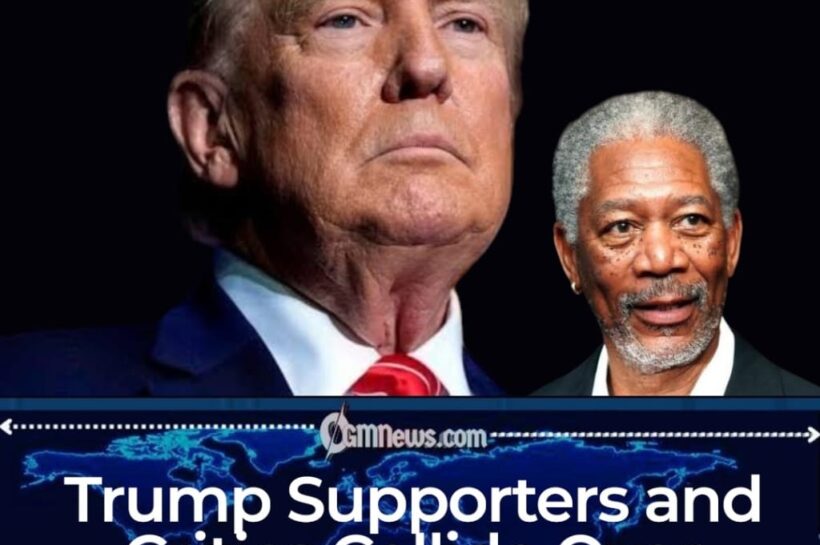
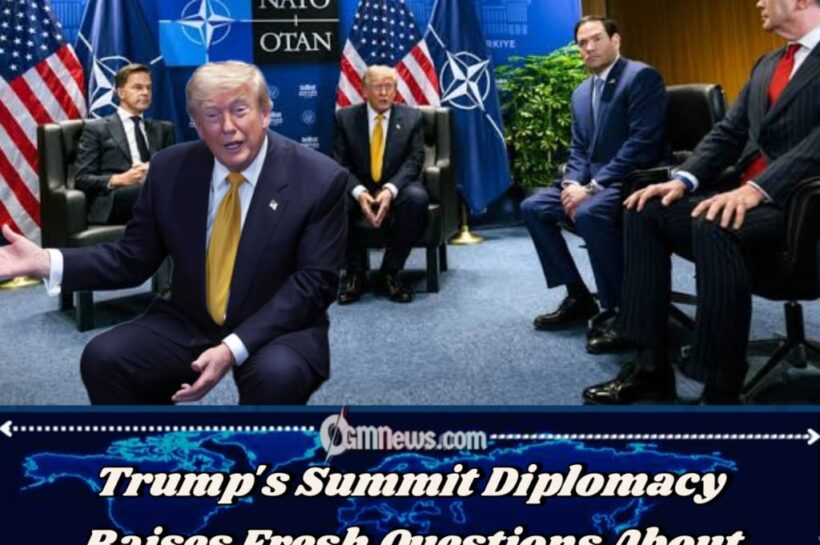
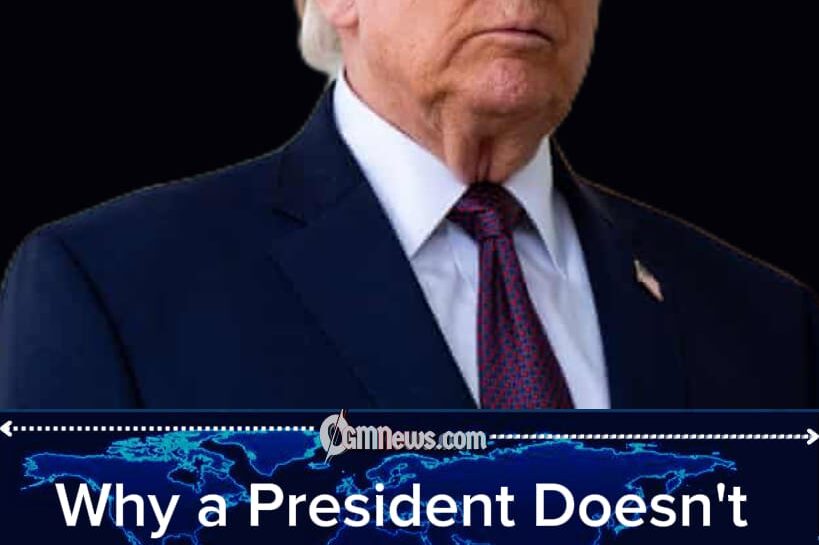




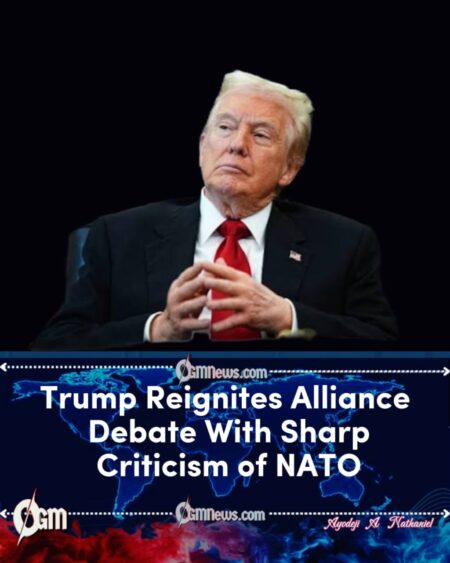
President Donald Trump, serving a second term as the current U.S. president, has sparked fresh controversy after sharing a post asserting that the North Atlantic Treaty Organization (NATO) poses a bigger threat to the United States than geopolitical rivals Russia and China. The claim, circulated on social media, has drawn swift attention from U.S. allies, foreign policy analysts, and lawmakers, reopening long-running debates about America’s role within the transatlantic alliance.
The statement marks one of the strongest rhetorical attacks yet on NATO by a sitting U.S. president and has raised concerns about alliance cohesion at a time of ongoing global security challenges, including the war in Ukraine and rising tensions in the Indo-Pacific.
Trump’s Statement and Its Immediate Context
The post shared by President Donald Trump argued that NATO undermines American interests more than traditional adversaries, a view that contrasts sharply with decades of U.S. foreign policy consensus. While Trump did not provide detailed justification in the post, the message aligns with his long-standing criticism that NATO allies rely too heavily on U.S. military and financial support.
During both his first and second terms, Trump has repeatedly accused alliance members of failing to meet defense spending commitments. Supporters of his position argue that the U.S. bears a disproportionate burden for Europe’s security, diverting resources away from domestic priorities.
Critics, however, say the comparison of NATO to adversarial powers represents a significant escalation in rhetoric with potentially serious diplomatic consequences.
NATO’s Role in U.S. Security Strategy
NATO has been a central pillar of U.S. and European security since its founding in 1949, designed to provide collective defense against external threats. American military planners have historically viewed the alliance as a force multiplier that extends U.S. influence and deters aggression.
In recent years, NATO has expanded its focus to include cyber threats, counterterrorism, and strategic competition with Russia and China. U.S. officials across multiple administrations have argued that alliance unity strengthens Washington’s global position rather than weakens it.
Trump’s claim challenges this view directly, raising questions about whether the United States could reassess its commitments or leverage alliance pressure more aggressively.
Political and Diplomatic Reactions
Lawmakers from both parties reacted cautiously, with some Republicans echoing concerns about burden-sharing while distancing themselves from the suggestion that NATO is an enemy. Democratic leaders criticized the statement, warning that it could embolden adversaries and unsettle allies.
European officials have not issued formal responses, but diplomats privately expressed concern that such rhetoric could undermine trust at a critical moment for transatlantic cooperation. Analysts note that statements from a sitting U.S. president carry weight regardless of whether they signal immediate policy changes.
Foreign policy experts warn that framing NATO as an adversary risks weakening deterrence and creating uncertainty about U.S. intentions.
Broader Implications for U.S. Foreign Policy
The controversy underscores a broader debate over America’s global role under President Donald Trump’s leadership. His emphasis on transactional alliances and cost-benefit calculations continues to challenge traditional diplomatic norms.
Economists and defense analysts caution that uncertainty around NATO could affect defense planning, markets, and long-term strategic coordination. At the same time, Trump’s supporters argue that blunt rhetoric is necessary to force reform within alliances they view as outdated or inefficient.
Whether the statement represents a negotiating tactic or a deeper shift in strategic thinking remains unclear.
What to Watch Going Forward
Attention is now focused on whether the White House will clarify or expand on the statement and whether it will translate into concrete policy actions. Upcoming NATO meetings and defense budget discussions may offer early signals.
Allies and adversaries alike are expected to closely monitor U.S. messaging for consistency. For now, the remark has reignited debate over alliance loyalty, strategic priorities, and America’s place in an increasingly multipolar world.
https://shorturl.fm/XPOeg