














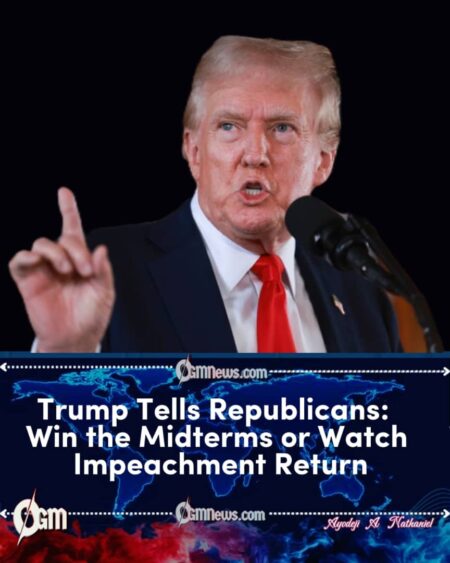
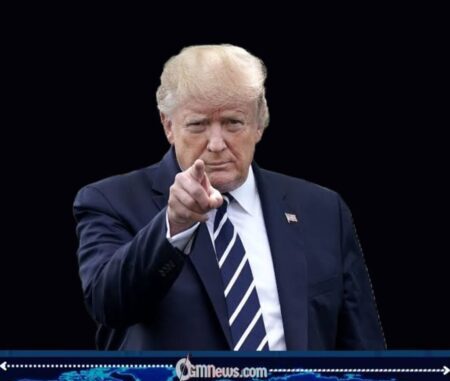
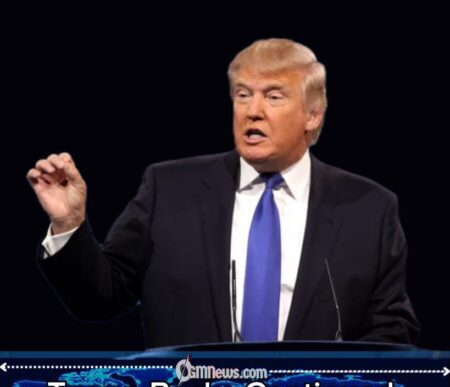
President Trump, currently serving a second term as U.S. president, has issued a stark political warning, saying he expects to be impeached if Republicans fail to win the upcoming midterm elections. The statement underscores the high political stakes surrounding the midterms and reflects the deep partisan divisions shaping Washington. Trump’s remarks frame the election not merely as a legislative contest, but as a referendum on the survival of his presidency.
President Trump Links Midterms Directly to His Presidency
President Trump’s statement draws a direct line between Republican control of Congress and his political security. By asserting that impeachment would follow a Republican defeat, Trump positioned the midterms as a defensive battle against Democratic oversight and potential legislative action.
The comment suggests that Trump views impeachment less as a question of conduct and more as a political weapon. His framing reinforces a long-standing narrative that opposition parties use congressional power to weaken or remove sitting presidents.
The Impeachment Threat in Context
Impeachment is a constitutional process, but Trump’s warning casts it as an almost inevitable outcome should Democrats gain control of Congress. This reflects the reality that impeachment proceedings are initiated in the House of Representatives, where a shift in majority could dramatically change the political environment.
While impeachment does not automatically lead to removal from office, the process itself can consume political capital, dominate public discourse, and stall legislative agendas. Trump’s remarks highlight his awareness of these risks and their potential impact on governance.
Midterms as a Referendum on Trump’s Second Term
President Trump’s comments effectively redefine the midterm elections as a referendum on his second-term presidency. Rather than focusing solely on policy or party platforms, he presented the vote as a choice between continuity of his agenda and aggressive opposition oversight.
This strategy mirrors historical patterns in U.S. politics, where presidents seek to nationalize midterms to energize their base. By personalizing the stakes, Trump aims to mobilize Republican voters who may see the election as critical to protecting his leadership.
Republican and Democratic Reactions
Republican allies have echoed concerns about intensified investigations and legislative confrontation if Democrats regain power, arguing that divided government would lead to political paralysis. They frame Republican victories as essential to stability and policy continuity.
Democrats, meanwhile, have pushed back on Trump’s claims, insisting that impeachment is not automatic and that accountability, if pursued, would be driven by evidence rather than electoral outcomes. Nonetheless, Trump’s statement has amplified expectations around post-election political conflict.
Broader Implications for Governance
The warning underscores how deeply polarized American politics has become, with elections increasingly framed as existential struggles. President Trump’s remarks suggest that governance, oversight, and elections are now tightly intertwined in public perception.
As the midterms approach, the focus is likely to intensify on congressional power, checks and balances, and the consequences of divided government. Trump’s statement ensures that impeachment, whether hypothetical or real, will remain central to the political conversation.
[…] […]