






















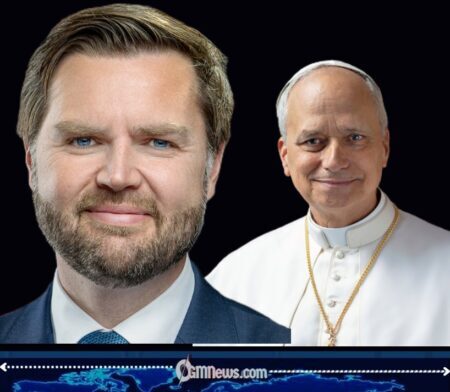
Vice President JD Vance has expressed appreciation for remarks by Pope Leo XIV that appear to de-escalate tensions with Donald Trump, following a week of public disagreement over foreign policy and moral leadership. The comments, delivered during the pope’s Africa tour, sought to clarify earlier statements that had been widely interpreted as criticism of the U.S. administration.
Speaking publicly, the pontiff suggested that international media coverage had overstated divisions, noting that his broader message focused on opposition to war rather than targeting specific political leaders. Vance, a practicing Catholic, welcomed the clarification while acknowledging ongoing differences between the White House and the Vatican on key global issues.
Papal Clarification Aims to Reset Narrative
During remarks made en route to Angola, Pope Leo emphasized that his previous comments about “a handful of tyrants” spending heavily on warfare were not directed at President Trump. He explained that the speech had been prepared weeks earlier, prior to recent developments involving U.S. policy toward Iran.
The pope also stressed that his position has consistently been rooted in a general opposition to war and violence. By distancing his earlier remarks from direct political targeting, he appeared to signal a willingness to reduce tensions with Washington while maintaining his broader moral stance on global conflicts.
This clarification comes amid heightened scrutiny of the Vatican’s role in commenting on geopolitical matters, particularly when such statements intersect with the policies of major world powers.
Vance Responds with Measured Support
In a message posted on the social media platform X, Vance expressed gratitude for the pope’s remarks, describing the situation as more nuanced than portrayed in media narratives. He acknowledged that disagreements between political leadership and religious authorities are inevitable but emphasized the importance of mutual respect.
Vance noted that while the pope’s role is to articulate moral and spiritual guidance, the administration must navigate complex global realities. His comments reflect an attempt to balance respect for religious authority with the practical demands of governance.
He further indicated that both the pope and the administration would remain in each other’s prayers, signaling a conciliatory tone despite underlying policy differences.
Origins of the Trump–Pope Dispute
The disagreement between President Trump and Pope Leo XIV began after the pontiff criticized rhetoric suggesting severe consequences if Iran failed to comply with U.S. demands regarding the Strait of Hormuz. The pope described threats against entire populations as unacceptable and urged citizens worldwide to advocate for peace.
He also condemned attacks on civilian infrastructure, stating that such actions violate international law. These remarks were widely interpreted as a critique of U.S. foreign policy, particularly statements attributed to the president regarding potential military actions.
The Vatican’s intervention added a moral dimension to an already tense geopolitical situation, drawing global attention to the intersection of faith and statecraft.
Trump’s Response and Public Reaction
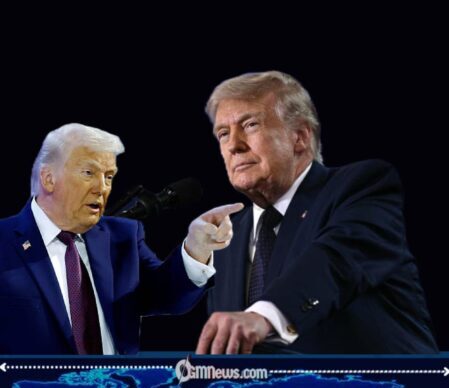
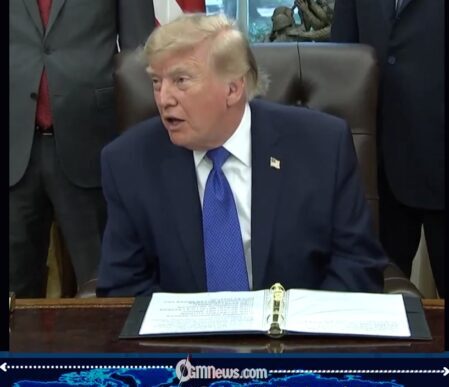
President Trump responded forcefully on social media, accusing the pope of weakness on foreign policy and criticizing his stance on issues related to Iran. The president defended his approach as consistent with his electoral mandate and national security priorities.
The situation intensified when Trump shared an AI-generated image depicting himself in religious attire performing acts reminiscent of biblical healing. The post sparked backlash from religious communities and was subsequently deleted.
When questioned, Trump characterized the image as humorous, while Vance later described it as a joke that had been misunderstood by the public.
Vance Defends Administration’s Position
Throughout the controversy, Vance has played a key role in articulating the administration’s perspective. During a public event, he suggested that religious leaders should exercise caution when addressing complex theological and geopolitical matters simultaneously.
He also referenced the concept of “just war theory,” a principle within Christian ethics that allows for armed conflict under specific conditions, such as self-defense. By invoking this doctrine, Vance sought to frame the administration’s actions within a broader moral context.
In media appearances, he reiterated that disagreements with the pope do not diminish respect for his spiritual leadership, underscoring the administration’s effort to maintain diplomatic decorum.
Broader Implications for Church–State Relations
The episode highlights enduring tensions between religious authority and political leadership, particularly in matters of war and peace. While both institutions wield significant influence, their priorities and methods often diverge.
Pope Leo’s clarification may help ease immediate tensions, but the underlying differences in worldview remain. The Vatican’s emphasis on moral absolutes contrasts with the pragmatic considerations that shape national policy decisions.
As global conflicts continue to evolve, interactions between religious and political leaders are likely to remain a focal point of international discourse, and when ethical considerations intersect with strategic interests.
[…] […]