



























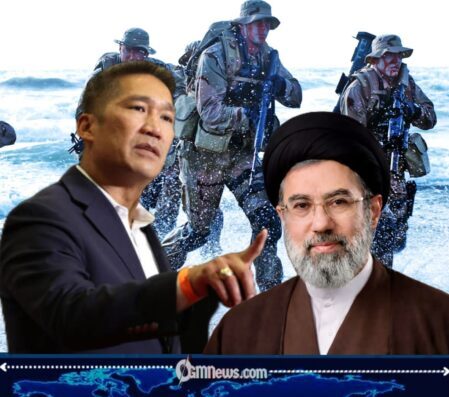
U.S. Navy Secretary Hung Cao has revealed that parts of a planned American arms sales package to Taiwan have been placed on “pause” because of the ongoing Iran war, triggering fresh international debate over U.S. military readiness and global strategic priorities.
Speaking during a congressional hearing, Cao reportedly explained that the Trump administration decided to temporarily delay some foreign military sales in order to preserve sufficient munitions for ongoing operations connected to Iran. The remarks immediately drew attention because Taiwan remains heavily dependent on American military support amid growing tensions with China.
Taiwan Arms Sales
Hung Cao reportedly told lawmakers that the temporary pause was linked to ensuring adequate weapons supplies for “Epic Fury,” the codename associated with U.S. operations tied to the Iran conflict. The delayed package reportedly involves approximately $14 billion worth of military equipment intended for Taiwan.
According to reports, President Donald J. Trump has not yet given final approval for the package following recent discussions with Chinese President Xi Jinping.
Taiwanese officials, however, stated that they had not received formal notice regarding any suspension or alteration to defense cooperation agreements with Washington. The island continues relying heavily on American military assistance as tensions with China remain high.
Under the Taiwan Relations Act, the United States is committed to helping Taiwan maintain defensive capabilities. China strongly opposes U.S. arms sales to Taiwan and views the island as part of its territory, while Taiwan rejects Beijing’s sovereignty claims and continues operating as a self-governed democracy.
Hung Cao: Iran War
The comments from Hung Cao have intensified broader concerns about whether ongoing military operations linked to the Iran war are beginning to stretch American defense resources and munitions stockpiles.
Military analysts note that modern conflicts consume large quantities of advanced missiles, interceptors, and precision-guided weapons at extremely high rates, forcing governments to carefully balance strategic priorities across different regions.
Some experts fear that delays involving Taiwan could create perceptions of weakened American reliability among allies in Asia. Supporters of the Trump administration argue that prioritizing operational readiness during active conflict is a normal military precaution rather than a strategic retreat. Critics, however, warn that even temporary pauses involving Taiwan carry sensitive geopolitical consequences because of China’s increasing military activities near the island.
The controversy also highlights growing global concerns about defense manufacturing capacity and the ability of major powers to sustain prolonged military commitments across multiple regions simultaneously.
For now, uncertainty remains over how long the reported pause may continue or whether the Taiwan arms package will eventually proceed without major changes. OGM News Nigeria understands that the issue is expected to remain a major topic in geopolitical discussions involving U.S.-China relations, Taiwan’s security, and the broader impact of the Iran war on international military strategy.
[…] […]